
TL;DR:
- Roasting coffee involves complex chemical reactions that transform green beans into flavor-rich brews.
- Understanding these processes helps consumers select, evaluate, and appreciate coffee with greater insight and confidence.
Most people assume roasting coffee is just heating beans until they turn brown. It is not. Explaining coffee bean roasting properly means talking about a chain of chemical events that transforms a flat, grassy green seed into something with hundreds of distinct aroma compounds. For Colorado Springs coffee lovers who want to choose better beans, brew with more confidence, or simply appreciate what goes into every cup, understanding the roasting process changes everything. This guide breaks it all down — the science, the steps, the roast levels, and how to use that knowledge locally.
Table of Contents
- The science behind coffee bean roasting
- Step-by-step process of roasting coffee beans at home
- Understanding roast levels and their flavor profiles
- Controlling and perfecting the roast: tips for home roasters
- Applying roasting knowledge to select and appreciate coffee beans in Colorado Springs
- Why understanding roasting as chemistry and craft changes how you savor coffee
- Explore expertly roasted coffee with Third Space Coffee in Colorado Springs
- Frequently asked questions
The science behind coffee bean roasting
Roasting is not just cooking. It is a sequence of overlapping chemical reactions, and each one shapes the flavor you eventually taste. The roasting of green coffee beans is a complex process involving various chemical reactions that play a crucial role in taste, color, and aroma. That complexity is exactly why two roasters using the same beans can produce cups that taste nothing alike.
Here is what actually happens inside the drum or roasting chamber:
- Drying phase: Green beans hold up to 11% moisture. The first minutes of roasting drive off that water, turning beans from green to yellow. Nothing drinkable yet.
- Maillard reaction: As temperatures climb past roughly 300°F (150°C), amino acids and reducing sugars react to form hundreds of new flavor and color compounds. This is the same reaction that browns a steak or toasts bread.
- Caramelization: Around 370°F (188°C), sugars begin to break down and reorganize into caramel-like compounds, adding sweetness and complexity.
- Pyrolytic reactions: At higher temperatures, more aggressive chemical breakdown occurs, generating the bitter, smoky notes associated with dark roasts.
Managing these reaction pathways — not just setting a timer — is what separates a skilled roaster from someone who guesses. Learning these home coffee roasting basics gives you the vocabulary to describe what you taste. And if you want to get fluent in the language of roasting, brushing up on roasting terms explained is a smart move.
"Heat does not just cook coffee — it builds it. Every degree and every second is an opportunity to create or destroy flavor."
With this chemical backdrop, you can now understand what happens during the coffee roasting process step by step.
Step-by-step process of roasting coffee beans at home
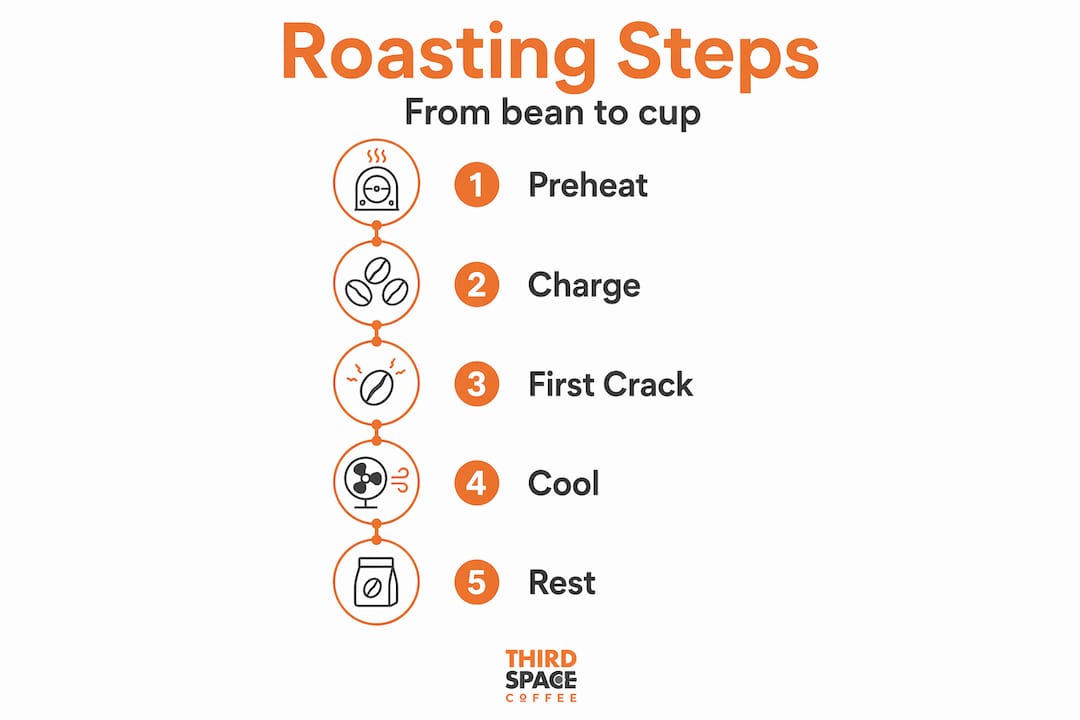
The steps in coffee roasting follow a predictable sequence, but reading the sensory cues correctly is where skill develops. A home-roasting workflow typically includes preheating to around 400°F (200°C), charging the roaster with green beans, monitoring for early color change, listening for first crack, and then cooling beans quickly.
Here is how that plays out in practice:
- Preheat your roaster to about 400°F (200°C). Adding beans to a cold roaster creates uneven heat distribution and muddied flavors.
- Charge the roaster with green beans. Keep batch sizes consistent. Overloading slows heat transfer and produces uneven roasts.
- Watch for the yellowing stage. Within the first few minutes, beans shift from green to yellow and the smell changes from fresh grass to toasted grain. This is your first sensory marker.
- Monitor temperature and airflow. Even heat ensures every bean develops at the same rate. Uneven roasting produces a mix of underdeveloped and overdeveloped beans in the same batch.
- Listen for first crack. A popping sound, similar to popcorn but more subtle, signals that the beans have hit a drinkable roast level. This is your decision point.
- Stop the roast at your target level. Pull the beans from heat when you reach your chosen roast stage. Do not wait for them to "look done."
- Cool beans rapidly. Spread them out or use a cooling tray with airflow. Fast cooling stops the roasting and locks in flavor.
This step-by-step roasting guide and broader home coffee brewing tips can sharpen your execution once you have the basics down.
Pro Tip: Keep a written roasting log for every batch. Note preheat temp, charge weight, first crack time, and final roast time. After three or four batches, patterns emerge that help you repeat your best results.
Understanding roast levels and their flavor profiles
First crack is an important sensory cue marking the earliest palatable roast stage, called City roast. Second crack signals darker roasts like Vienna or French roasts. Everything in between is a dial you can turn.
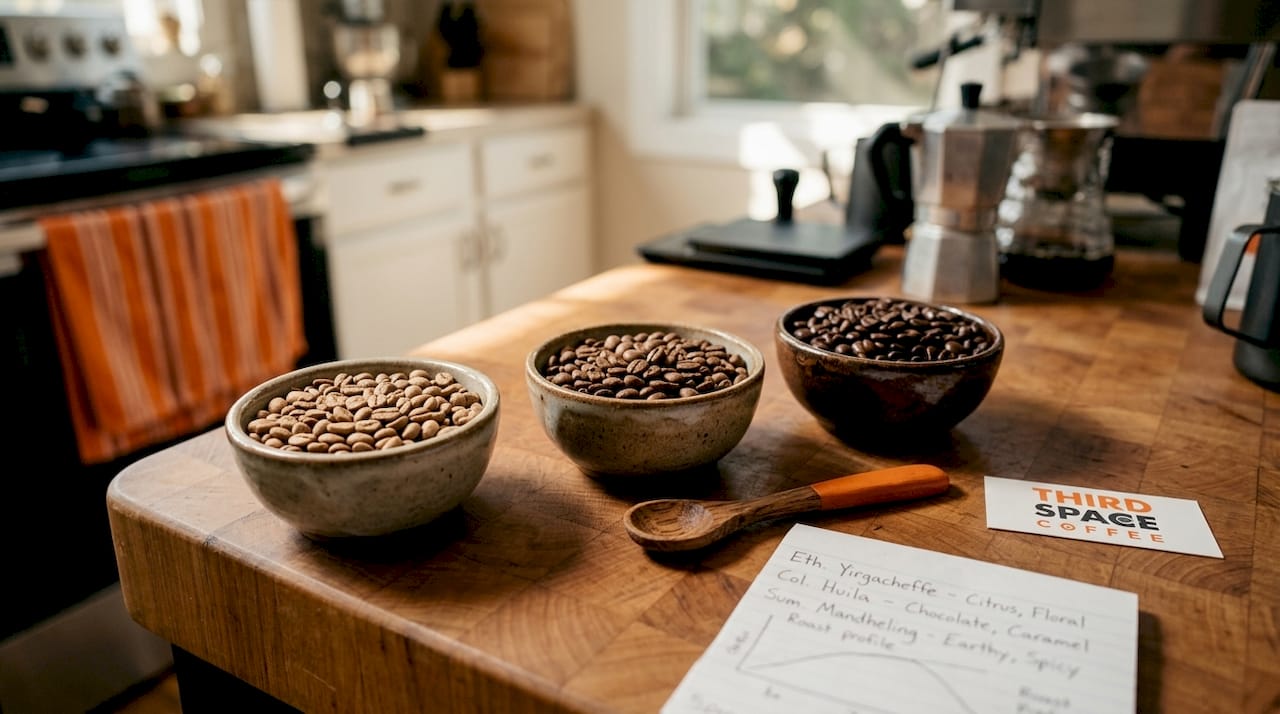
Here is how the major roast levels compare:
| Roast level | Temperature range | Key flavor notes | Best brewing method |
|---|---|---|---|
| Light (City) | 400–415°F (205–213°C) | Fruity, floral, high acidity | Pour-over, Aeropress |
| Medium (City+) | 415–435°F (213–224°C) | Caramel, balanced, mild acidity | Drip, flat white |
| Medium-Dark (Full City) | 435–445°F (224–229°C) | Chocolate, low acidity, slight bitterness | Espresso, French press |
| Dark (Vienna/French) | 445°F+ (229°C+) | Smoky, bold, bitter, oily | Cold brew, espresso blends |
A few things worth knowing beyond the table:
- Light roasts preserve origin character. A naturally processed Ethiopian bean roasted light will taste like the bean's terroir, not the roast.
- Medium roasts develop caramelization that smooths acidity without destroying origin notes. This is why they are the most popular globally.
- Dark roasts are forgiving in blends but punishing with single origins. The roast flavor dominates and can mask what made the bean interesting in the first place.
- Roast level directly affects solubility. Darker beans extract faster, which matters when dialing in espresso.
Understanding coffee flavor profiles in connection with roast levels puts you in control of what ends up in your cup.
Pro Tip: If a bag just says "dark roast" without naming the origin or the roast date, you are buying blind. Those two pieces of information tell you far more about what you are about to taste.
Controlling and perfecting the roast: tips for home roasters
Knowing the theory is one thing. Getting consistent results is another. The most common mistakes home roasters make come down to rushing the process and ignoring the sensory feedback the beans give you.
Key things to manage:
- Heat and airflow together. Heat drives the reactions; airflow removes moisture and chaff. Too little airflow creates a baked, flat taste. Too much cools the beans and drags out the roast.
- Avoid roasting too fast. Beans need time to develop evenly. A roast that hits first crack in under eight minutes often tastes sharp and underdeveloped.
- Avoid roasting too slow. Extending the roast beyond about 15 minutes without good reason produces baked, hollow-tasting coffee. You can over-roast in time even without hitting dark temperatures.
- Cool fast, every time. Cooling quickly is important because beans retain internal heat that continues cooking if not cooled promptly. A minute of delay at the wrong stage can push a medium roast into medium-dark territory without you intending it.
"The roast does not end when you pull the beans from the heat. It ends when the beans reach ambient temperature. That final phase is part of the process."
One underrated variable is batch size. Smaller batches heat more predictably and are easier to control. If you are new to home roasting, start with 100g batches before scaling up. Consistency in small batches teaches you more than occasional large ones. These home roasting tips can help you build that muscle memory faster.
Applying roasting knowledge to select and appreciate coffee beans in Colorado Springs
Here is where the information becomes directly useful. Understanding the benefits of coffee roasting gives you a filter when you walk into a local shop or browse online.
What to look for when buying locally roasted coffee:
- Roast date on the bag. Freshly roasted beans off-gas carbon dioxide for a day or two after roasting. Buying within two weeks of the roast date means you are getting the full flavor window.
- Roast level label. Light, medium, medium-dark, and dark should appear somewhere on the packaging. If it does not, ask.
- Origin information. Knowing the country or region helps you predict flavor direction before you even open the bag. Ethiopian beans tend toward fruit and floral; Colombian beans toward caramel and nuts.
- In-house roasting. Roasting control lets cafes offer custom products that enhance flavor and build brand identity, a model Colorado Springs coffee lovers can appreciate through locally roasted selections. When a shop roasts on-site, you get traceability and freshness that bagged imports cannot match.
Buying locally roasted beans also means you can have a conversation with the people making the product. Ask which beans they roasted this week, what the roast profile targets, and which brewing method they recommend. That exchange is itself part of the experience. For deeper guidance on selecting coffee beans and browsing whole bean coffee selections locally, you have good options right here in Colorado Springs.
Why understanding roasting as chemistry and craft changes how you savor coffee
Here is an honest take: most coffee content treats roasting like a mysterious art form that only professionals can understand. That framing is flattering to roasters but unhelpful to drinkers. The truth is that roasting outcomes are governed by chemical reaction dynamics that can be modeled and controlled, which means precision and understanding of reactions matter more than simple roasting time.
Knowing that changes two things. First, it changes how you buy coffee. You stop treating roast level as a preference category and start treating it as a technical specification. A light roast is not just "mild." It is a bean that spent less time past first crack, preserving soluble compounds that produce brightness and origin character. That is useful information.
Second, it changes how you evaluate local roasters. A shop that roasts in-house is making dozens of decisions per batch, adjusting heat curves, monitoring airflow, reading color and sound, and correcting in real time. Understanding roasting as science and craft makes you a better customer and a better advocate for quality.
The best coffee towns are not the ones with the most shops. They are the ones where enough people understand what they are drinking that roasters are pushed to do their best work. Colorado Springs has the community for that. You now have the knowledge.
Explore expertly roasted coffee with Third Space Coffee in Colorado Springs
Now that you understand what goes into a quality roast, you can taste the difference.

Third Space Coffee roasts whole beans in-house right here in Colorado Springs, which means what you buy is genuinely fresh. Browse their whole bean coffee selection to find beans that match your roast level preference, or stop in and ask the team what came off the roaster recently. Want to taste their craft without committing to a full bag first? Their specialty coffee drinks put expertly roasted beans in every cup. You can also grab a well-made drip coffee as a simple, honest way to experience what thoughtful roasting actually tastes like. Order ahead for quick pickup and you are set.
Frequently asked questions
How long does it usually take to roast coffee beans at home?
Roasting times vary depending on method and batch size, but about 10 to 16 minutes is common for most home setups. Smaller batches on a stovetop popcorn popper tend toward the shorter end.
What is "first crack" in coffee roasting?
First crack is an audible popping sound that signals the earliest palatable roast stage, known as City roast, where sugars caramelize and beans reach a drinkable state. Think of it as your clearest cue to start making roast-level decisions.
Why is cooling coffee beans quickly important after roasting?
Beans retain internal heat that continues cooking them after they leave the heat source, so rapid cooling is the only way to stop the roast at the exact level you want and preserve the flavor you developed.
Can I brew coffee immediately after roasting?
It is best to wait 12 to 24 hours after roasting to allow the beans to degas carbon dioxide before brewing, since excess CO2 interferes with even extraction and can make the cup taste sharp or hollow.
How do roast levels impact the flavor of coffee?
Roast level influences flavor from fruity and acidic in light roasts to smoky and bitter in dark roasts, because each level represents a different point in the caramelization and pyrolytic reaction sequence. The longer the reaction runs, the more origin character gets replaced by roast character.