
TL;DR:
- Pour over coffee is a manual, gravity-fed brewing method that offers great control over extraction variables. It produces a clean, nuanced cup that highlights the bean's origin and flavor profile. Proper technique and fresh, high-quality beans enhance its clarity, brightness, and overall flavor.
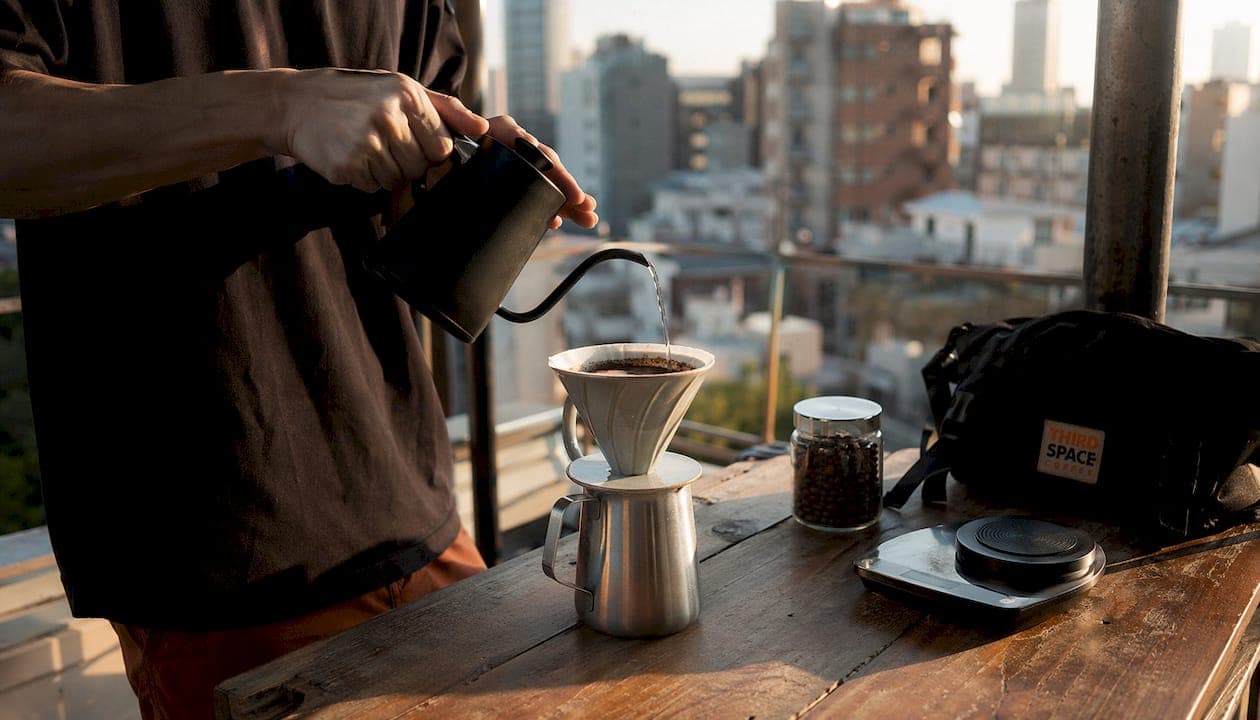
Pour over coffee is defined as a manual, gravity-fed brewing method where you pour hot water by hand over ground coffee held in a filter. The water passes through the grounds and drips into a vessel below, giving you direct control over extraction variables that automatic machines manage for you. Standard parameters include a 1:15 to 1:16 coffee-to-water ratio, water temperature between 195–205°F, and a total brew time of 3–4 minutes. That level of control produces a clean, flavor-forward cup that highlights the character of the bean itself. Thirdspacecoffee roasts its whole beans in-house specifically to reward methods like this one.
What is pour over coffee and how does it work?
Pour over brewing is the industry term for what many coffee drinkers call "hand-drip" or "manual drip" coffee. The method relies entirely on gravity and your technique, not pressure or automation. You control water temperature, pour speed, and the time water spends in contact with the grounds. Each of those variables shapes the final flavor in ways an automatic drip machine cannot replicate.
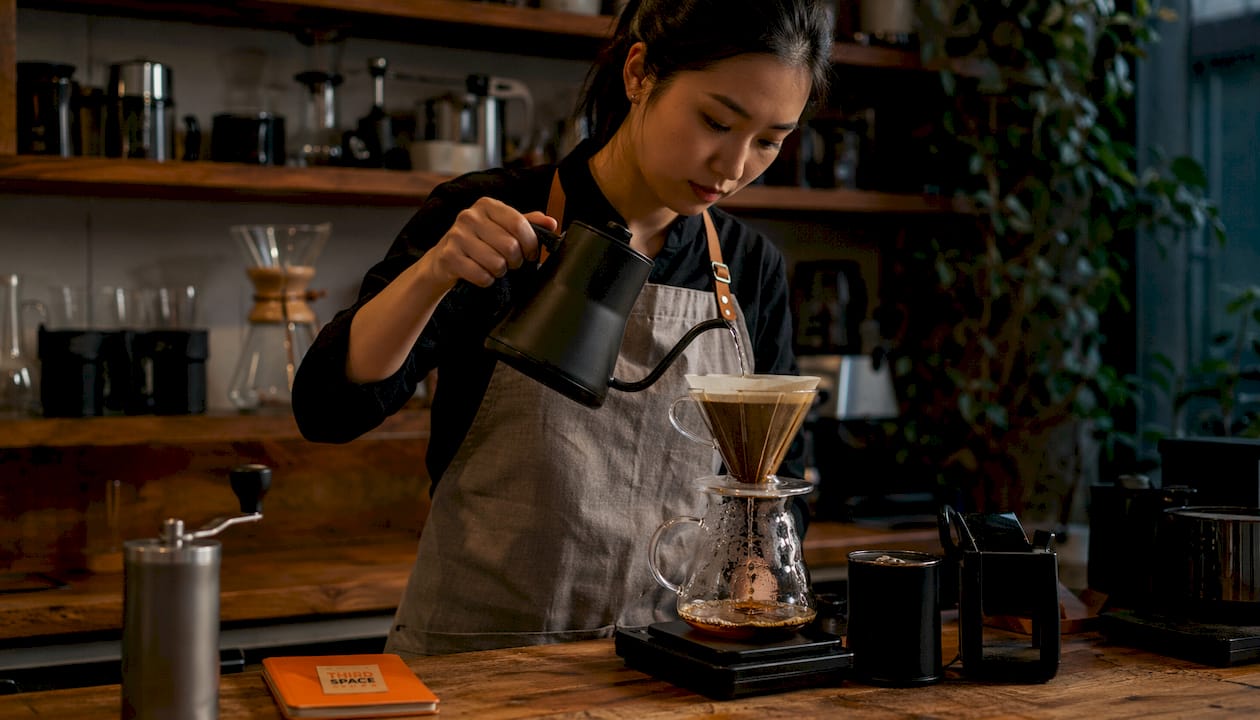
The sensory ritual of pour over also teaches you how coffee actually works. When you slow down and pour by hand, you notice how grind size changes flow rate, how water temperature shifts the taste, and how the bloom phase affects clarity. That hands-on feedback loop makes pour over one of the most educational brewing methods available to home brewers and enthusiasts alike.
How does the pour over brewing process work step by step?
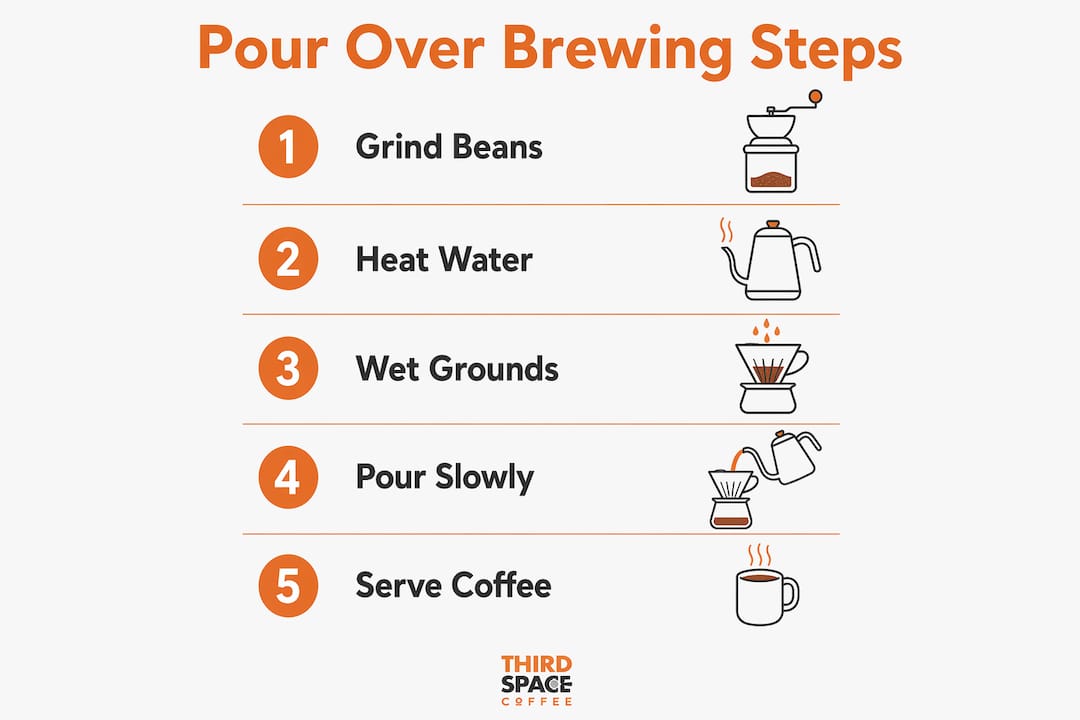
The process follows a clear sequence. Each step builds on the last, and skipping one changes the result in a measurable way.
- Heat your water to 195–205°F. A gooseneck kettle with a built-in thermometer gives you the most control over both temperature and pour direction.
- Grind your coffee to a medium-coarse consistency, similar to coarse sea salt. A burr grinder produces uniform particle size, which leads to even extraction.
- Rinse the paper filter with hot water before adding grounds. This removes any papery taste and preheats the dripper and vessel.
- Add your grounds and level the bed. A flat, even surface sets up the bloom phase correctly.
- Start the bloom. Pour water at twice the weight of your dry grounds, for example, 30g of water for 15g of coffee. Let it rest for 30–45 seconds to release trapped CO2 from the grounds. Skipping this step causes uneven extraction because gas bubbles block water from reaching the coffee evenly.
- Pour in slow, circular passes, working from the center outward and back. Keep the water level steady rather than flooding the dripper all at once.
- Finish and level the bed. After your final pour, gently swirl or shake the dripper to flatten the coffee bed. A flat bed prevents channeling, which is when water finds a path of least resistance and extracts unevenly.
Total brew time runs 3–4 minutes from first pour to last drip.
Pro Tip: Weigh your water and grounds every time, at least until your recipe feels automatic. A $15 kitchen scale removes the single biggest source of inconsistency in home pour over brewing.
What flavor profiles does pour over coffee produce?
Pour over coffee produces a clean, light-bodied cup with high clarity. The paper filter removes oils and sediment, which is what gives the cup a mouthfeel closer to tea than to a French press or espresso. That clarity is the method's defining characteristic.
Because the cup is so transparent, pour over highlights the specific origin notes of the bean. A washed Ethiopian coffee brewed this way might show clear jasmine and lemon. A Colombian bean might read as caramel and red apple. The terroir of the bean comes through without interference from oils or pressure-driven intensity. That is why specialty roasters favor this method for showcasing single-origin coffees.
Key sensory characteristics of pour over coffee:
- Clarity: No sediment, no cloudiness, clean finish
- Light to medium body: Noticeably lighter than French press or espresso
- Bright acidity: Origin-driven fruit and floral notes come forward
- Even extraction: Slow, controlled pours produce balanced sweetness without harsh bitterness
- Transparency to bean quality: Flaws in stale or average beans show up clearly
That last point matters. Pour over rewards fresh, high-quality beans and exposes the weaknesses of stale or low-grade ones. A bean that tastes acceptable in a French press can taste flat or thin in a pour over. The method is selective by design.
How does pour over coffee compare to other brewing methods?
Pour over sits in a distinct position among brewing methods. The comparison below covers the four most common approaches.
| Method | Process | Body | Flavor clarity | Control level |
|---|---|---|---|---|
| Pour over | Manual, gravity-fed | Light to medium | Very high | Full manual |
| Automatic drip | Automated, gravity-fed | Medium | Moderate | Limited |
| French press | Immersion, no filter | Full, heavy | Low (oils present) | Moderate |
| Espresso | Pressurized extraction | Very full | Concentrated, low | High (machine-dependent) |
Automatic drip machines use gravity like pour over does, but they fix water temperature, flow rate, and timing. You get consistency without control. Pour over gives you both, if you develop the technique.
French press uses immersion brewing, meaning the grounds sit in water for the full brew time. That produces a heavier body and more oils in the cup. The flavor is rich but less defined. Pour over produces the opposite: less body, more definition.
Espresso uses pressure, typically 9 bars, to force water through finely ground coffee in 25–30 seconds. The result is concentrated and intense. Pour over uses no pressure at all. The absence of pressure means you cannot replicate espresso's body or crema with this method, but you also avoid the bitterness that over-extracted espresso carries.
What tips and pitfalls should beginners know?
Most pour over mistakes come from one of four sources: grind inconsistency, wrong water temperature, uneven pouring, or poor bean quality. Fixing these in order gives you the fastest improvement.
- Grind consistency is the foundation. A burr grinder improves extraction more than any other equipment upgrade. Blade grinders chop unevenly, producing both fine powder and coarse chunks in the same batch. Those different particle sizes extract at different rates, which muddies the cup.
- Water temperature controls taste defects. Water above 205°F pulls bitter compounds. Water below 195°F under-extracts and produces a sour, weak cup. Temperature precision prevents both problems. A variable-temperature kettle is worth the investment.
- Pour speed and saturation matter. Pouring too fast floods the dripper and rushes extraction. Pouring too slow stalls it. Aim for a steady, thin stream that keeps the water level consistent above the grounds.
- Level your grounds before and after. Channeling is the most common cause of uneven extraction. A flat bed before the bloom and a gentle swirl after the final pour both help.
- Start with fresh, quality beans. The pour over method reveals bean flaws that other methods mask. Buy whole beans roasted within the past two to four weeks and grind just before brewing.
Equipment worth prioritizing, in order of impact: burr grinder, gooseneck kettle, kitchen scale, quality dripper. Most beginners over-invest in the dripper and under-invest in the grinder. Flip that priority and your cup quality will improve immediately.
Pro Tip: Set a timer the moment you start your bloom. Consistent bloom timing, 30–45 seconds every time, removes one more variable from your process and makes your results repeatable.
For a deeper look at home brewing skills, Thirdspacecoffee's brewing guide covers technique across multiple methods.
Key Takeaways
Pour over coffee produces its best results when fresh beans, consistent grind size, and controlled water temperature work together within a 3–4 minute brew.
| Point | Details |
|---|---|
| Standard parameters | Use a 1:15–1:16 ratio, 195–205°F water, and a 3–4 minute total brew time. |
| Bloom phase is non-negotiable | Pour twice the weight of your grounds and wait 30–45 seconds to release CO2 before continuing. |
| Grinder quality drives flavor | A burr grinder improves cup clarity more than any other equipment upgrade. |
| Bean quality shows immediately | Stale or low-grade beans taste flat in pour over; always use fresh, high-quality whole beans. |
| Flat grounds prevent channeling | Level the coffee bed before and after pouring to keep extraction even throughout the brew. |
Why pour over changed how I think about coffee
I used to think good coffee was about the machine. A better machine meant a better cup. Pour over proved that wrong in about a week.
The first time I brewed a pour over with a single-origin Ethiopian bean, the jasmine note in the cup stopped me mid-sip. I had drunk that bean before in an automatic drip and tasted nothing like that. The pour over method did not add anything. It just got out of the way. That distinction matters more than most brewing guides acknowledge.
What pour over actually teaches you is attention. You learn that coffee extraction is a sensory experience shaped by dozens of small decisions. The grind, the water, the pour, the timing. Each one is a variable you own. That ownership changes how you taste coffee, even when someone else brews it for you.
The ritualistic side of pour over is not a marketing angle. It is a real effect. Slowing down to brew by hand creates a kind of focus that automatic brewing never does. You notice more. You remember more. And when a cup turns out well, you know exactly why.
My honest recommendation: start simple. One dripper, one scale, one burr grinder, and the best fresh beans you can find. Do not chase equipment. Chase attention to process. The cup quality follows from that, not the other way around.
— Tanya
Thirdspacecoffee and your pour over practice
Thirdspacecoffee roasts its whole bean coffees in-house at its Colorado Springs location, which means the beans you buy are fresh, not sitting in a warehouse. Fresh beans make a measurable difference in pour over brewing, where staleness has nowhere to hide.

If you want to brew pour over at home with beans that are actually worth the effort, Thirdspacecoffee's whole bean coffee selection is the right starting point. Each roast is crafted to highlight origin character, which is exactly what the pour over method rewards. Prefer to let someone else do the brewing? The specialty drinks menu at Thirdspacecoffee includes pour over prepared by people who take the process seriously. Stop in, order one, and taste what the method can do with the right beans behind it.
FAQ
What is pour over coffee in simple terms?
Pour over coffee is a manual brewing method where you pour hot water over ground coffee in a filter and let gravity pull it into a cup below. You control the water temperature, pour speed, and timing to shape the flavor.
How is pour over different from regular drip coffee?
Automatic drip machines fix all the variables for you, while pour over puts every variable in your hands. Pour over typically produces a cleaner, more nuanced cup because you can adjust each step to match the specific bean you are using.
What grind size is best for pour over?
A medium-coarse grind, similar to coarse sea salt, works best for most pour over recipes. Consistent particle size from a burr grinder matters more than the exact coarseness setting.
Why does the bloom phase matter?
The bloom releases CO2 trapped in freshly roasted coffee grounds. Skipping it causes gas bubbles to block water from extracting evenly, which produces a flat or uneven cup.
What beans work best for pour over coffee?
Fresh, high-quality single-origin beans produce the clearest results in pour over brewing. The method highlights bean origin characteristics and exposes flaws in stale or low-grade coffee, so bean quality directly determines cup quality.