
TL;DR:
- Terroir encompasses environmental factors like soil, altitude, and climate that shape coffee flavors. Scientific research confirms that terroir consistently influences both chemical composition and sensory profiles of coffee beans. Understanding and tasting terroir enhances appreciation, brewing, and communication about origin-specific coffees.
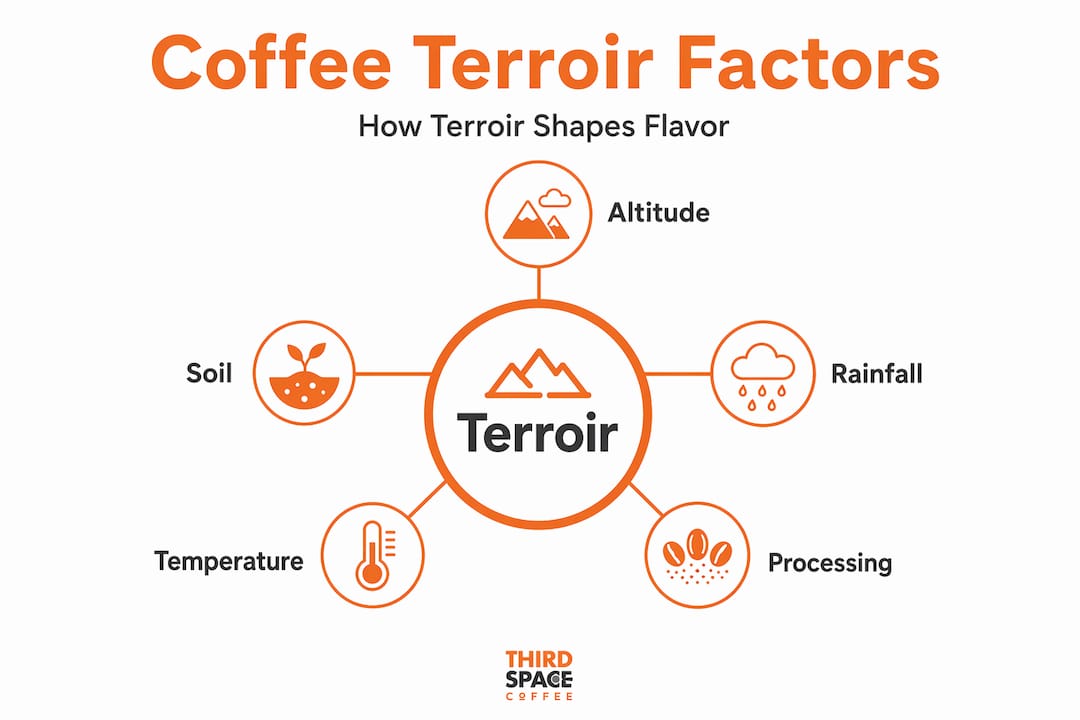
You pour a Ethiopian Yirgacheffe and get jasmine, bergamot, and a bright lemon finish. You brew a Sumatran natural and the cup is earthy, full-bodied, almost syrupy. Same species. Wildly different results. What is coffee terroir? It's the answer to that question. Terroir is the full set of environmental conditions, altitude, soil, rainfall, temperature, and surrounding ecosystem, that shape a coffee plant's growth and the flavors locked inside its beans. Understanding it doesn't just deepen your appreciation. It changes how you buy coffee, brew it, and talk about it.
Table of Contents
- Key takeaways
- What is coffee terroir, really
- The science behind terroir and flavor
- How processing and farming decisions affect terroir expression
- Applying terroir knowledge when you brew and taste
- My take on terroir as a framework, not a formula
- Taste what terroir really means at Thirdspacecoffee
- FAQ
Key takeaways
| Point | Details |
|---|---|
| Terroir goes beyond geography | It combines altitude, soil, rainfall, temperature, and microclimate into one flavor-shaping system. |
| Science validates origin differences | Research confirms terroir creates measurable differences in chemical compounds and sensory profiles. |
| Processing interacts with terroir | Washed, natural, and co-fermented methods can reveal or mask the flavors terroir creates. |
| Brew parameters unlock terroir | Adjusting water temperature and extraction time helps reveal acidity and aromatics tied to origin. |
| Traceability matters | Single-origin coffees with clear sourcing let you taste and verify terroir expression directly. |
What is coffee terroir, really
The word comes from wine. French vintners used "terroir" to explain why the same grape variety tasted completely different depending on where it was grown. Specialty coffee borrowed the concept, and for good reason. Terroir in coffee includes climate, altitude, soil, rainfall, and the surrounding ecosystem, all working together, not as isolated variables but as an interconnected system that influences every stage of plant development.
Here is what each factor actually does:
- Altitude slows the maturation of coffee cherries at higher elevations because temperatures are cooler. Slower maturation means the cherry spends more time developing sugars and complex aromatic compounds. Coffea arabica cup quality measurably improves above 1,500 meters due to these agroecological factors.
- Temperature and rainfall patterns determine how evenly cherries ripen across a harvest. Irregular rainfall can stress the plant and alter sugar concentration in ways that show up in the cup.
- Soil composition is more specific than most people realize. Higher soil organic matter correlates positively with cup quality by reducing bitterness compounds like caffeine and ferulic acid while improving the overall sensory profile.
- Surrounding vegetation creates shade, which regulates temperature and moisture. Shade-grown coffee in biodiverse ecosystems often shows more nuanced flavor development than sun-grown crops in monoculture settings.
- Microclimates matter even within the same region. Two farms at identical altitude can produce noticeably different cups if one sits in a valley with morning fog and the other faces a dry ridgeline.
Pro Tip: When you read "grown at 1,800m" on a coffee bag, that elevation tells you to expect higher density beans, brighter acidity, and more aromatic complexity. Use it as your first clue to what the cup might offer before you even open the bag.
The science behind terroir and flavor
Terroir is not a marketing term. Research confirms that origin-related factors shape coffee's chemical composition in ways that directly influence sensory experience. Different growing regions produce distinct volatile compound profiles. Those compounds are what you smell and taste in the cup.
Here is a quick comparison of how altitude and soil interact to produce different terroir characteristics:
| Terroir factor | Effect on the bean | Resulting cup attribute |
|---|---|---|
| High altitude (above 1,500m) | Denser bean structure, slower sugar development | Bright acidity, floral and fruit notes |
| Rich organic soil | Lower bitterness compounds, higher aromatic precursors | Cleaner sweetness, more complexity |
| Consistent cool temperatures | Extended maturation period | Layered flavor development |
| Microclimate variation | Differences in moisture and sun exposure | Cup variation even within same farm |
| Biodiverse shade canopy | Regulated heat stress on cherry | More nuanced, less one-dimensional flavor |
What the research also reveals is that terroir is not a single dial you turn up or down. It is a complex interplay. A study comparing regions in Brazil found that microclimate differences at similar altitudes produced noticeable taste variations, affecting both maturation speed and aromatic profile. Two farms a few miles apart can tell completely different stories in the cup.
Terroir also maps to measurable traceability. When terroir links to sensory differences, origin claims become quality-relevant facts rather than vague marketing language. For baristas and enthusiasts who want to understand coffee origin flavors with real depth, this matters enormously.
Pro Tip: The next time you compare two single-origin coffees, look for the altitude, region, and soil notes on the bag. Brewing them side by side with identical parameters is one of the fastest ways to actually feel what terroir does to a cup.
How processing and farming decisions affect terroir expression
Terroir creates potential. What happens after the cherry is picked determines how much of that potential reaches your cup.
Processing is where things get genuinely complicated:
- Washed processing strips the cherry's fruit layer before drying, which tends to produce a cleaner cup where terroir characteristics, especially acidity and floral notes, come through clearly. If you want to taste origin, washed coffees usually show it most directly.
- Natural processing dries the whole cherry, letting the fruit ferment around the bean. This adds body and sweetness but layers fruit-forward flavors on top of terroir. It can be spectacular or it can obscure the origin's more subtle qualities.
- Co-fermentation is the most controversial method right now. Producers inoculate coffee with specific yeasts or add fruit during fermentation to create distinctive flavor profiles. Co-fermented coffees may mask terroir, raising real concerns about authenticity and trust in clean terroir expression. Some specialty consumers actively distrust them for this reason.
- Farming practices add another layer. Organic farming, intentional shade tree selection, and careful cherry picking all preserve the terroir expression that processing will later either enhance or suppress.
Traceability is the thread that ties this together. When you know the farm, the processing method, and the altitude, you can start separating what terroir contributed from what the producer layered on afterward. Without that information, you are tasting a black box.
For baristas, this is where understanding coffee profiles becomes a practical skill. You are not just looking for flavor. You are learning to read a coffee's history in the cup.
Applying terroir knowledge when you brew and taste
Knowing what terroir is gets interesting when you start using that knowledge at the brew station. Here is how to make it practical:
- Start with single-origin coffees that have clear sourcing information. Region, farm, altitude, and processing method all give you context. A Whole Bean Coffee with transparent origin details is your best starting point for tasting terroir with intention.
- Adjust water temperature based on the terroir profile. High-altitude, high-acidity coffees often respond well to slightly lower brew temperatures, around 195°F rather than 205°F. Baristas skilled in tasting terroir adjust parameters like temperature and extraction time specifically to reveal acidity and aromatic compounds tied to origin.
- Slow down your extraction slightly for delicate terroir. A longer bloom time on a pour-over, or a slightly coarser grind on an espresso, can give subtle aromatic compounds room to develop rather than rushing them through the extraction.
- Cup two coffees from the same country but different regions. Ethiopian coffees from Yirgacheffe versus Sidamo are a perfect example. Same country, same variety, but the microclimate differences produce distinct cups that make terroir tangible rather than theoretical.
- Read tasting notes critically. Notes like "stone fruit" and "jasmine" are not made up. They reflect the volatile compounds that developed in that specific terroir. When you taste what the notes describe, you are tasting terroir directly.
- Use terroir knowledge in customer conversations. If you work behind a bar, explaining why a specific coffee tastes the way it does makes the cup more memorable and builds real trust with guests. Cupping techniques are the formal framework for developing this skill quickly.
Pro Tip: When designing a coffee menu around terroir, choose coffees that contrast clearly across at least two variables, such as altitude and processing method. The contrast teaches guests to taste difference rather than just preference.
My take on terroir as a framework, not a formula
I have tasted enough coffee from enough origins to say this clearly: terroir is one of the most useful ideas in specialty coffee and also one of the most misused. People treat it like a guarantee. If the altitude is right and the soil checks out, the cup will be extraordinary. That is not how it works.
What I have learned is that terroir is better understood as a tendency, not a recipe. It sets the boundaries of what a coffee can express. A high-altitude Ethiopian washed coffee will almost certainly lean toward bright acidity and floral aromatics. But whether it is good depends on the farmer's practices, the harvest timing, the processing execution, and yes, how you brew it.
The most surprising thing I encounter in tasting is how much variation exists within a single terroir. Two lots from farms a kilometer apart in the same valley can taste like they came from different countries. That is not a problem with terroir as a concept. It is actually proof of how localized and sensitive the system really is.
My bigger concern is when co-ferments and heavily processed coffees get labeled as terroir-expressive when the terroir has effectively been replaced by the processing. Some consumers distrust these coffees for exactly this reason. I think that distrust is fair. Terroir deserves transparency, not a costume.
If you want to get better at tasting terroir, do not wait until you have the perfect coffee. Start experimenting now. Brew two origins side by side. Adjust one variable. Pay attention. The framework rewards curiosity.
— Tanya
Taste what terroir really means at Thirdspacecoffee
Understanding terroir is one thing. Tasting it in a well-sourced, carefully roasted cup is something else entirely.

At Thirdspacecoffee in Colorado Springs, sourcing decisions start with origin. Every coffee in the lineup is roasted in-house with attention to preserving the flavor potential that terroir built into the bean. Whether you want to explore terroir-expressive whole beans for home brewing or experience origin-driven flavor in a crafted specialty drink, the menu is built around helping you taste the difference that origin makes. Stop in, ask questions, and let the coffee tell you where it came from.
FAQ
What does terroir mean in coffee?
Coffee terroir refers to the combination of environmental conditions, including altitude, soil, temperature, rainfall, and surrounding ecosystem, that influence how a coffee plant grows and what flavors develop in the bean.
How does altitude affect coffee flavor?
Higher altitudes produce cooler temperatures that slow cherry maturation, resulting in denser beans with brighter acidity and more complex aromatic compounds, all recognized markers of quality in specialty coffee.
Can processing methods change terroir expression?
Yes. Washed processing tends to highlight terroir characteristics clearly, while natural and co-fermented methods can add or overlay flavors that compete with the origin's natural expression.
How can I taste terroir at home?
Brew single-origin coffees with clear sourcing details side by side using identical parameters, then adjust temperature or extraction time to see how each coffee responds. This is the most direct way to experience origin flavor differences in your own kitchen.
Is terroir just a marketing term for coffee?
No. Research confirms that terroir maps to measurable chemical and sensory differences between origins, making it a scientifically grounded concept rather than a branding device.