
TL;DR:
- Whole bean coffee preserves over 800 aromatic compounds and lipids until grinding, maintaining flavor and freshness. Grinding fresh beans enhances aroma, allows proper grind size for brewing, and prevents rapid oxidation; storage in airtight, cool, dark containers extends freshness up to six weeks. Using a burr grinder and selecting beans roasted within 2–4 weeks maximizes flavor, while freezing only works if beans are vacuum-sealed and untouched after thawing.
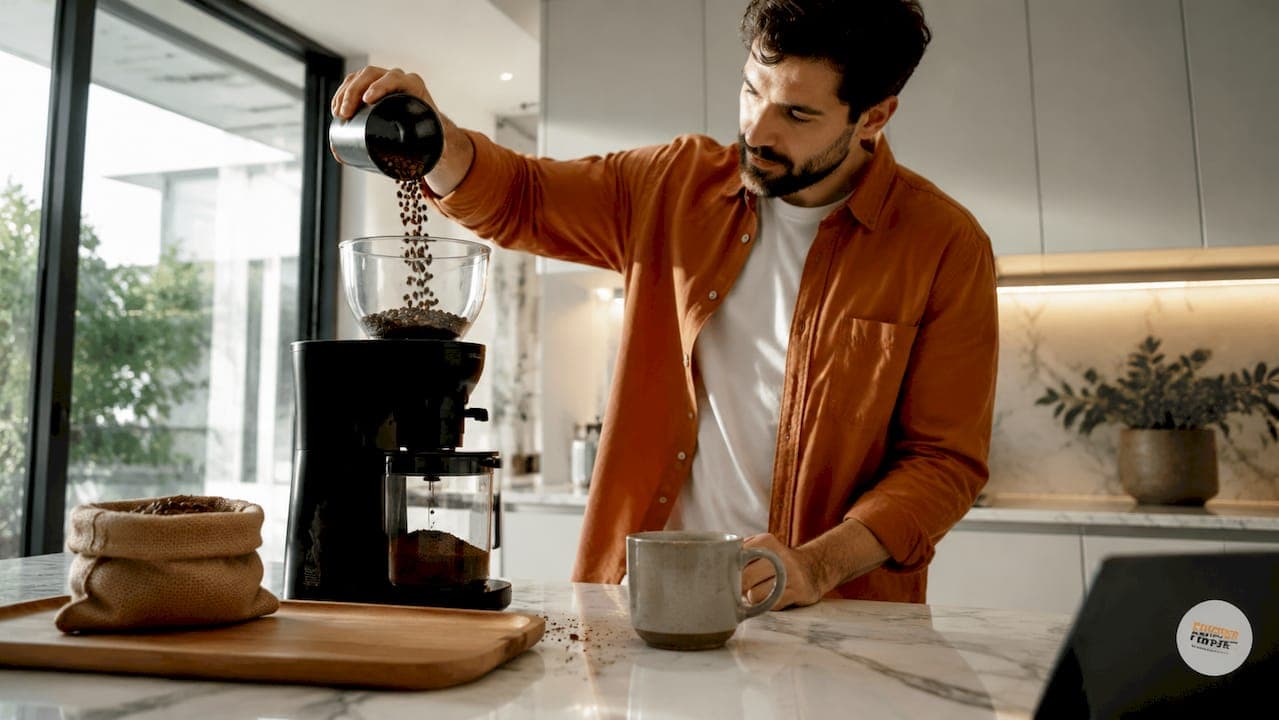
Whole bean coffee is the superior choice for flavor and freshness because it protects over 800 volatile organic compounds and essential lipids inside the bean's intact structure until the moment you grind it. Pre-ground coffee begins losing those aromatic compounds within 15–30 minutes of grinding. The intact bean acts as a natural seal, slowing oxidation and preserving the nuanced flavors that define a great cup. Understanding why whole bean coffee is better starts with what happens the second a bean is ground, and why that timing matters more than most coffee drinkers realize.
How does whole bean coffee preserve freshness and flavor better?
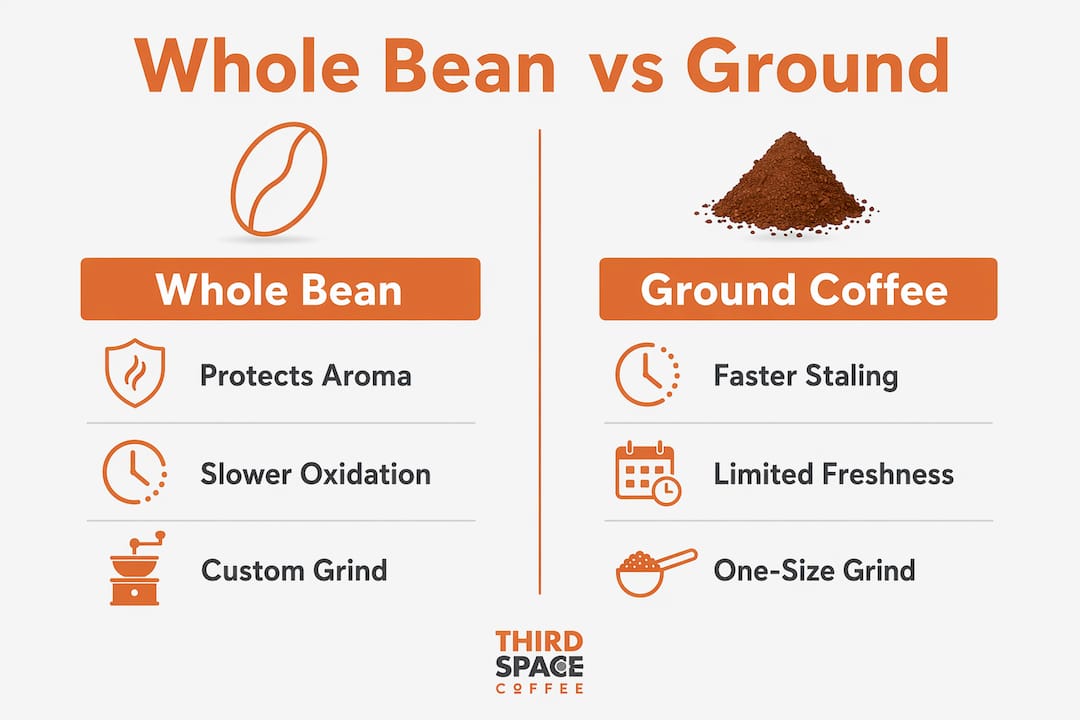
Ground coffee oxidizes at 7 times the rate of whole beans. That single fact explains most of the flavor gap between a bag of pre-ground coffee and beans you grind yourself right before brewing.
Grinding shatters the bean and exponentially increases its surface area. Every new surface is exposed to oxygen, moisture, and light, all of which degrade flavor compounds fast. The volatile organic compounds responsible for floral, fruity, and chocolatey notes are the first to go. Essential lipids that carry body and mouthfeel follow shortly after.
Whole beans also benefit from a natural protective process after roasting. Beans release CO₂ for 7–14 days post-roast, and that gas acts as a built-in antioxidant shield when the bean remains whole. Once ground, that protection disappears immediately.
Whole beans maintain optimal freshness for 4–6 weeks when stored properly. Pre-ground coffee reaches quality degradation within 24 hours.
Packaging plays a role too. Nitrogen-flushed valve bags delay staling by 3 times compared to standard ziplock storage. That is why specialty roasters invest in one-way valve bags. The valve lets CO₂ escape without letting oxygen in, buying the beans more time on the shelf without sacrificing freshness.
Dark roasts face the steepest freshness challenge. Dark roast beans are more porous than light or medium roasts, which means they oxidize faster and benefit the most from being kept whole until brewing. If you drink dark roast coffee, grinding fresh is not optional. It is the difference between a rich, bold cup and a flat, stale one.
What practical benefits do coffee lovers get from grinding fresh?
Fresh grinding gives you control that pre-ground coffee simply cannot offer. Grind size is one of the most powerful variables in brewing, and it changes depending on your method.
Here is how grind size maps to common brew methods:
- Coarse grind: French press and cold brew. A coarse grind slows extraction during long steep times, preventing bitterness.
- Medium grind: Drip coffee makers. This is the standard setting most home grinders default to.
- Medium-fine grind: Pour-over methods like Chemex or V60. Slightly finer than drip to compensate for faster water flow.
- Fine grind: Espresso. A fine, consistent grind is critical for the pressure-based extraction espresso requires.
- Extra-fine grind: AeroPress with short brew times. Finer grinds work when contact time is brief.
Pre-ground coffee is sold at one grind size, usually medium. That means it is a compromise for every brew method except the one it was calibrated for. Whole beans let you dial in exactly what your method needs.
The aroma difference is also immediate and unmistakable. Grinding fresh releases a burst of volatile compounds that pre-ground coffee has already lost. That smell is not just pleasant. It signals that the aromatic compounds are still present and will end up in your cup.
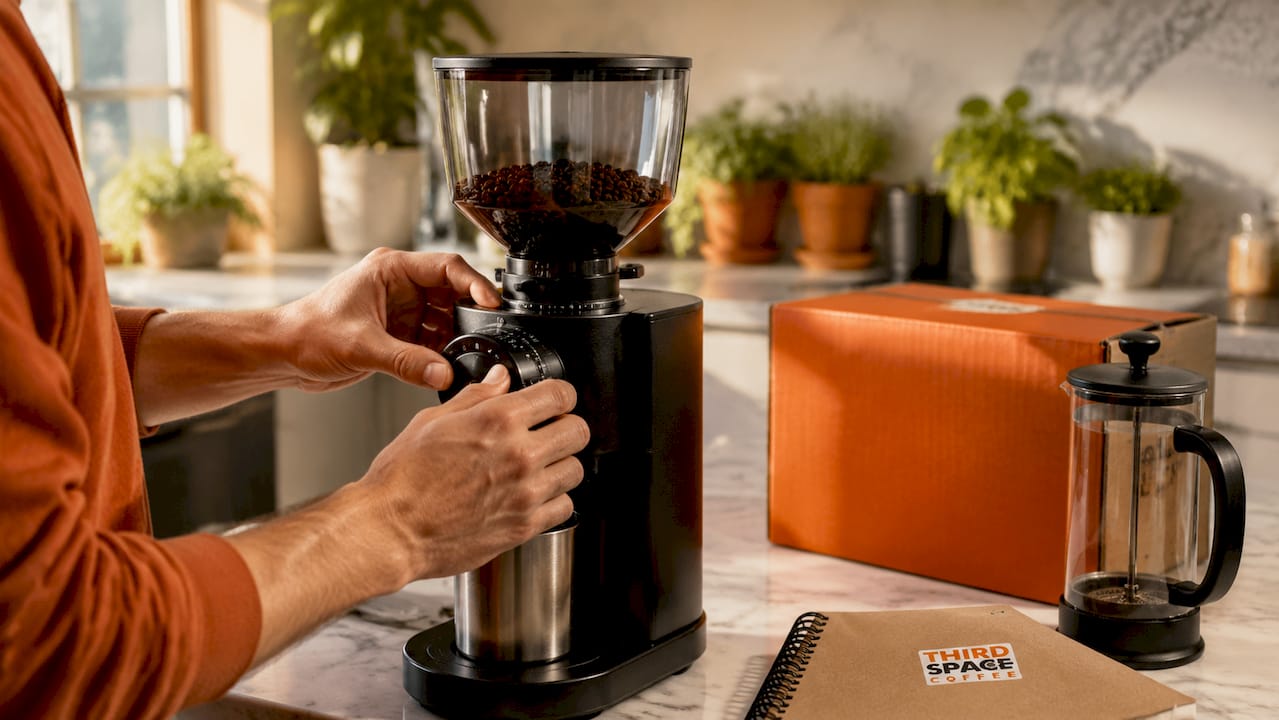
Pro Tip: Grind only what you need for each brew session. Grinding in bulk and storing ground coffee, even for a day, defeats the purpose of buying whole beans.
The grinder you use matters as much as the beans. Burr grinders produce uniform particle sizes critical for even extraction. Blade grinders chop beans unevenly, creating a mix of fine dust and large chunks. That inconsistency causes simultaneous over-extraction and under-extraction in the same brew, producing a cup that tastes both bitter and sour. A quality burr grinder, even an entry-level model like the Baratza Encore, removes that variable entirely.
Single-origin coffees benefit the most from fresh grinding. Their terroir-driven flavor profiles, the specific fruit, floral, or earthy notes tied to a region, are delicate. Those notes are the first casualties of oxidation. Grinding fresh is the only way to taste what the roaster intended.
How should you select and store whole bean coffee?
Selecting the right whole beans starts with one rule: ignore the "best by" date. Focus on the roast date instead.
Experts recommend beans roasted within the last 2–4 weeks for peak flavor. A bag with a "best by" date 12 months out tells you nothing useful. A bag stamped "roasted on october 15" tells you exactly where you stand.
Follow these steps when buying and storing whole beans:
- Check the roast date. Buy beans roasted within the past two to four weeks.
- Choose based on your brew method. Light roasts perform best in pour-over; bold natural-process beans suit French press and immersion brewers.
- Store in an airtight container. Keep beans in a ceramic or opaque container with a tight seal. Avoid clear glass jars on countertops.
- Keep them cool and dark. A cabinet away from the stove is ideal. Heat and light accelerate staling.
- Avoid the refrigerator. The fridge introduces moisture and absorbs odors from other foods.
For longer-term storage, freezing works but only under strict conditions. Freezing preserves flavor only when beans are vacuum-sealed airtight. Any moisture exposure causes hydrolytic rancidity, which ruins the beans faster than simply leaving them at room temperature. Freeze in single-use portions and never refreeze after thawing.
| Storage method | Freshness window | Risk level |
|---|---|---|
| Airtight container, cool/dark | 4–6 weeks | Low |
| Nitrogen-flushed valve bag | Extended shelf life | Low |
| Open bag on counter | 3–5 days | High |
| Refrigerator | 1–2 weeks | Medium to high |
| Vacuum-sealed freezer bag | Several months | Low if done correctly |
Pro Tip: Buy smaller bags more frequently rather than one large bag every few months. Freshness degrades with time, and a smaller, fresher bag always beats a larger, older one.
Also, give freshly roasted beans a short rest before brewing. Beans need 3–7 days post-roast to degas CO₂. Brewing too soon after roasting causes uneven extraction because excess gas disrupts water contact with the grounds. You can find more coffee freshness guidance to help you protect flavor at every stage.
When does pre-ground coffee make more sense?
Whole bean coffee is the better choice for flavor, but it is not the right choice for every situation. Pre-ground coffee has legitimate advantages in specific contexts.
- No burr grinder available. Whole beans only deliver their advantage with a reliable burr grinder. A blade grinder can actually produce worse results than a quality pre-ground coffee because of the inconsistent particle sizes it creates.
- Travel or camping. Carrying whole beans and a grinder is impractical. A well-sealed bag of quality pre-ground coffee is a reasonable trade-off.
- Convenience-first mornings. If your routine does not allow for grinding, a high-quality pre-ground from a reputable roaster beats a poorly ground whole bean every time.
- Brew methods with low grind sensitivity. Cold brew and French press tolerate grind inconsistency better than espresso or pour-over. Pre-ground coarse coffee can still produce a decent cold brew.
- Gifting or sharing. Not everyone you share coffee with owns a grinder. Pre-ground removes the barrier.
The honest truth is that mismatched grind size causes more bad coffee than stale beans. A coffee drinker using a blade grinder on whole beans and brewing espresso will get a worse result than someone using a quality pre-ground espresso blend. Equipment and skill matter as much as bean form. Whole beans reward the coffee drinker who is willing to invest in the right tools and learn how to use them.
Key Takeaways
Whole bean coffee delivers better flavor than pre-ground coffee because it protects aromatic compounds from oxidation until the moment of grinding, and that advantage is fully realized only with a quality burr grinder and proper storage.
| Point | Details |
|---|---|
| Freshness window | Whole beans stay fresh for 4–6 weeks; ground coffee degrades within 24 hours. |
| Grind customization | Whole beans let you match grind size to your brew method for better extraction. |
| Grinder quality matters | A burr grinder is required to unlock whole bean coffee's flavor advantage. |
| Roast date over best-by | Buy beans roasted within the past 2–4 weeks for peak flavor. |
| Storage discipline | Airtight containers in cool, dark places preserve whole bean freshness longest. |
What I have learned from years of brewing whole bean coffee
The single biggest mistake I see coffee drinkers make is buying excellent whole beans and then grinding them with a blade grinder. The beans are not the problem. The grinder is. A $40 burr grinder from Baratza or OXO Brew will do more for your cup than spending twice as much on premium beans while keeping a blade grinder on the counter.
The second thing I have learned is patience with freshly roasted coffee. When Thirdspacecoffee roasts beans in-house, those beans need a few days to rest. Brewing on day one produces a gassy, uneven cup. Brewing on day four or five, after the CO₂ has settled, produces something noticeably cleaner and more balanced. Most coffee drinkers never wait. The ones who do taste the difference immediately.
Storage is where most people quietly lose freshness without realizing it. Leaving beans in the original bag, folded over and clipped, exposes them to oxygen every time you open it. Moving them to a proper airtight container on day one is a small habit that pays off every morning for weeks.
My honest recommendation: start with a good burr grinder, buy beans with a visible roast date, and store them properly. Those three changes will improve your coffee more than any single origin or exotic processing method. You can also sharpen your technique with this home brewing skills guide to get the most from every bag you buy.
— Tanya
Fresh whole bean coffee, roasted in Colorado Springs
Thirdspacecoffee roasts its whole bean coffee in-house in Colorado Springs, which means you know exactly when those beans were roasted. No guessing about roast dates. No mystery supply chains.

If you are ready to taste the difference that fresh beans make, Thirdspacecoffee's whole bean coffee selection is available for online order with convenient front-of-store pickup. For those who want to experience what freshly ground whole beans taste like in a finished drink, the specialty drinks menu showcases exactly what properly sourced, freshly roasted beans can produce in skilled hands. Stop by, order online, or follow Thirdspacecoffee on Instagram to see what is roasting this week.
FAQ
Why does whole bean coffee taste better than pre-ground?
Whole beans protect over 800 volatile aromatic compounds from oxidation until you grind them. Pre-ground coffee loses those compounds within 15–30 minutes of grinding, which flattens flavor before it ever reaches your cup.
How long do whole beans stay fresh after opening?
Whole beans stored in an airtight container in a cool, dark place stay fresh for 4–6 weeks. Ground coffee degrades significantly within 24 hours of grinding.
Do I need a special grinder for whole bean coffee?
A burr grinder is the right tool for whole bean coffee. Blade grinders produce uneven particle sizes that cause over-extraction and under-extraction in the same brew, which creates bitter and sour flavors simultaneously.
What should I look for when buying whole bean coffee?
Look for a visible roast date and buy beans roasted within the past 2–4 weeks. Ignore "best by" dates, which are not a reliable indicator of freshness for specialty coffee.
Can I freeze whole bean coffee to keep it fresh?
Freezing works only if beans are vacuum-sealed airtight before going into the freezer. Any moisture exposure during freezing causes rancidity. Freeze in single-use portions and never refreeze beans after thawing.