
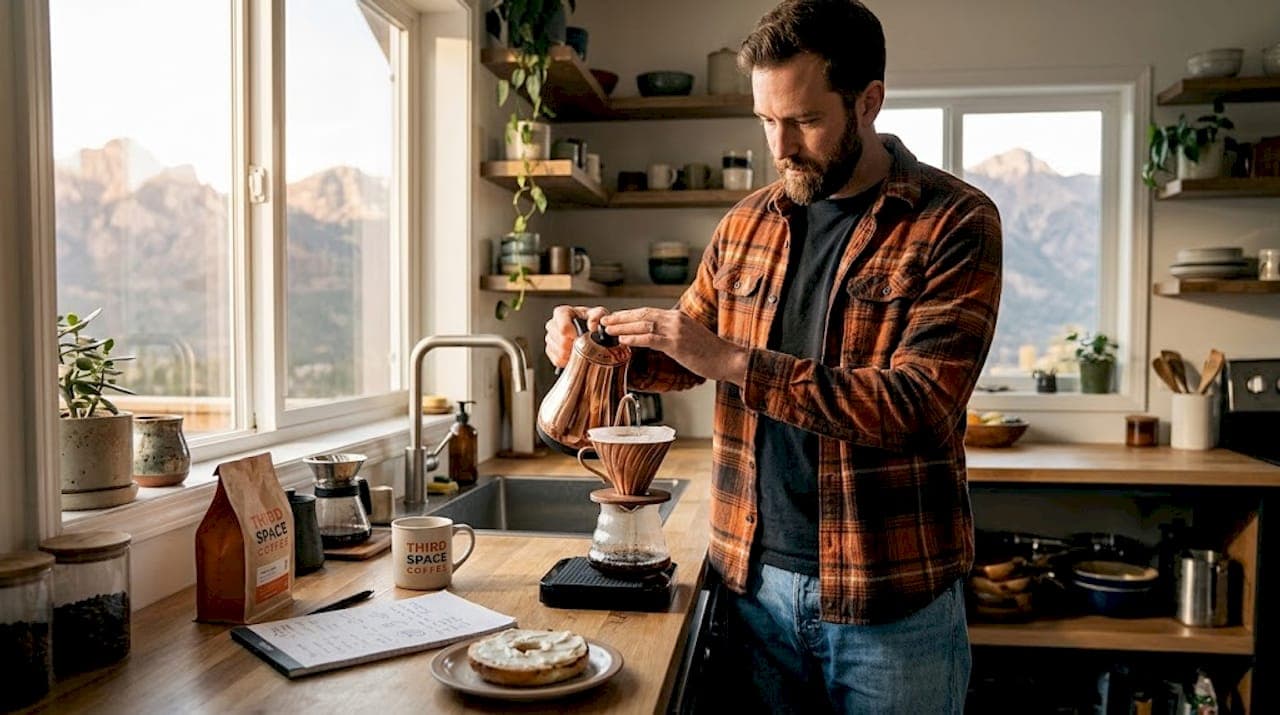
TL;DR:
- Altitude affects brewing temperature and extraction, requiring adjustments like finer grind and longer steep times.
- Consistent flavor depends more on water movement and extraction kinetics than on following rigid recipes.
- Proper tools, fresh beans, and understanding local water chemistry are crucial for cafe-quality coffee at home.
Pulling a perfect cup at home feels like chasing a moving target. One morning it's sharp and bright, the next it's flat and bitter, and you can't figure out what changed. For coffee enthusiasts in Colorado Springs, there's an extra layer of complexity: our altitude sits around 6,035 feet, which means water boils at roughly 202°F instead of 212°F, and that single fact reshapes every brewing decision you make. This guide walks you through the right tools, precise techniques, common mistakes, and sensory skills you need to brew café-quality coffee consistently, right in your own kitchen.
Table of Contents
- Essential tools and ingredients for great coffee
- Step-by-step brewing techniques for popular methods
- Troubleshooting common brewing mistakes
- Sensory evaluation and mastering your brew
- What most coffee guides overlook: extraction science is the key
- Discover specialty coffee and resources in Colorado Springs
- Frequently asked questions
Key Takeaways
| Point | Details |
|---|---|
| Precision matters | Paying attention to brewing technique and extraction mechanics dramatically elevates home brew quality. |
| Local adjustments | Altitude and water quality in Colorado Springs require unique brewing tweaks for best results. |
| Taste as guide | Use sensory evaluation tools to continually refine and improve your coffee making. |
| Troubleshoot smart | Common mistakes can be fixed with science-backed adjustments to grind, water, and brewing time. |
| Leverage local resources | Sourcing specialty beans and equipment locally enhances your coffee journey and community involvement. |
Essential tools and ingredients for great coffee
Before you touch a single bean, you need the right setup. Research confirms that brewing technique significantly changes the physicochemical and sensory profile of coffee, which means your equipment choices are not just preferences. They are variables that directly shape what lands in your cup.
Core equipment every home brewer needs:
- A burr grinder (not a blade grinder — more on this below)
- A digital kitchen scale accurate to 0.1 grams
- A gooseneck kettle with a built-in thermometer
- Your brewer of choice: French press, pour-over dripper, or automatic drip machine
- A timer
- Filtered water
Water quality deserves special attention in Colorado Springs. Our municipal water is moderately hard, which can mute delicate floral and fruit notes in lighter roasts. Using a simple carbon filter pitcher makes a noticeable difference. When choosing coffee blends that suit your palate, keep in mind that your water chemistry will interact with the bean's natural acidity and sweetness.
Understanding coffee origins also helps you predict how a bean will behave under your local conditions. Ethiopian naturals, for example, carry intense fruit aromatics that can become muted if your water is too mineral-heavy.
| Brewing tool | Grind size | Brew time | Flavor profile |
|---|---|---|---|
| French press | Coarse | 4 minutes | Full body, rich, oily |
| Pour-over (V60) | Medium-fine | 2.5 to 3.5 minutes | Clean, bright, complex |
| Automatic drip | Medium | 5 to 6 minutes | Balanced, approachable |
| AeroPress | Medium-fine | 1.5 to 2.5 minutes | Concentrated, versatile |
Pro Tip: Invest in a quality burr grinder before upgrading any other piece of equipment. A consistent grind size is the single biggest lever you have for flavor control. Blade grinders chop beans unevenly, creating both fine powder and large chunks in the same batch, which leads to simultaneous over-extraction and under-extraction. If you're unsure where to start, check out these industry coffee terms to get comfortable with the vocabulary before shopping.
Clean your grinder every two weeks by running a small amount of uncooked rice through it or using a dedicated grinder cleaning tablet. Old coffee oils go rancid quickly and will contaminate every future brew.
Step-by-step brewing techniques for popular methods
Now that you have the essentials, let's break brewing down method by method so you can confidently create your ideal cup. Water quality, temperature, pressure, and extraction time all shape extraction and sensory outcomes, and in Colorado Springs, you need to actively manage each one.
French press (serves 2):
- Heat filtered water to 200°F (our altitude already gets you close to this naturally).
- Coarsely grind 30 grams of fresh beans.
- Add grounds to the press and pour 500 grams of water in a slow, even spiral.
- Place the lid on loosely and steep for exactly 4 minutes.
- Press the plunger down slowly and pour immediately to stop extraction.
Pour-over (single cup):
- Heat water to 200 to 202°F.
- Grind 15 grams of beans to a medium-fine consistency, similar to table salt.
- Rinse your paper filter with hot water to remove papery taste and preheat the vessel.
- Add grounds and pour 30 grams of water first for a 30-second bloom. This releases CO2 and primes the coffee bed for even extraction.
- Pour the remaining 220 grams of water in slow, concentric circles over 2 to 3 minutes.
- Total brew time should land between 2.5 and 3.5 minutes.
Automatic drip:
- Use a 1:15 ratio (1 gram of coffee per 15 grams of water).
- Grind to medium consistency, similar to coarse sand.
- Use filtered water and ensure your machine heats to at least 195°F. Many budget drip machines fall short of this, especially at altitude.
- Run a cleaning cycle monthly with white vinegar to prevent mineral buildup.
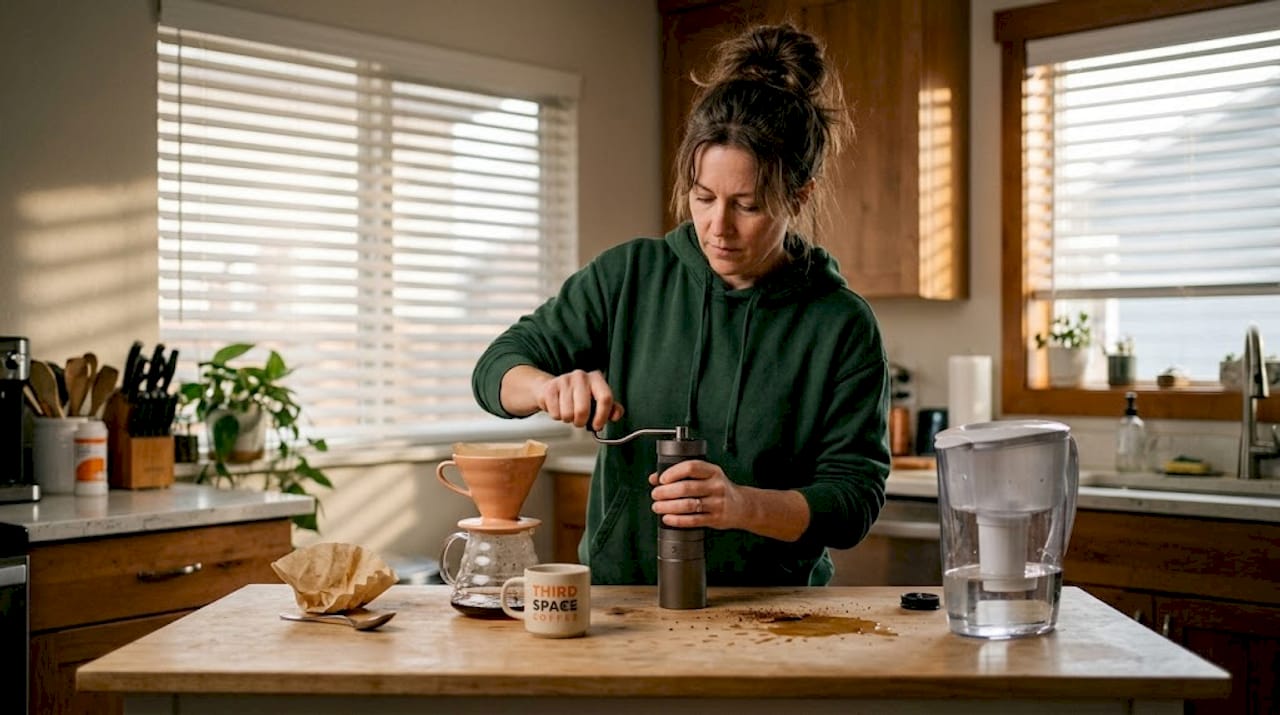
Extraction kinetics depend on how water moves through the coffee bed, which means grind uniformity and pour technique are not just stylistic choices. They are engineering decisions.
| Method | Coffee:water ratio | Ideal water temp | Total brew time |
|---|---|---|---|
| French press | 1:16 | 200°F | 4 minutes |
| Pour-over | 1:15 | 200 to 202°F | 2.5 to 3.5 minutes |
| Automatic drip | 1:15 | 195 to 205°F | 5 to 6 minutes |
| AeroPress | 1:12 | 185 to 205°F | 1.5 to 2.5 minutes |
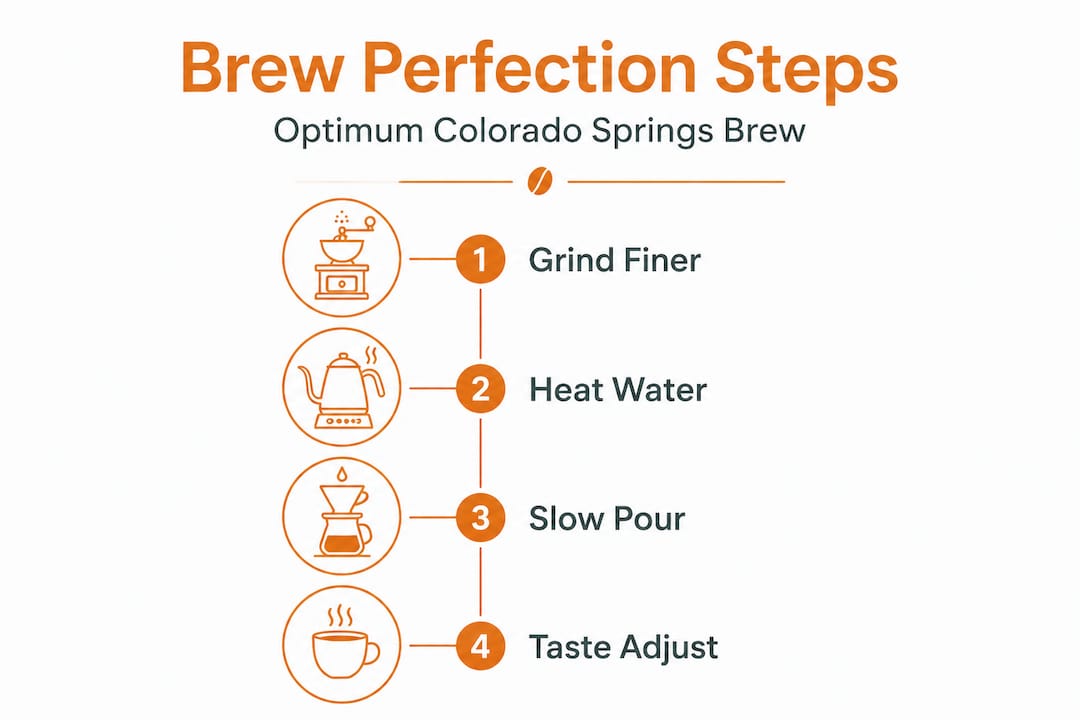
Pro Tip: At 6,000 feet, go one click finer on your grinder compared to sea-level recipes. Because water boils lower here, extraction happens more slowly. A slightly finer grind compensates by increasing the surface area in contact with water, pulling flavor compounds more efficiently.
Pairing your technique with the right roast level matters too. If you're experimenting with coffee roasting at home, lighter roasts need more precise temperature control because their dense cell structure resists extraction. Darker roasts are more forgiving but can turn muddy if you over-extract. Use your coffee tasting tips knowledge to evaluate each batch and adjust accordingly.
Supporting local roasters in Colorado Springs also means getting fresher beans, which extract more predictably than beans that have been sitting in a warehouse for weeks.
Troubleshooting common brewing mistakes
As you experiment with different techniques, you're bound to hit a snag. Let's demystify the most common issues and how to overcome them.
Extraction kinetics can be experimentally studied and quantitatively modeled, which means the problems you're tasting have measurable, fixable causes. You're not guessing. You're diagnosing.
"The flavor in your cup is a direct record of how water moved through your coffee bed. Every off-note is a clue pointing back to a specific variable you can control."
Common mistakes and how to fix them:
- Bitter coffee: Over-extraction caused by grind too fine, water too hot, or brew time too long. Coarsen your grind by one or two clicks, lower water temperature by 2 to 3 degrees, or shorten steep time.
- Sour or sharp coffee: Under-extraction caused by grind too coarse, water too cool, or brew time too short. Go finer, increase water temperature, or extend your steep time.
- Flat, lifeless coffee: Usually stale beans or water that's too soft. Buy fresh beans (roasted within the last two to four weeks) and try water with slightly more mineral content.
- Inconsistent results day to day: Likely a grinder issue. Blade grinders are the main culprit. A burr grinder produces a uniform particle size every time.
- Muddy or gritty texture in pour-over: Filter not rinsed, or grind too coarse for the paper. Rinse filters thoroughly before use.
- Weak, watery coffee: Ratio is off. Increase your coffee dose. Most people start with too little coffee and compensate by brewing longer, which just adds bitterness without adding body.
Altitude adds a specific wrinkle. Because water here boils at a lower temperature, under-extraction is your default enemy. If you're tasting sourness or brightness that feels harsh rather than pleasant, your water simply isn't hot enough to pull the sweeter, more complex flavor compounds from the bean. Use a thermometer and target 200 to 202°F deliberately.
Pro Tip: If you don't own a thermometer yet, bring water to a full boil and let it sit for 20 to 30 seconds before pouring. At our altitude, that brings you very close to the 200°F sweet spot without any guesswork.
Refining your palate alongside your technique helps you diagnose problems faster. The coffee tasting tips in our blog give you a structured vocabulary for what you're tasting, which makes troubleshooting much more efficient.
Sensory evaluation and mastering your brew
Once you've ironed out the mistakes, elevate your coffee game by assessing each brew for quality and flavor profile. Tasting with intention transforms brewing from a routine into a practice.
Brewing method alters acidity, body, and crema stability, which means switching from a French press to a pour-over with the same beans will produce a fundamentally different sensory experience. Neither is wrong. Both are intentional.
Key sensory markers to evaluate:
- Aroma: Smell the dry grounds before brewing and the wet grounds after. You should detect distinct notes like fruit, chocolate, nuts, or florals.
- Acidity: A pleasant brightness that lifts the cup. Harsh sharpness is a sign of under-extraction.
- Body: The weight and texture of the coffee on your tongue. French press produces heavier body; pour-over produces lighter, cleaner body.
- Sweetness: A well-extracted coffee should have natural sweetness without any added sugar.
- Finish: What lingers after you swallow. A long, clean finish indicates quality beans and good extraction.
How to evaluate your brew systematically:
- Smell the dry grounds and note what you detect.
- Brew your coffee and smell it immediately after brewing.
- Let it cool slightly to around 140°F before tasting. Scalding hot coffee numbs your palate.
- Take a small sip and let it coat your entire tongue before swallowing.
- Note the acidity, body, and sweetness separately, then assess the overall finish.
- Compare your notes to your previous brew and identify one variable to change.
Pro Tip: Keep a tasting journal. Write down your grind setting, dose, water temperature, brew time, and sensory notes for every brew. After two weeks, patterns emerge that tell you exactly which variables produce your best results. It sounds obsessive, but it's the fastest path to consistency.
The coffee tasting tips we've put together for Colorado Springs enthusiasts walk you through a structured evaluation process that mirrors what professional cuppers use, adapted for home use.
What most coffee guides overlook: extraction science is the key
Most brewing guides hand you a recipe and send you on your way. Follow the ratio, hit the temperature, and you should be fine. But that approach misses the deeper truth: the recipe is just a starting point. What actually determines your cup quality is how water physically moves through your coffee bed.
Extraction kinetics depend on water movement through the coffee bed, and that movement is shaped by grind distribution, bed depth, pour rate, and even the shape of your dripper. Two people using identical recipes can produce dramatically different cups because their pour technique creates different flow paths through the grounds.
This is why we believe the real skill in home brewing is not memorizing recipes. It's developing an intuitive feel for how water is moving through your coffee at any given moment. Is your pour-over draining too fast? Your grind is too coarse or your pour is too aggressive. Draining too slowly? Your grind is too fine or your filter is channeling.
For Colorado Springs brewers, this matters even more. Our lower boiling point means water arrives at the coffee bed slightly cooler than it would at sea level, which slows extraction. Combine that with water that runs on the harder side, and you have two local variables stacking against you before you've even started pouring. Understanding extraction mechanics, not just following a recipe, is what allows you to compensate intelligently.
We also think too many home brewers underestimate the value of home coffee roasting as a way to understand extraction. When you roast your own beans, you start to see how roast development affects cell structure, CO2 content, and solubility. That knowledge feeds directly back into your brewing decisions.
Stop chasing the perfect recipe. Start understanding the physics of your pour.
Discover specialty coffee and resources in Colorado Springs
Ready to take your new skills further? Local resources can supply the beans, tools, and community for your journey.

At Third Space Coffee, we roast our whole bean coffee in-house right here in Colorado Springs, so you're always working with fresh, traceable beans that behave predictably under the techniques you've been building. Our whole bean coffee selection gives you a range of origins and roast profiles to experiment with at home. If you want to taste what a well-dialed extraction looks like before replicating it yourself, try our specialty drinks in-store as a reference point. We also offer drip coffee for those days when you want a benchmark without the setup. Stop by, place an order online for quick front-of-store pickup, and connect with a community that takes coffee as seriously as you do.
Frequently asked questions
How does Colorado Springs' altitude affect coffee brewing?
Higher altitude means water boils at around 202°F instead of 212°F, so coffee extracts more slowly. Compensate by grinding slightly finer, using water as close to 200°F as possible, and extending steep times by 15 to 30 seconds compared to sea-level recipes.
What's the most important factor for consistent coffee flavor?
Extraction kinetics — specifically how water moves through the coffee bed — have the greatest impact on consistent flavor. Grind uniformity and pour technique control that movement more than any other variable.
What tools do I need to get started with home coffee brewing?
A quality burr grinder, a digital scale, a gooseneck kettle with a thermometer, your chosen brewer, and filtered water cover the essentials. Fresh beans roasted within two to four weeks round out the foundation.
How can I troubleshoot bitter or sour tasting coffee at home?
Bitterness signals over-extraction, so coarsen your grind, lower your water temperature, or shorten your brew time. Sourness signals under-extraction, so go finer, increase water temperature, or brew longer until the flavor balances out.