
TL;DR:
- A coffee profile is the comprehensive sensory fingerprint including aroma, flavor, acidity, body, and aftertaste.
- Profiles are shaped by origin, processing, roasting, and brewing methods, influencing taste and texture.
- Understanding and identifying profiles enhances brewing, tasting, and personalizing coffee experiences at home and in cafes.
Most coffee drinkers treat their morning cup like a light switch: on or off, strong or weak. But if you've ever noticed that one coffee tasted like dark chocolate while another reminded you of blueberries, you've already experienced a coffee profile without knowing it. Coffee profiles are the full picture of what's in your cup, covering aroma, flavor, acidity, body, and aftertaste. Here in Colorado Springs, where the specialty coffee scene keeps growing, understanding profiles can turn a good cup into a genuinely memorable one. This guide will show you exactly what profiles are, how they're created, and how to use that knowledge every time you brew.
Table of Contents
- What is a coffee profile?
- The science and art behind coffee profiles
- Tasting and identifying coffee profiles
- Applying coffee profiles at home and in cafes
- A fresh perspective: Why knowing your coffee profile matters more than ever
- Discover your perfect coffee profile at Third Space Coffee
- Frequently asked questions
Key Takeaways
| Point | Details |
|---|---|
| Coffee profiles defined | A coffee profile combines origin, roast, and tasting notes for a unique flavor experience. |
| Profiles enhance enjoyment | Understanding profiles helps you brew, taste, and select coffees more confidently. |
| Science and artistry | Both nature and creativity contribute to the development of coffee profiles. |
| Practical tasting techniques | Use step-by-step guides and flavor lists to describe and identify coffee profiles at home or in cafes. |
| Local exploration | Colorado Springs cafes often spotlight profiles, making it easy to explore new coffees. |
What is a coffee profile?
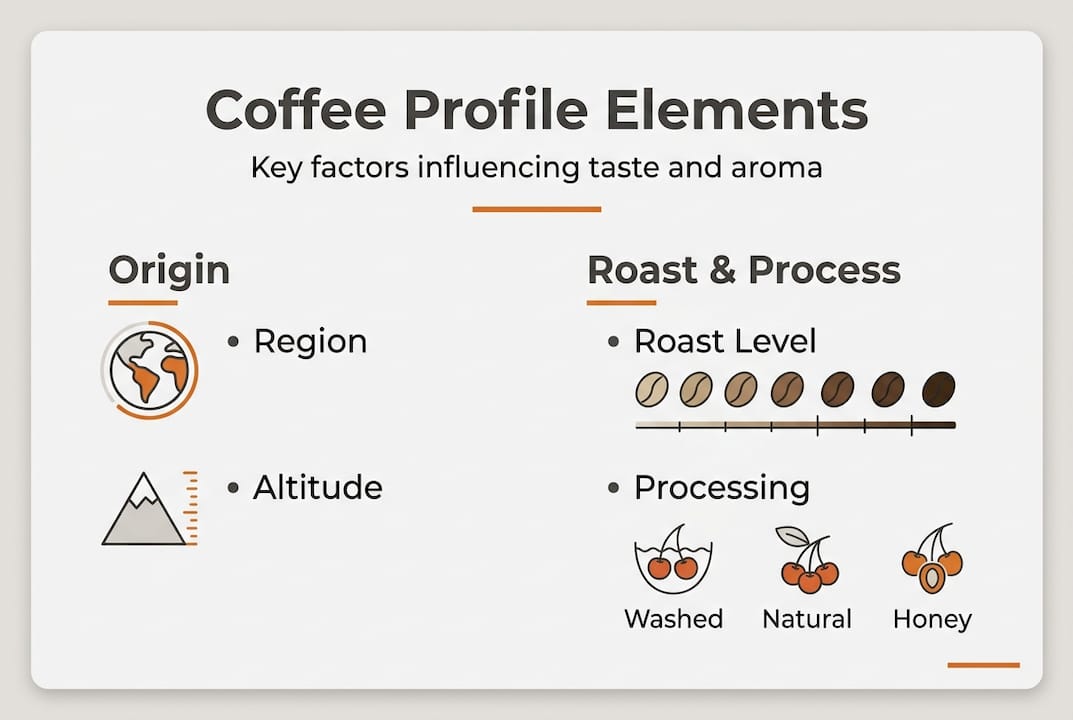
A coffee profile is the complete sensory fingerprint of a coffee. It captures everything your senses pick up: the aroma rising from a fresh brew, the first flavor that hits your tongue, the weight of the liquid in your mouth, the acidity that makes it bright or mellow, and the finish that lingers after you swallow. Think of it like a flavor blueprint that tells you what to expect before you even take a sip.
The main building blocks of any coffee profile are:
- Origin: Where the coffee was grown, including country, region, and even specific farm
- Roast level: Light, medium, or dark, each producing a dramatically different taste
- Processing method: Washed, natural, or honey processes all alter sweetness and body
- Tasting notes: Descriptors like "chocolatey," "citrusy," or "floral" that guide your expectations
These factors don't work in isolation. As coffee origins decoded explains, profiles are shaped by origin, roasting, and processing methods working together. Change one element and the entire profile shifts.
Professionals use profiles to source, describe, and sell coffee consistently. But enthusiasts benefit just as much, because profiles give you a shared language. Instead of saying "I like the smoky one," you can say "I prefer a dark roast with low acidity and a heavy body." That precision helps baristas and roasters guide you to exactly what you'll enjoy.
Familiarizing yourself with a coffee terms glossary makes this process a lot faster.
| Profile element | What it describes | Example |
|---|---|---|
| Origin | Growing region and farm | Ethiopia Yirgacheffe |
| Roast level | Degree of roasting applied | Light, medium, dark |
| Processing | Post-harvest preparation | Washed, natural, honey |
| Tasting notes | Flavor and aroma descriptors | Blueberry, caramel, cedar |
| Body | Texture and weight in the mouth | Light, medium, full |
This is also valuable when choosing coffee blends, because blends are designed to hit a specific profile target consistently across every bag.
Pro Tip: Brew two coffees of different origins side by side using the same method. The contrast will make each profile unmistakably clear, even if you're new to tasting.
The science and art behind coffee profiles
With a clear understanding of what makes up a coffee profile, let's explore how these elements are crafted.
Every coffee starts as a seed grown in specific conditions. Altitude, soil composition, rainfall, and temperature all directly influence the sugars, acids, and compounds that develop in the coffee cherry. High-altitude coffees, for example, tend to develop more slowly, building higher acidity and more nuanced flavors. Lower altitudes often produce heavier, earthier cups. Colorado Springs sits at over 6,000 feet, which gives locals an interesting perspective on altitude's role in coffee growth.
After harvesting, the processing method determines how much of the fruit's sweetness transfers to the bean. Natural processing, where the fruit dries around the bean, typically adds fruity and wine-like notes. Washed processing removes the fruit early, producing cleaner, brighter cups. Honey processing falls somewhere between the two.
Then comes roasting. Roasting transforms chemical compounds, creating the unique flavor notes that define a coffee's profile. Light roasts preserve the origin's natural character, giving you fruity or floral notes with higher acidity. Dark roasts break down those delicate compounds and build bolder, bitter, and smoky flavors. Most specialty coffees target a specific roast level to maximize their best natural attributes.
Here's a quick comparison of single origin versus blended coffees:
| Single origin | Blend | |
|---|---|---|
| Flavor | Expressive, distinct, terroir-driven | Balanced, layered, consistent |
| Best for | Pour-over, aeropress | Espresso, drip |
| Profile clarity | Very high, reflects one source | Moderate, combines multiple profiles |
| Experimentation | Great for profile exploration | Great for dialing in a house cup |
For home brewers who want to experiment, here's a simple approach:
- Start with a light roast from a single origin to taste raw origin character
- Move to a medium roast from the same origin to see how heat changes it
- Try a dark roast and note how the original flavor notes have shifted
- Repeat with a different origin to compare how terroir affects the same roast level
- Start blending two favorites and see how the profiles interact
Artisanship is as important as science here. Skilled roasters adjust time, temperature curves, and airflow to coax out specific flavors, much like a chef seasoning a dish. Exploring coffee roasting tips can help you understand why that perfect roast isn't an accident.
Tasting and identifying coffee profiles
Understanding the science and art is one thing; experiencing coffee profiles is another. Let's learn how to taste and identify them.

Your palate needs a little preparation before a serious tasting session. Drink a glass of water and avoid strong flavors like mint or spicy food for at least 30 minutes beforehand. This clears the way for subtle notes you'd otherwise miss.
Here's a simple step-by-step tasting process:
- Aroma: Before tasting, inhale deeply over the cup. Fresh coffee releases dozens of aromatic compounds. Notice whether it smells earthy, sweet, floral, or toasty.
- First sip: Let the coffee sit on the front of your tongue. Identify the initial flavor. Is it bright and sharp, or smooth and mellow?
- Retronasal: As you swallow, breathe out gently through your nose. This sends aroma compounds backward through your nasal passage, often revealing hidden fruity or floral notes.
- Aftertaste: What lingers? A clean finish often means high-quality beans and good processing. A bitter or harsh finish might suggest over-roasting or over-extraction.
Common flavor note categories to listen for include:
- Chocolatey: Dark chocolate, milk chocolate, cocoa powder
- Fruity: Citrus, berry, tropical, stone fruit
- Floral: Jasmine, rose, lavender
- Nutty: Almond, hazelnut, pecan
- Earthy: Leather, tobacco, forest floor
As a local tasting guide points out, tasting guides help enthusiasts decode aromas and flavors in specialty coffees, giving you a framework to make sense of what you're sensing.
"A coffee profile is your passport to discovering more nuanced flavors in every cup."
Don't worry if you can't identify every note at first. Tasting is a skill. The more intentionally you taste, the faster your vocabulary and palate develop together.
Applying coffee profiles at home and in cafes
Once you've tasted a variety of profiles, you can use this knowledge in your daily brewing and when you visit local cafes.
Knowing your preferred profile makes shopping for beans much more efficient. Instead of grabbing a bag because the label looks appealing, you can look for specific origin, roast level, and tasting note information. Many local Colorado Springs cafes make this easy by listing profile details right on their menus.
Here's how to apply profiles across different brew methods:
- Espresso: Look for medium to dark roasts with a full body and low acidity. A profile with chocolate and caramel notes works beautifully under pressure. Italian espresso beans are a classic reference point for this style.
- Pour-over: Light to medium roasts with higher acidity and fruity or floral notes shine through this slow, manual method, which preserves delicate compounds.
- Drip: Medium roasts with balanced profiles work reliably well, offering good body without overwhelming flavor in a larger batch.
- Cold brew: Full-bodied, low-acidity profiles with chocolatey or nutty notes hold up over long steep times without turning bitter.
- French press: Earthy, full-bodied profiles with bold flavors thrive in immersion brewing, where oils aren't filtered out.
As profile-based selection shows, choosing coffee based on profiles enhances your brewing experience and allows cafes to cater to diverse tastes. This is exactly why understanding profiles makes you a more confident customer and a better home brewer.
The Colorado Springs coffee culture is rich with opportunities to explore profiles, from specialty shops featuring rotating single origins to local roasters experimenting with unique processes.
Pro Tip: Keep a simple tasting journal. After each brew, jot down the origin, roast level, brew method, and two or three flavor words. Over a few weeks, patterns emerge that reveal your profile preferences clearly.
A fresh perspective: Why knowing your coffee profile matters more than ever
We believe coffee profiles are doing something more important than helping people pick a tastier cup. They're creating common ground. When a barista explains that a coffee has stone fruit acidity and a honey sweetness, and a customer's eyes light up with recognition, something real happens. A connection forms around a shared sensory experience.
In Colorado Springs, where community matters deeply, coffee profiles are becoming a local language. We've seen newcomers bond with longtime enthusiasts over a single cup because they had the vocabulary to talk about it. That's not a marketing trend. That's culture building.
Profiles also push back against the idea that your taste is fixed. Most people assume they like what they like and stop there. But trying a new profile from deeper coffee origins often surprises people who thought they only liked dark roast. Personal discovery is always available, one cup at a time.
We think the real value isn't in sounding knowledgeable. It's in the joy of noticing something new in a familiar drink and sharing that moment with someone else.
Discover your perfect coffee profile at Third Space Coffee
Ready to put your knowledge into action? Here's where to start exploring more profiles, locally and online.
At Third Space Coffee, we roast all of our beans in-house right here in Colorado Springs, which means every bag reflects a deliberate profile decision. Our staff genuinely loves talking through flavor preferences and matching you to something new.

Browse our specialty drinks selection to taste profiles crafted by our team, or explore our whole bean coffee options if you want to brew your favorite profile at home. Whether you're just starting to explore profiles or you've been tasting for years, there's always something worth discovering here.
Frequently asked questions
How can I identify my preferred coffee profile?
Taste several coffees side by side and note which flavors, aromas, and textures appeal to you most. A solid tasting guide helps you classify those preferences into a clear, repeatable profile.
Are coffee profiles only for experts?
Not at all. Profile-based selection enhances experiences for all coffee lovers, and even a basic understanding helps you brew better and order with more confidence at any cafe.
Can I find coffee profile details at local Colorado Springs cafes?
Yes. Many Colorado Springs cafes, including Third Space Coffee, highlight profiles on their menus or have staff ready to walk you through the options. A local tasting guide confirms that profiles are increasingly part of the local coffee conversation.
Does roast level change the coffee profile?
Absolutely. Roasting transforms compounds in the bean, directly affecting flavor, aroma, acidity, and body, making roast level one of the most powerful variables in any coffee profile.