
TL;DR:
- Barista craftsmanship combines technical skill, sensory evaluation, operational workflow, and hospitality to produce consistently excellent coffee.
- The role has evolved to include quality control and customer experience management, beyond mere manual execution, even with automation.
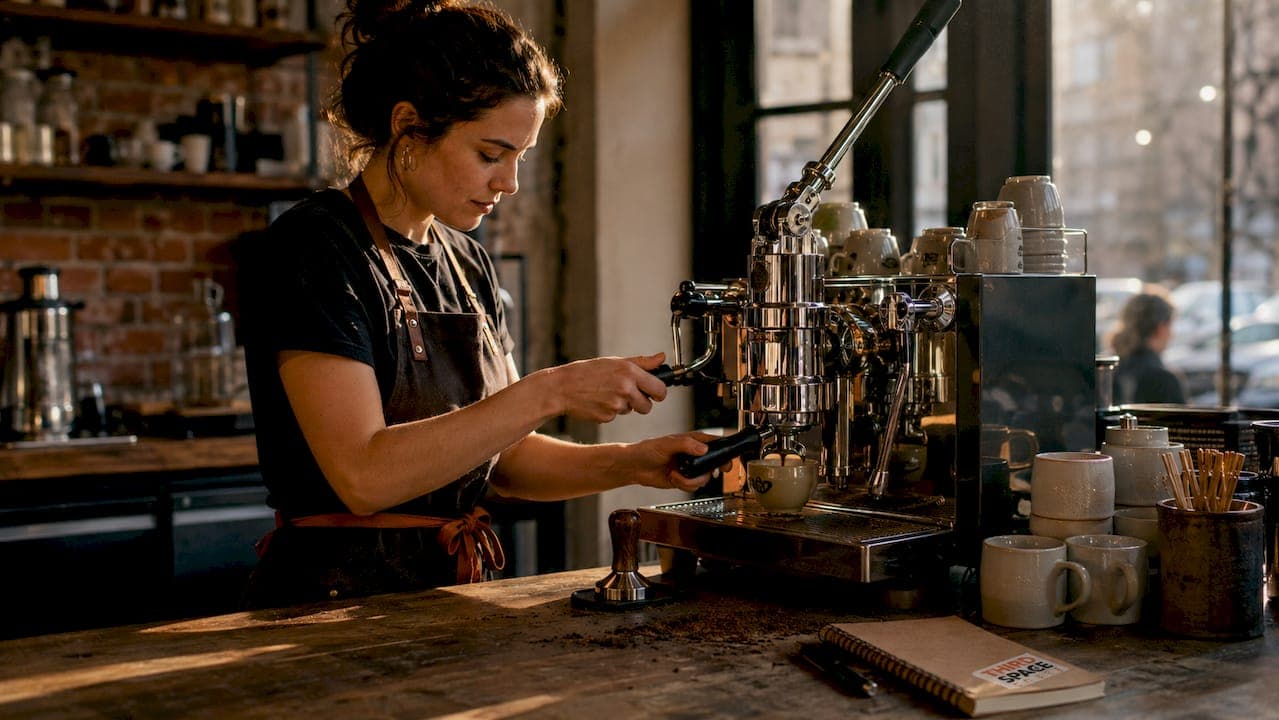
Barista craftsmanship is defined as the professional integration of technical precision, sensory evaluation, operational workflow, and hospitality skills that produces consistently excellent coffee. The industry term for this standard is "barista competency," measured against the Specialty Coffee Association (SCA) curriculum across foundation, intermediate, and professional levels. What is barista craftsmanship in practical terms? It is the ability to pull a flawless espresso shot, read a customer's mood, and maintain a clean machine, all within the same shift. At Thirdspacecoffee in Colorado Springs, this philosophy shapes every cup served.
What key skills and techniques make up barista craftsmanship?
Barista craftsmanship combines technical proficiency, sensory evaluation, operational workflow, and interpersonal skills into one unified practice. Each category builds on the others. A barista who pulls precise shots but ignores the customer experience delivers only half the craft.
Technical skills form the foundation of every great cup:
- Espresso extraction: Controlling dosing, tamping pressure (approximately 15kg), grind size, and water temperature to hit a target yield and extraction time
- Milk chemistry: Steaming milk to the correct temperature and texture for each drink, from flat whites to cappuccinos
- Machine hygiene: Daily equipment maintenance including chemical backflushing, portafilter cleaning, and multiple grinder calibrations per shift
- Recipe consistency: Using shot recipe cards that document dose, grind, yield, and extraction time so every barista on every shift produces the same result
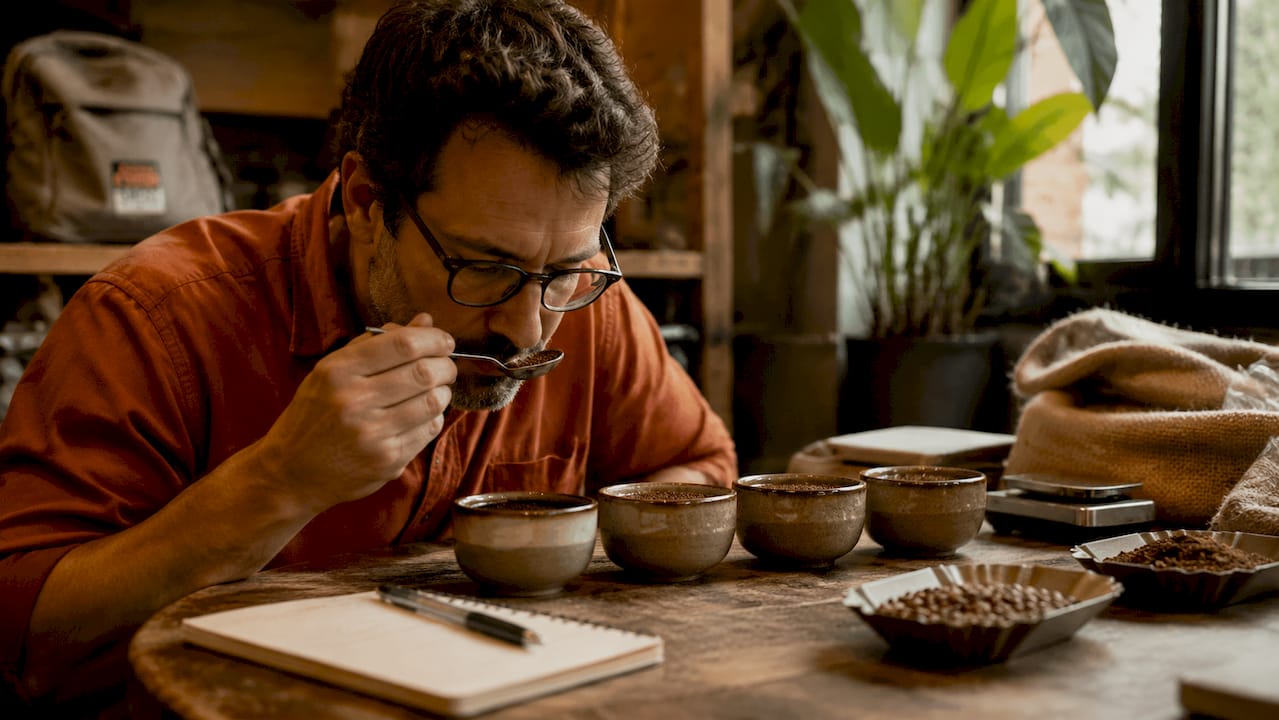
Sensory skills separate good baristas from great ones. Cupping, the formal practice of tasting coffee to identify flavor notes and detect faults, trains your palate beyond what drink making alone can teach. Regular cupping sessions sharpen your ability to diagnose extraction problems by taste rather than guesswork.
Hospitality skills complete the picture. Reading customer mood, communicating clearly under pressure, and resolving complaints with calm are as important as any technical skill. A barista who can manage a 20-person morning rush without losing composure or quality is demonstrating craftsmanship at its fullest.
Pro Tip: Most beginners rush toward latte art before mastering extraction fundamentals. Nail your espresso recipe first. Latte art on a poorly extracted shot is decoration on a flawed product.
How has the role of barista craftsmanship evolved in modern coffee shops?
The barista role has shifted from pure manual execution to a blend of quality control, equipment monitoring, and customer experience management. Automation has changed what baristas do with their hands. It has not reduced what they need to know.
Automated machines increase efficiency but require baristas to shift focus toward quality control rather than just manual operation. A super-automatic espresso machine can grind and tamp on its own. It cannot taste the shot, notice a grind drift, or adjust for a new bag of beans. That judgment still belongs entirely to the barista.
The modern barista has also taken on a new identity in the specialty coffee world:
"The modern barista is not just a drink maker but also a sensory expert, storyteller, and final quality controller." — Compound Coffee, 2026
This evolution means barista job skills now include emotional intelligence and adaptability alongside grind calibration. A barista who can explain the origin story of a single-origin Ethiopian pour-over to a curious customer is adding real value to the experience. That storytelling ability builds loyalty in ways that a perfectly pulled shot alone cannot.
The concept of the barista as an "extraction scientist" captures this dual role well. Craft is passion meeting precision, the ability to produce the same perfect cup despite humidity changes, bean age, and equipment wear. That standard has not changed. The tools and context around it have.
What distinguishes foundational barista skills from professional mastery?
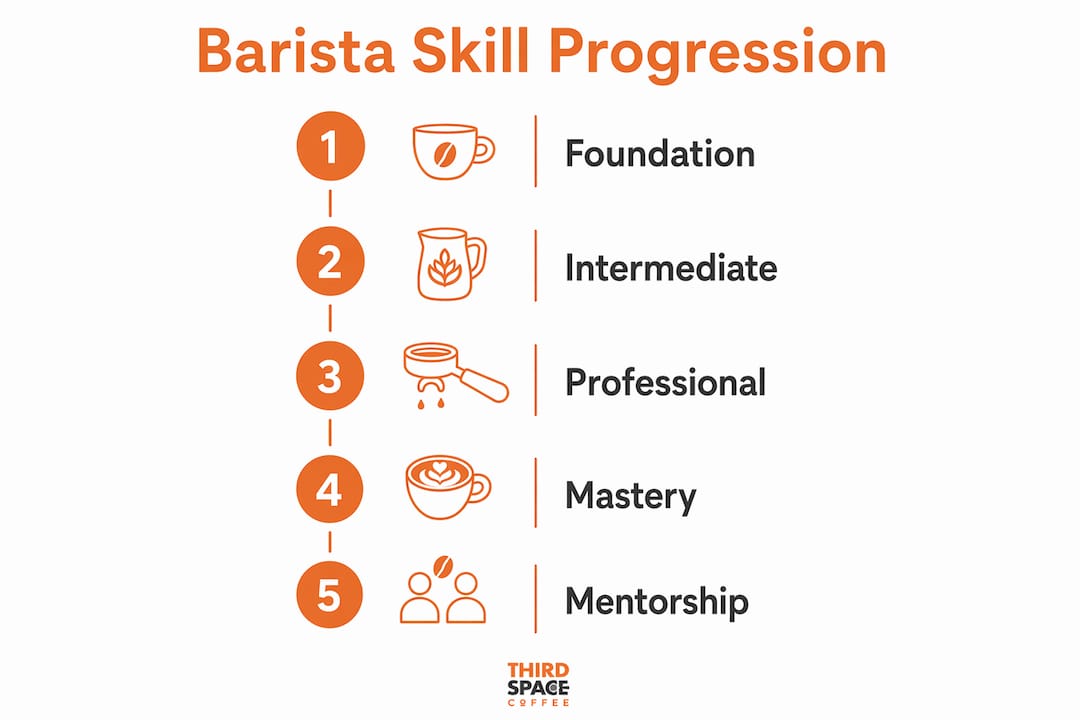
The SCA framework organizes barista competency into three clear levels. Each level adds responsibility, not just complexity. Understanding where you sit on this scale is the first step toward deliberate improvement.
| Skill level | Core capabilities | Key responsibilities |
|---|---|---|
| Foundation | Basic espresso prep, milk steaming, hygiene protocols | Consistent drink production, equipment cleaning, order accuracy |
| Intermediate | Extraction science, recipe diagnosis, latte art, workflow under pressure | Adjusting grind on the fly, managing rush periods, sensory fault detection |
| Professional | Independent operation, training others, menu development | SCA formal assessments, equipment management, quality standard ownership |
Foundation baristas focus on repetition and consistency. The goal at this stage is to execute a standard recipe correctly every time, not to experiment. Hygiene protocols, including backflushing and grinder calibration, are non-negotiable from day one because flavor degradation from dirty equipment is invisible until it is already in the cup.
Intermediate baristas develop diagnostic ability. They can taste a shot and identify whether the problem is grind size, dose, or temperature. They manage workflow under pressure without sacrificing quality. Latte art enters the picture here, but only as a finishing skill layered on top of solid extraction fundamentals.
Professional baristas operate independently and multiply their skills through others. Formal SCA assessments at this level include timed practical exams, sensory evaluation tests, and written coffee theory. Professionals also own menu development and equipment decisions, turning individual craft into a shop-wide standard.
Pro Tip: If you are at the intermediate level, spend one shift per week working exclusively on sensory diagnosis. Pull shots at three different grind settings, taste each one, and write down what you notice. This builds the palate faster than any course.
How can aspiring baristas develop and refine their craftsmanship?
Skill development in coffee follows the same principle as any technical discipline: structured, deliberate practice beats unstructured repetition every time. Here is a practical framework for building real competency.
-
Run focused daily skill sessions. Dedicate 30 minutes each shift to one specific skill, whether that is dialing in a new grind setting, practicing milk texturing, or running a cupping exercise. Broad practice spreads attention too thin. Narrow practice builds depth.
-
Cup coffee regularly. Sensory evaluation beyond drink making is the fastest way to develop your palate. Cupping teaches you to identify acidity, body, sweetness, and faults in a controlled setting, skills that transfer directly to diagnosing espresso problems on the machine.
-
Seek critique from experienced baristas. Honest feedback from someone further along the skill progression is worth more than hours of solo practice. Ask a senior barista to watch your workflow and point out inefficiencies. Most beginners have blind spots they cannot see themselves.
-
Enter competitions or pursue certifications. Barista competitions, including those sanctioned by the SCA, force you to perform under pressure and meet objective standards. The preparation process alone accelerates skill development significantly. Certifications provide a structured curriculum and a benchmark for where your skills actually stand.
-
Document your recipes and maintain your equipment. SOPs and recipe cards that record dose, grind setting, yield, time, and milk texture turn your practice into a replicable process. Without documentation, you cannot track improvement or diagnose what changed when a drink starts tasting off.
For home enthusiasts looking to build these skills outside a professional setting, resources like Thirdspacecoffee's home brewing guide offer a practical starting point for applying these same principles at home.
Pro Tip: Equipment maintenance is the most overlooked skill in barista training. A dirty grinder produces inconsistent particle size, which makes every other variable harder to control. Clean your equipment before you practice, not after.
Key takeaways
Barista craftsmanship requires technical precision, sensory skill, and hospitality working together, and all three must be developed deliberately and progressively.
| Point | Details |
|---|---|
| Craftsmanship is multidimensional | Technical, sensory, operational, and hospitality skills all define barista competency equally. |
| Automation raises the bar | Machines handle manual steps, so baristas must master quality control and sensory diagnosis instead. |
| Skill levels are structured | The SCA framework defines foundation, intermediate, and professional levels with formal assessment criteria. |
| Deliberate practice accelerates growth | Focused 30-minute sessions, regular cupping, and documented recipes build skill faster than general repetition. |
| Hospitality is not optional | Reading customers, managing conflict, and communicating clearly are core barista job skills, not soft extras. |
Why I think most baristas underestimate the hospitality side of their craft
I have watched a lot of talented baristas plateau. They dial in their espresso perfectly, their latte art is clean, and their workflow is tight. Then a difficult customer walks in and the whole performance falls apart. That is the gap most training programs do not address directly enough.
The technical side of coffee is learnable from books, videos, and practice sessions. The hospitality side requires a different kind of attention. It means noticing when a regular seems off today and adjusting your interaction accordingly. It means explaining a drink change without making the customer feel judged. It means staying composed when the machine goes down during the morning rush and the line is out the door.
There is also a misconception I see constantly: that craftsmanship is about the dramatic moments, the competition-worthy latte art or the rare single-origin pour-over. Real craftsmanship is about the Tuesday morning when nothing is special and you still deliver the same quality you would on your best day. That consistency is what coffee shop hospitality actually means in practice.
My advice: treat your interpersonal skills with the same seriousness you give your extraction technique. Practice them with the same deliberateness. The baristas who build real careers in specialty coffee are the ones who master both sides of the craft, not just the technical half.
— Tanya
Taste the craft at Thirdspacecoffee in Colorado Springs
Understanding barista craftsmanship changes how you experience every cup. Thirdspacecoffee brings that same precision and care to every drink it serves, from its in-house roasted whole bean coffees to its full lineup of specialty drinks crafted with the techniques described in this guide.

Whether you are an aspiring barista looking to taste what skilled extraction actually produces, or a coffee enthusiast who wants to explore different flavor profiles, Thirdspacecoffee is the right place to start. Stop by the Colorado Springs location, order online for pickup, or browse the full menu to find your next favorite cup. Every drink is a chance to taste what real craftsmanship looks like in the glass.
FAQ
What is barista craftsmanship in simple terms?
Barista craftsmanship is the combination of technical skill, sensory evaluation, and hospitality that allows a barista to produce consistently excellent coffee. The Specialty Coffee Association measures this competency across foundation, intermediate, and professional levels.
What are the most important barista skills for beginners?
Beginners should prioritize espresso extraction fundamentals, milk steaming technique, and equipment hygiene before moving to advanced skills like latte art. Mastering these basics first creates the foundation for every other skill.
How does automation affect barista craftsmanship?
Automation handles manual steps like grinding and tamping in some machines, but it shifts the barista's role toward quality control, sensory diagnosis, and customer engagement rather than eliminating the need for skill.
How long does it take to develop professional barista skills?
Reaching professional competency, as defined by SCA formal assessment standards, typically requires consistent deliberate practice over one to three years, depending on training frequency and access to feedback.
Why are hospitality skills part of barista craftsmanship?
Hospitality skills including reading customer mood, communicating clearly, and managing conflict are core barista job skills because the customer experience is inseparable from the quality of the coffee itself.