 how-to
How to Adjust Coffee Grind Size for Better Flavor
Last Updated: October 23, 2026
Quick Summary
To adjust coffee grind size for better flavor, make the grounds finer to slow water flow and increase extraction if your coffee tastes sour, or coarser to speed water flow and decrease extraction if it tastes bitter. Match your grind size to your brewing method using a chart as a starting point, then dial in by taste and brew time rather than copying numbered settings from other grinders.
- Finer grinds slow water flow and increase extraction time; coarser grinds speed it up and decrease extraction time.
- Use a grind chart matched to your brewing method as a starting point, not a universal setting.
- Make small adjustments of one or two clicks at a time, as each click changes shot time by 3-5 seconds on espresso.
- Brew time targets are 25-30 seconds for espresso, 3-4 minutes for pour-over, and 4 minutes for French press.
- Rule out water temperature, dose, freshness, and agitation before adjusting grind, as these variables also affect extraction.
Table of Contents
- Why Grind Size Matters for Coffee Flavor
- Understanding Extraction and How It Affects Taste
- Coffee Grind Size Chart and Brew Method Matching
- Step-by-Step: How to Dial in Espresso Grind
- Adjusting Grind Size for Pour-Over Coffee
- Troubleshooting: When Your Coffee Tastes Sour or Bitter
- Common Mistakes to Avoid When Adjusting Grind Size
- Frequently Asked Questions
Why Grind Size Matters for Coffee Flavor
Learning how to adjust coffee grind size is one of the most powerful levers you have to improve flavor. It controls how fast water moves through the coffee: too fine and the water gets stuck, too coarse and it rushes through, either way, the coffee tastes flat, sour, or bitter.
When you adjust coffee grind size, you change how much surface area the water contacts. Smaller particles mean more surface area, larger particles less, so flavor compounds extract at different rates.
Understanding Extraction and How It Affects Taste
Extraction is the process of pulling flavor compounds out of coffee grounds into your water.
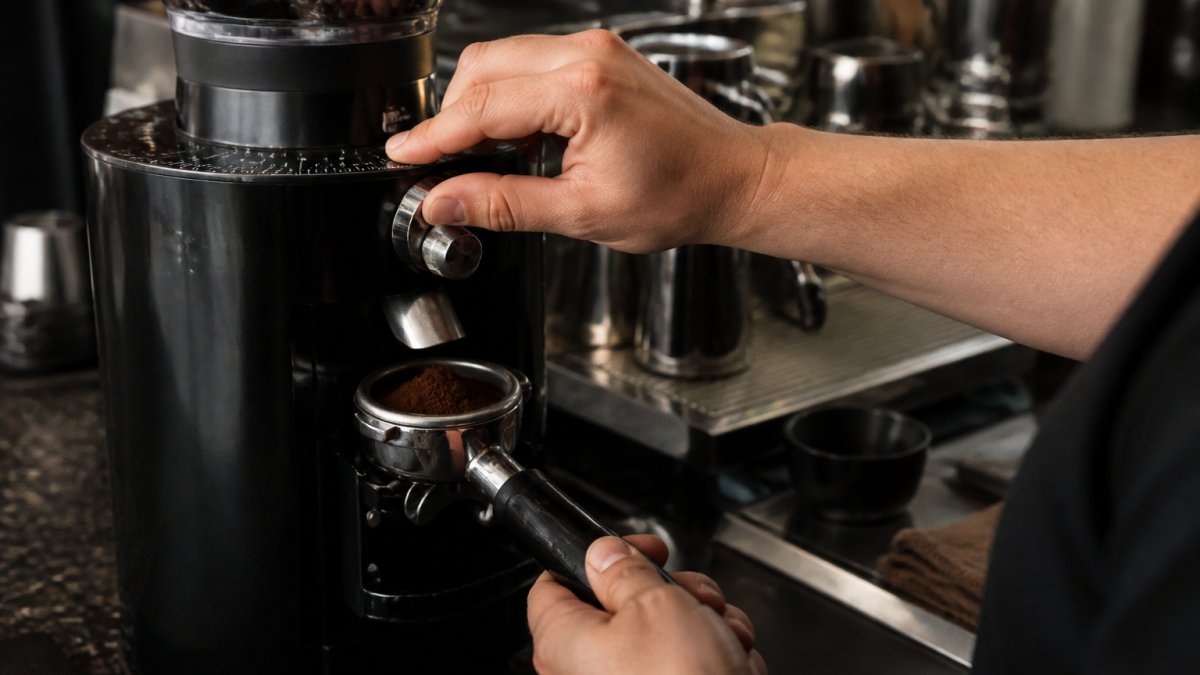
Balanced extraction tastes sweet, clean, and full. When it's off, you get under-extraction or over-extraction.
Under-extracted coffee tastes sour, thin, and acidic.
Over-extracted coffee tastes bitter and harsh. Water spends too long in contact with the grounds, pulling out compounds that turn astringent and unpleasant.
Finer grinds slow water flow and increase extraction time; coarser grinds speed it up.
Coffee Grind Size Chart and Brew Method Matching
Different brewing methods need different grind sizes because each has a different flow rate, contact time, and pressure. A chart gives you a starting point, not a universal setting.
Starting-point chart by brew method
| Grind category | Texture reference | Typical methods | Typical brew time |
|---|---|---|---|
| Extra-fine | Powder, finer than flour | Turkish coffee, moka pot | 1-2 minutes (moka), simmer (Turkish) |
| Fine | Table salt | Espresso, some pour-over cones | 25-30 seconds (espresso), 2:30-3:30 (pour-over) |
| Medium-fine | Fine sand | Pour-over with paper filters, AeroPress | 3-4 minutes (pour-over) |
| Medium | Sand | Drip coffee makers, AeroPress | 4-6 minutes (drip) |
| Medium-coarse | Coarse sand | Chemex, pour-over with metal filters | 4-5 minutes |
| Coarse | Breadcrumbs, sea salt | French press, cold brew | 4 minutes steep (French press), 12-18 hours (cold brew) |
Why the chart is a starting point, not a setting
The texture references are deliberately approximate. Two grinders set to "medium" can produce very different particle distributions, and a setting of 6 on one grinder has no relationship to a setting of 6 on another. Grinder geometry, flat versus conical burr, burr size, and burr alignment, changes both average particle size and the spread of sizes. Never copy a numbered setting from a video or forum post.
Stepped versus stepless grinders
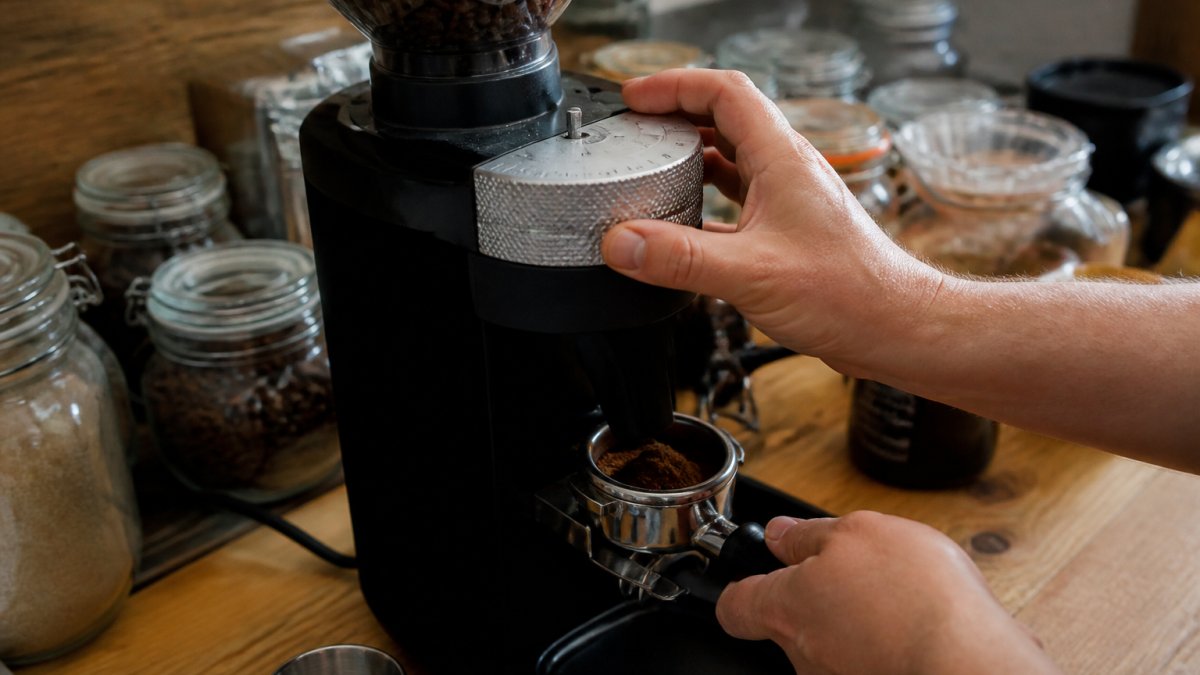
- Stepped grinders click into fixed positions. On espresso, each click can be several seconds of shot time. Make one click at a time and expect to overshoot occasionally.
- Stepless grinders adjust continuously with no detents. You can make very small changes, but you cannot easily return to a previous setting unless you record it. Mark your dial or note the position relative to a reference point.
Retention and calibration
Retention is the ground coffee left inside the grinder after grinding, a fraction of a gram on a home grinder, several grams on some commercial models. It matters because the first dose after a grind change is partly old grounds at the previous setting. Two habits reduce the error:
- Purge after a change. Grind and discard a small amount (a few grams) after moving the dial before you brew the dose you will evaluate.
- Recalibrate after cleaning. Removing the burrs for cleaning can shift the zero point. After reassembly, grind a small test dose and reset your reference before dialing in.
Adjusting for dose and roast
Grind size is not the only variable that changes extraction. A larger dose in the same basket or filter increases bed depth and resistance, slowing flow and pushing extraction up. Darker roasts are more soluble and often need a slightly coarser grind than light roasts. If you switch beans, expect to move the grind slightly even if nothing else changed.
A practical reference for particle size
For a physical check, compare a pinch of grounds to a known texture: table salt for fine, fine sand for medium-fine, coarse sand for medium-coarse, and breadcrumbs for coarse. This is a rough guide, not a measurement. For repeatability, rely on brew time and taste on your own grinder rather than matching a photo or someone else's number.
Step-by-Step: How to Dial in Espresso Grind
Dialing in espresso is the most common grind adjustment task. Espresso is also the most sensitive to grind size changes.
Here's the process:
Step 1: Start with a baseline grind size
Use the medium-fine setting as a starting point.
Step 2: Pull a test shot
Dose your portafilter (usually 18-20 grams for a double shot), tamp evenly and firmly, and time the shot.
Step 3: Evaluate the flow rate
If the shot runs in under 20 seconds, your grind is too coarse, adjust finer.
Step 4: Make small adjustments
Step 5: Taste the shot
Once your timing is right, taste the espresso.
Step 6: Lock in your setting
The key mistake is adjusting too much at once.
You can book a drain inspection to learn more about how to dial in espresso grind with our team, or try our 50/50 Espresso Blend Bag to practice with beans designed for consistent espresso extraction.
Adjusting Grind Size for Pour-Over Coffee
Pour-over is more forgiving than espresso, but grind size still matters. The goal is a brew time of 3-4 minutes from first water contact to last drip.
Start with a medium-fine grind, pour slowly and steadily, and time the drain.
Pour-over also depends on water temperature and pouring technique. If your timing is right but the coffee tastes sour, check your water temperature.
For more guidance on choosing the right beans for pour-over, explore How to Choose the Best Coffee for Pour Over Brewing.
Troubleshooting: When Your Coffee Tastes Sour or Bitter
Sour and bitter are the two loudest signals, but grind is not always the cause. A reliable troubleshooting pass starts by naming the taste, then ruling out the non-grind variables before you touch the dial. Otherwise you will chase the setting in circles.
A sensory troubleshooting matrix
Use this as a first-pass diagnostic. Treat each row as a hypothesis, not a verdict.
| What you taste | Likely extraction state | First grind move | Check before you commit |
|---|---|---|---|
| Sour, sharp, thin | Under-extracted | Go finer, one increment | Water temp too low, dose too low, brew time too short, beans very fresh |
| Bitter, harsh, drying | Over-extracted | Go coarser, one increment | Water temp too high, over-agitation, brew time too long, stale beans |
| Astringent, mouth-drying, chalky | Over-extracted or channeling | Go coarser slightly; check puck prep | Channeling in espresso, uneven pour, fines migration |
| Weak body, watery but not sour | Under-extracted or under-dosed | Go finer only after confirming dose | Ratio too high (too much water), dose too low |
| Uneven flavor, some sips sour and some bitter | Inconsistent particle size or channeling | Improve distribution before changing grind | Blade grinder, clumpy grounds, uneven tamp, uneven pour |
| Metallic or papery | Not primarily grind | Do not adjust grind yet | Water quality, filter rinse, stale or poorly stored beans |
Two cautions. Astringency and bitterness are easy to confuse: astringency is the drying, puckering sensation that lingers, while bitterness sits on the back of the tongue. And "sour" in very light roasts can be deliberate, confirm the roaster's intended profile before you grind finer to chase it away.
Rule out the confounding variables first
Before you change the grind, confirm these are stable:
- Water. Too soft can make coffee taste flat or sour; too hard can mute sweetness and push bitterness. A change in tap or bottled water alone can shift flavor.
- Temperature. Most drip and pour-over brewing lands in the 195-205°F range. A kettle reading 10°F low will under-extract no matter how fine you grind.
- Ratio. A common starting point is 1:15 to 1:17 coffee to water by weight. If you changed your scoop or mug size, you changed the ratio.
- Freshness. Beans roasted within the last few days off-gas and can taste sour or foamy; beans months past roast taste flat and papery. Neither is a grind problem.
- Agitation. Swirling a pour-over or stirring a French press increases extraction. A changed pour pattern changes extraction.
The sour loop, done correctly
If the matrix points to under-extraction and the confounders are stable, make one grinder increment finer, brew again with the same dose, water, and technique, and taste. Repeat only if the sourness persists. Most burr grinders move shot time by several seconds per click on espresso, so two clicks is often too big a jump; on pour-over, a half-step is usually enough.
The bitter loop, done correctly
If the matrix points to over-extraction, go one increment coarser and retest. If bitterness persists after two coarser steps, stop adjusting grind and check temperature, agitation, and brew time. Over-extraction is often a time or temperature problem wearing a grind costume.
When it is not grind at all
If the coffee tastes metallic, papery, or chemically, grind will not fix it. Rinse paper filters, check your water, and confirm the beans are fresh. If the flavor is uneven from sip to sip, the problem is distribution and channeling, not the average grind size. Fix puck prep or pour technique first, then revisit grind.
Common Mistakes to Avoid When Adjusting Grind Size
Adjusting too much at once. One or two clicks is enough; bigger adjustments overshoot and waste coffee.
Using a grinder that's not consistent. A cheap blade grinder produces particles of wildly different sizes, making it impossible to dial in.
Forgetting that grind size changes with humidity. Coffee grounds absorb moisture from the air.
Not tasting your coffee. Numbers matter, but taste is the final judge.
Getting your grind size right is the fastest way to improve your coffee at home.
Third Space Coffee supports your brewing journey with high-quality, in-house roasted beans and expert guidance. Visit us or explore How to Brew Better Coffee at Home: A 2026 Guide for a comprehensive approach to improving your entire brewing process.
Frequently Asked Questions
How does grind size affect coffee flavor?
Grind size controls how fast water extracts flavor compounds from coffee grounds. Finer grinds increase surface area, speeding extraction and creating stronger, sometimes bitter flavors. Coarser grinds slow extraction, resulting in lighter, sometimes sour flavors. The right grind size for your brew method balances extraction time and flavor balance, pulling out sweetness and intensity without bitterness or sourness.
Should I grind coffee finer or coarser if it tastes sour?
If your coffee tastes sour, grind finer. Sour flavor signals under-extraction, meaning water passed through the grounds too quickly without pulling enough flavor compounds. A finer grind slows water flow, increasing contact time and extraction rate. Start with a small adjustment (one or two notches on your grinder), brew, and taste. Make incremental changes until you reach sweetness and balance.
How do I know if my coffee grind is too fine or too coarse?
Too-fine grinds produce bitter, over-extracted coffee with a harsh aftertaste. You may also notice slow flow rate or channeling (water cutting through grounds unevenly). Too-coarse grinds taste sour, weak, or thin because water flows through too fast. Taste is your best guide: bitter means finer adjustment is needed; sour means coarser adjustment. Consistency matters too, uneven particle size causes uneven extraction and muddy flavor.
How often should I adjust my grind size?
Adjust grind size when flavor changes or when switching brew methods. Variables like roast level, bean density, brew temperature, and water quality affect how extraction behaves, so you may need to re-dial after changing beans or seasons. Keep notes on your grinder setting for each bean and method. Most home brewers adjust weekly or when opening a new bag of beans. Espresso requires more frequent micro-adjustments during a single session.