 ultimate-guide
The Beginner's Guide to Coffee Roast Levels
Last Updated: November 7, 2026
Quick Summary
Coffee roast levels describe how far a green coffee bean has been taken through the roasting process, and that single variable reshapes flavor, aroma, acidity, and body more than almost anything else you control at home. Light roasts keep the bean's origin character, dark roasts replace it with roast character, and medium sits between as the safest landing spot for most beginners.
- Roast names are marketing language, not regulated categories, so one roaster's medium is another's medium-dark.
- Caffeine content stays roughly stable through roasting; darker beans just lose more bean mass.
- First crack marks the start of roast development and the light-roast zone; second crack signals dark territory.
- Match pour-over and drip to light or medium roast, and French press, cold brew, and espresso to medium or medium-dark.
- Start one step coarser when moving from a light to a dark roast of the same origin.
Table of Contents
- What Coffee Roast Levels Actually Mean
- Coffee Roast Levels Chart: The Spectrum at a Glance
- Light vs Medium vs Dark Roast Coffee
- A Coffee Roasting Temperature Guide
- How to Choose Coffee Roast for Your Brew Method
- Roast Level, Freshness, and Storage
- Taste Your Way to the Right Roast at Third Space Coffee
- Frequently Asked Questions
What Coffee Roast Levels Actually Mean
Coffee roast levels describe how far a green coffee bean has been taken through the roasting process, and that single variable reshapes flavor, aroma, acidity, and body more than almost anything else you control at home.
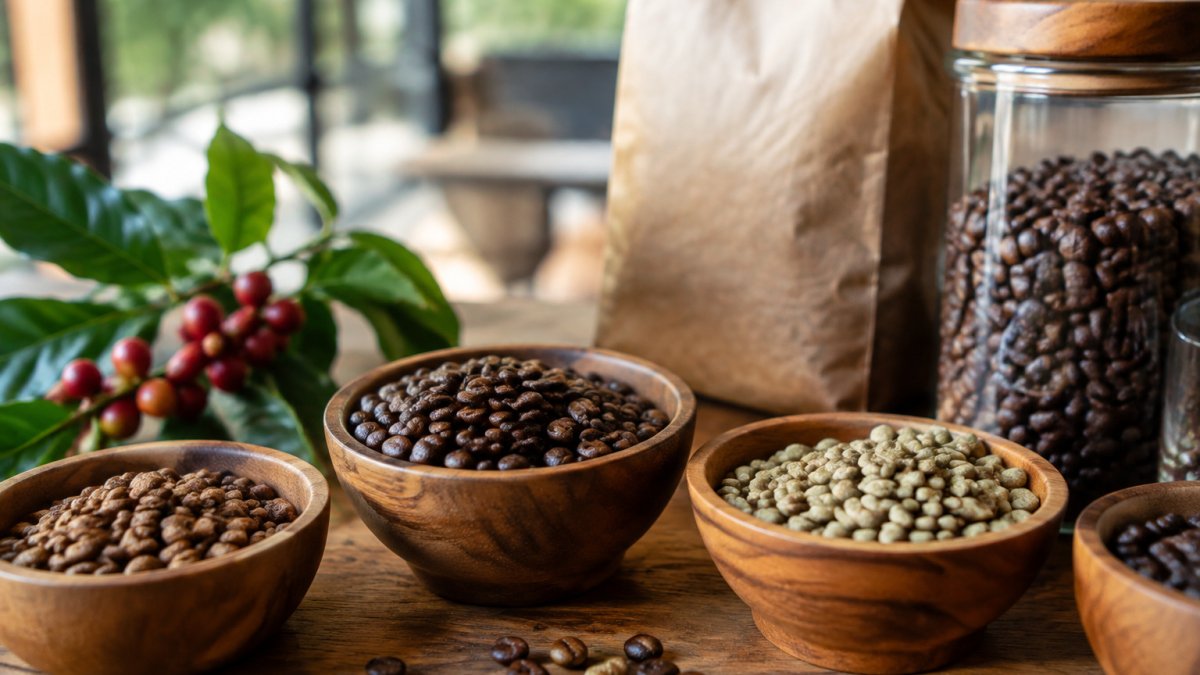
Here's the core idea: roasting is a heat-driven transformation, not a flavor additive. The bean starts dense, grassy, and pale green. Heat drives off moisture, triggers browning reactions, and builds the aromatic compounds you taste in the cup. Stop early and you keep the bean's origin character. Push further and roast character takes over.
That trade-off is the throughline for everything below. Every roast decision is a negotiation between the bean's birthplace and the roaster's fire.
From Green Coffee to Roasted Bean
Green coffee is raw, unroasted seed, typically smelling of hay or dried grass. During roasting, the bean loses moisture, expands, darkens, and develops the compounds responsible for sweetness, acidity, and aroma. The roasting process moves through drying, browning, and development stages, and where the roaster stops determines the final roast degree.
Why Roast Labels Are Not Standardized
Here's what most guides skip: roast names are marketing language, not regulated categories. One roaster's "medium" is another's "medium-dark," and nothing enforces consistency. Treat labels as a starting point, then read tasting notes and roast color descriptions for the real signal.
Coffee Roast Levels Chart: The Spectrum at a Glance
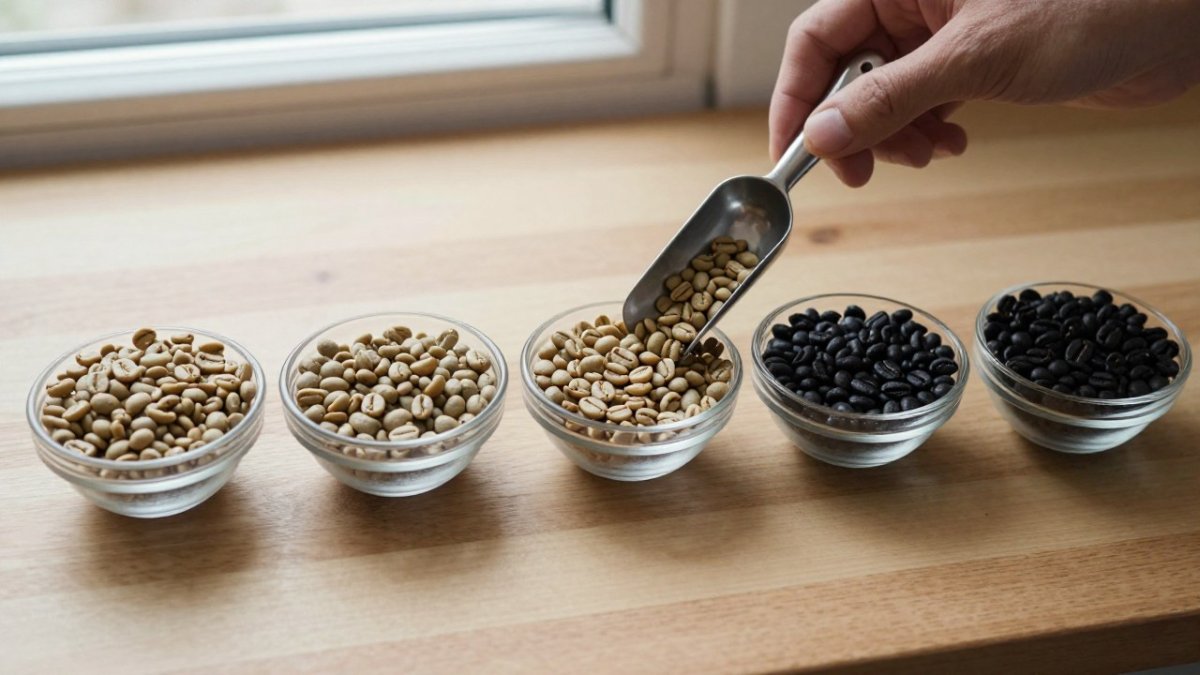
The coffee roast levels chart below maps the light-to-dark spectrum from palest to darkest, with the roast-stage milestones and typical bean temperatures that separate each zone. Use it as a reference, not a rulebook.
| Roast Level | Bean Color | Typical Flavor | Acidity | Body | Roast-Stage Marker |
|---|---|---|---|---|---|
| Cinnamon roast | Pale tan | Grassy, bright, thin | Very high | Very light | Pulled well before first crack finishes |
| City roast | Light brown | Fruity, floral, tea-like | High | Light | Just past the end of first crack |
| City Plus | Medium brown | Balanced, sweet, rounded | Medium-high | Medium | First crack complete, short development |
| Medium-dark roast | Rich brown | Chocolatey, nutty, caramel | Medium-low | Full | Approaching or at the start of second crack |
| French roast | Nearly black, oily | Smoky, bitter, bold | Low | Heavy | Well into second crack |
Notice how bean color and surface oils track together: the darker the roast, the more oil migrates to the surface. That visual cue is one of the most reliable ways to sanity-check a label.
Reading the Chart Like a Roaster
The chart rows are not evenly spaced in roast time. The jump from green bean to City roast covers the drying and browning phases and the bulk of first crack, while the jump from City Plus to French roast can happen in a minute or two of extra development. That is why roast development time after first crack matters more than total roast time for predicting flavor.
A common pattern is that roasters log bean temperature at first crack and then track development time as a percentage of total roast. A short development window keeps brightness and origin character; a longer one builds body and sweetness but starts muting acidity.
Why the Same Label Tastes Different
Roast names are marketing language, not regulated categories. One roaster's "medium" is another's "medium-dark," and terms like City, City Plus, Full City, and French roast have no enforced definitions. When you compare bags, read the tasting notes and roast color description first, then treat the label as a rough pointer. If a bag says "medium" but the beans are oily and nearly black, trust your eyes over the word.
Watch out: a very pale "light roast" with a grassy, peanut-like smell is often underdeveloped rather than intentionally bright, and no brewing adjustment will fix that.
Light vs Medium vs Dark Roast Coffee
The light vs medium vs dark roast coffee question comes down to one trade-off: origin character versus roast character. Light roasts preserve the bean's origin characteristics; dark roasts replace them with the roaster's imprint. Medium sits between, and for most beginners it's the safest landing spot.
Flavor, Acidity, Body, and Aroma by Roast
Light roast coffees tend to be fruity, floral, and bright, with high acidity and brightness and a lighter body. Medium roast balances sweetness and aroma with a rounder mouthfeel. Dark roast brings chocolatey, smoky, and bitter notes with a heavy body and low perceived acidity. None of these is "better." They're different tools for different palates.
Does Darker Roast Mean More Caffeine?
No, and this myth refuses to die. Caffeine content stays roughly stable through roasting; what changes is bean mass, since darker beans lose more weight. Measure by scoop and dark roast can even deliver slightly less caffeine. Measure by weight and the difference mostly disappears. Ignore the "dark equals stronger" claim.
A Coffee Roasting Temperature Guide
A coffee roasting temperature guide is really a map of milestones, not a single number. Roast temperature climbs through the drying stage, then into browning, and the roaster reads progress through sound and smell as much as the probe.
First Crack, Second Crack, and Roast Development
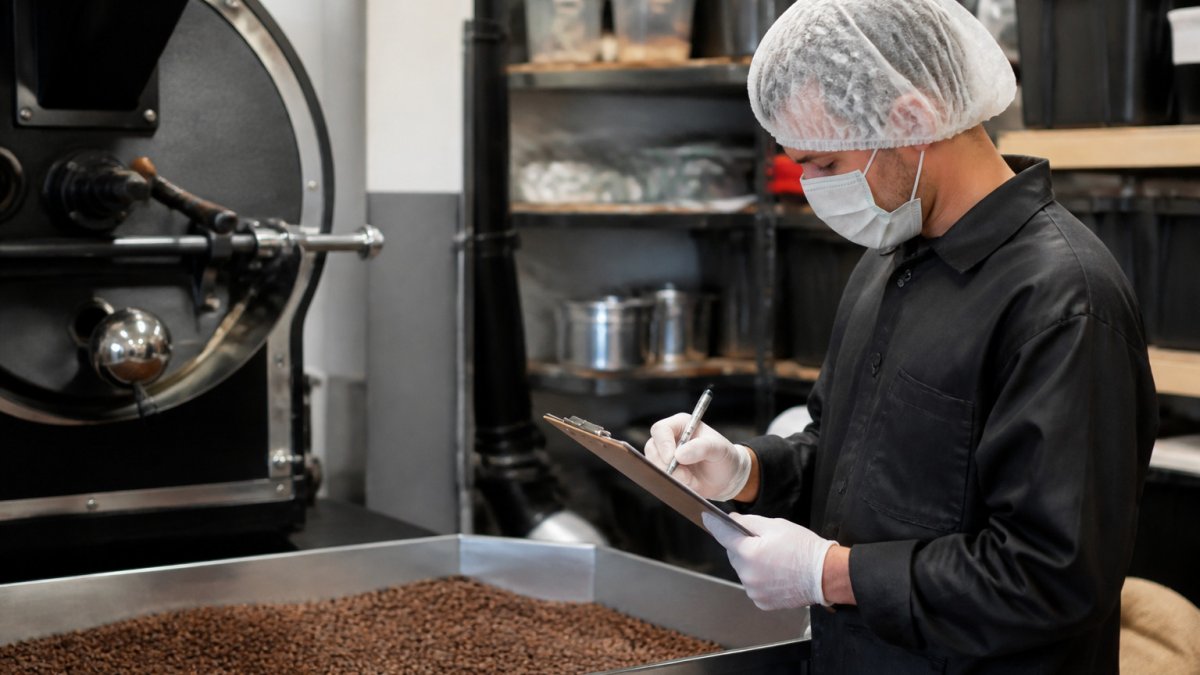
First crack is the audible pop when built-up moisture and gases escape, marking the start of roast development and the light-roast zone. Second crack is a quieter, sharper crackling that signals the shift into dark territory. Roast time and how long the roaster lingers after first crack decide whether you land at City Plus or French.
Watch out: pulling a roast right at first crack without enough development leaves grassy, underdeveloped flavors. A few extra seconds of development usually fixes it.
How to Choose Coffee Roast for Your Brew Method
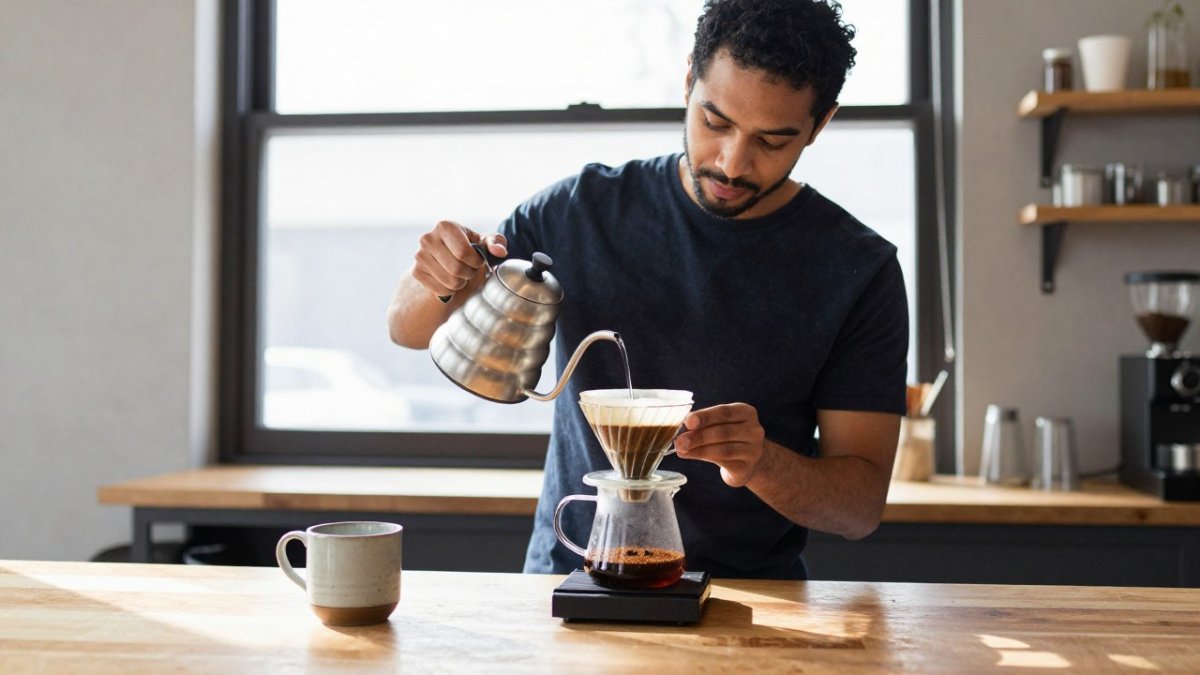
Learning how to choose coffee roast starts with your brewer, not your mood. Match the roast to the brewing method and the cup gets dramatically better. For a deeper walkthrough, our guide to choosing a coffee roast profile covers taste and setup in detail.
- Pour-over and drip: light to medium roast, which rewards clarity and brightness.
- French press and cold brew: medium to medium-dark, where body and sweetness shine.
- Espresso: medium to medium-dark, which holds up to pressure and milk.
- Moka pot: medium-dark, for a bold, syrupy cup.
Practical Brew Adjustments by Roast
Most guides stop at the pairing. The part that actually saves a bad cup is adjusting your brew when you switch roast levels, because darker beans are more porous and extract faster. These are reasonable starting points, not fixed rules, taste and adjust from there.
- Grind size: start one step coarser when moving from a light to a dark roast of the same origin, and one step finer when moving the other way. Dark roasts shed solubles quickly, so a finer grind can push them bitter fast.
- Water temperature: try roughly 200-205°F for light roasts and 195-200°F for dark roasts. Hotter water helps pull sweetness from dense light beans; cooler water slows extraction on dark beans.
- Ratio: begin around 1:16 coffee to water by weight for light and medium roasts, and 1:15 for dark roasts if the cup tastes thin. Adjust in small increments rather than jumping.
- Extraction check: if a light roast tastes sour or grassy, grind finer or raise water temperature slightly. If a dark roast tastes ashy or bitter, grind coarser or lower the temperature.
Our grind size adjustment guide walks through dialing this in cup by cup. Small changes, big payoff.
A Beginner Decision Path
If you are buying your first bag and do not know where to start, work through three questions in order. First, how do you brew? A drip machine or pour-over rewards a light or medium roast; a French press or espresso setup is more forgiving of medium-dark. Second, what do you already like to drink? Third, how fresh is the bag?
Watch out: do not judge a roast level from a single bad cup. Change one variable at a time, grind, then temperature, then ratio, or you will not know which adjustment helped.
Roast Level, Freshness, and Storage
Whole bean coffee stales fastest when exposed to oxygen, light, and heat, and roast level shifts the timeline. Darker roasts degas quickly and tend to fade sooner; lighter roasts hold their peak a bit longer. Buy in small amounts, store in an airtight container away from sunlight, and grind just before brewing. Our guide on how to tell if coffee beans are fresh covers the sensory checks, and our roundup of the best coffee bean storage containers helps you protect the bag once it's open.
Taste Your Way to the Right Roast at Third Space Coffee
The fastest way to learn coffee roast levels is to taste them side by side. Reading about the light-to-dark spectrum only gets you so far; the cup is the real teacher.
At Third Space Coffee, we roast our beans in-house, so you can explore the spectrum fresh. Our welcoming space is a good place to sip and compare roasts.
Picking a roast can feel like guesswork when labels vary from roaster to roaster. Third Space Coffee roasts in-house so you can taste the difference yourself, offers whole-bean coffee to take home, and provides flexible meeting room rental for teams and events.
Frequently Asked Questions
What are the different levels of coffee roast?
Roast levels run along a light-to-dark spectrum based on how long and how hot the beans are roasted. Common names include Cinnamon, City, City Plus, Full City, and French roast. Light roasts stop soon after first crack and keep more origin flavor, while dark roasts push into or past second crack and take on smoky, chocolatey notes. Roast labels are not standardized, so two roasters may use the same name for slightly different roast degrees.
Which coffee roast is best for beginners?
Medium roast is the easiest starting point for most beginners. It balances sweetness, acidity, and body, so it works in a drip brewer, pour-over, or French press without much fuss. If you drink coffee with milk or sugar, a medium-dark roast holds up well. Try a small bag of light and dark next to it and compare side by side over a week to find your preference.
Does darker roast coffee have more caffeine?
Not by weight, and the difference is smaller than most people expect. Darker beans lose some mass during roasting, so a scoop of dark roast can contain slightly less caffeine than the same scoop of light roast. Measuring by weight evens this out. Brewing method, grind size, and dose affect caffeine content far more than roast level does.
What roast level is best for espresso?
Medium and medium-dark roasts are the most common choice for espresso. They give enough sweetness and body to balance the concentrated shot while keeping some origin character. Light roasts can work in espresso but often need a finer grind and higher brew temperature to extract fully. Dark roasts pull easily but can turn bitter if the shot runs long.
How can you tell how dark coffee beans are roasted?
Look at bean color and surface oils. Light roasts are dry and tan to light brown with no shine. Medium roasts are medium brown and matte. Dark roasts are dark brown to near black and often glossy with surface oils. The color of the brewed coffee and the smell of the ground beans give you a second check before you buy.
How do coffee roast levels affect flavor and acidity?
As roast degree increases, acidity and brightness drop while body and bitterness rise. Light roasts taste fruity, floral, and bright, with clear origin characteristics. Medium roasts bring sweetness and balance. Dark roasts taste smoky and chocolatey with a heavier mouthfeel. If you find light roasts sour and dark roasts harsh, medium is usually the sweet spot.