
TL;DR:
- A community coffee workshop workflow involves detailed planning, execution, and follow-up to enhance attendee experience and efficiency. Clear station layout, defined team roles, and a story-driven session structure are essential for success. Post-event follow-up with automated emails helps convert attendees into loyal community members.
A community coffee workshop workflow is the organized sequence of planning, executing, and wrapping up coffee education events to maximize both attendee experience and operational efficiency. Most organizers underestimate how much structure drives a great event. The difference between a chaotic tasting and a memorable session comes down to one thing: a repeatable process. This guide covers the full coffee workshop process from six weeks out to the post-event follow-up, giving you a clear framework you can use immediately.
What does a community coffee workshop workflow actually require?
The community coffee workshop workflow starts well before anyone touches a grinder. Planning should begin 6–8 weeks before your event date to manage permits, vendor contracts, and logistics without scrambling. That lead time gives you room to confirm your venue, finalize your equipment list, and open RSVPs early enough to build real momentum.
Venue and equipment essentials
Your venue needs to support the physical demands of a working coffee station. Look for a space with reliable Wi-Fi, accessible power outlets, and enough room to separate the brewing area from the seating area. Event Wi-Fi and planned guest flow directly reduce service bottlenecks and keep the experience smooth for attendees.
Equipment planning follows the same logic. Build your checklist around the brewing methods you plan to teach, then work backward to identify every tool needed.
| Equipment Category | Examples |
|---|---|
| Grinding | Burr grinders, dosing cups, scales |
| Extraction | Pour-over drippers, espresso machine, French press |
| Milk and temperature | Steam wand, thermometers, pitchers |
| Serving and handoff | Cups, trays, napkins, tasting cards |
| Tech and logistics | QR code check-in station, power strips, extension cords |
Permits, pricing, and early promotion
Depending on your city, serving food or beverages at a public event may require a temporary food handler's permit or vendor license. Confirm requirements with your local health department at least four weeks out. On the pricing side, community sessions can run as low as $16 for a two-hour tasting, while specialized intensives reach $120–$200 per person. Set your price based on your cost per attendee, the depth of instruction, and the quality of beans you plan to use.
Promotion works best when it starts early and stays specific. Share your event on Instagram, use a simple RSVP form to cap attendance, and send a confirmation email the moment someone registers.
How do you design an efficient physical and operational workflow?
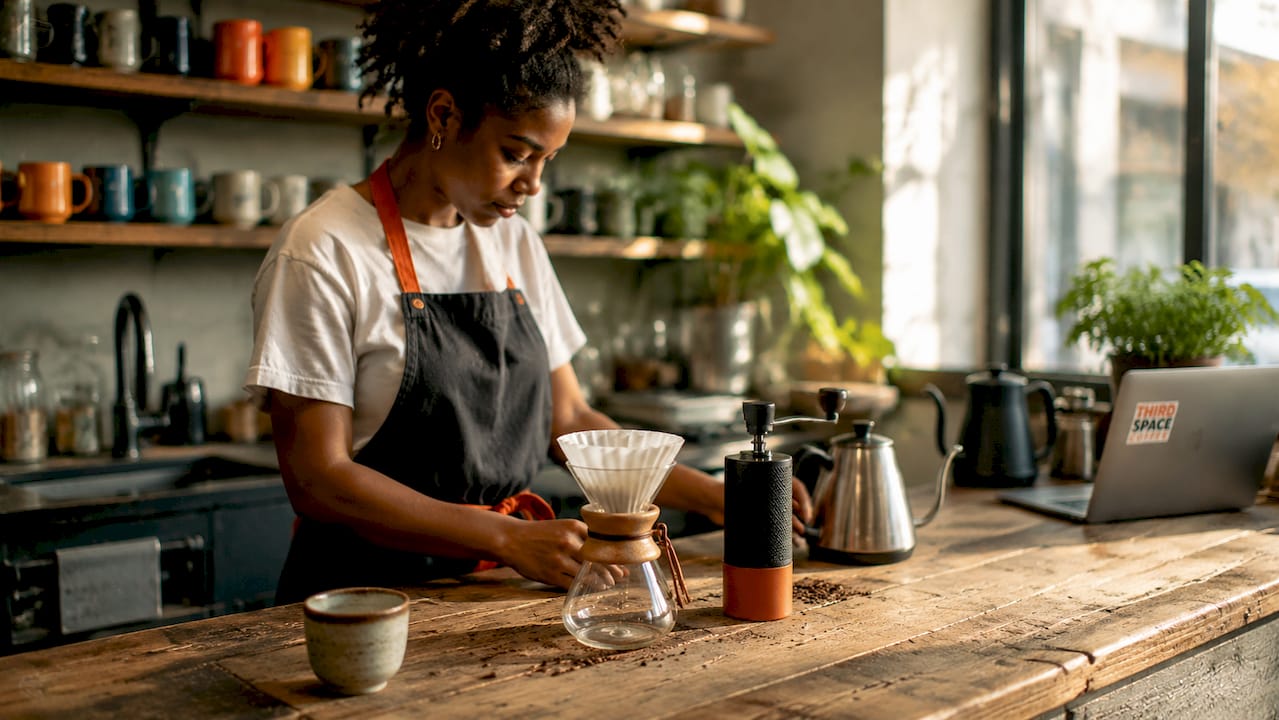
The physical layout of your coffee station determines how fast and smoothly your event runs. Efficient workflow maps drink preparation from cup selection through grinding, extraction, milk steaming, assembly, and handoff in a single linear sequence. When equipment follows that order left to right, baristas never cross paths or double back.
Sequencing your station layout
Set up your station so each step flows into the next without gaps or detours. Grinders go first. Extraction equipment comes next. Milk tools sit immediately after. Assembly and handoff happen at the far end. This linear preparation sequence cuts wasted movement and keeps service fast even when the room is full.
For a home coffee bar setup, the same logic applies. Thirdspacecoffee covers ergonomic equipment arrangement in detail for anyone building a hands-on practice station before their event.
Assigning roles clearly
Every workshop needs three defined roles. Clear role assignments, including an event manager, barista lead, and floaters, are the backbone of smooth event operations. The event manager handles the room, timing, and attendee questions. The barista lead runs the station and maintains quality. Floaters move between tasks, restock supplies, and solve problems before they escalate.
- Event manager: Controls the agenda, watches the clock, and manages the room energy
- Barista lead: Owns the brewing station and maintains consistency across every cup
- Floaters (1–2 people): Restock supplies, assist attendees at hands-on stations, and handle unexpected issues
Pro Tip: Run a full workflow test under busy conditions with multiple baristas and 10–20 simulated orders before event day. Testing at peak volume reveals bottlenecks you cannot spot during a quiet walkthrough.
How should you structure the session timeline for maximum engagement?
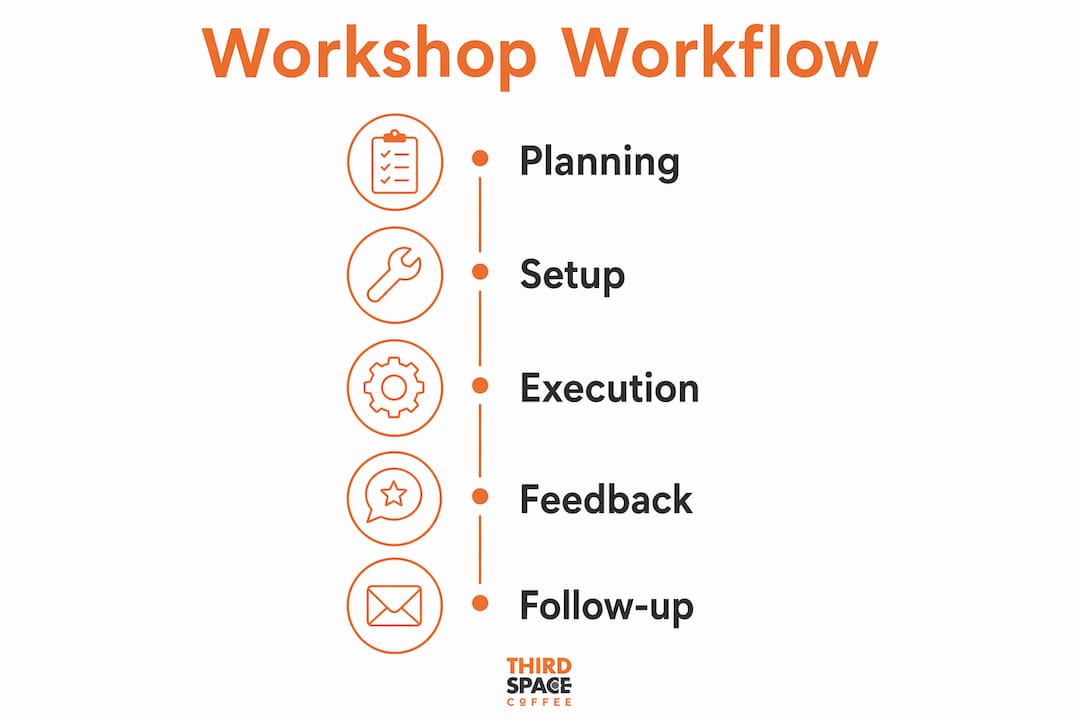
Session structure is where most organizers lose their audience. A well-paced coffee event planning approach treats the workshop like a story with a clear beginning, middle, and end rather than a series of back-to-back technical demonstrations.
Educational coffee workshops typically run 60–180 minutes with attendance capped at 5–10 participants for quality instruction. Smaller groups allow for hands-on practice and real conversation, which is what separates a workshop from a lecture.
A proven session structure
- Welcome and framing (10–15 minutes): Introduce the theme, the beans, and the people in the room. Set expectations for the session.
- First demo (10–15 minutes maximum): Show one technique clearly. Keep it short. Demos under 15 minutes prevent fatigue and hold attention better than extended walkthroughs.
- Hands-on practice (20–30 minutes): Attendees try the technique themselves. This is the highest-engagement segment of any workshop.
- Tasting and discussion (15–20 minutes): Guided tasting with open conversation. Alternating session intensities like demos, tastings, and discussions keeps energy up and prevents the room from going flat.
- Reflection and close (10 minutes): Summarize key takeaways, answer final questions, and point attendees toward next steps.
Pro Tip: Build a one-page printed agenda for each attendee. People relax when they know what comes next, and a physical agenda reduces the number of "what are we doing now?" interruptions.
The narrative arc approach, moving from welcome through exploration to reflection, sustains energy across the full session. Attendees leave feeling like they experienced something complete rather than just attended a class.
What are the best practices for post-event follow-up?
Post-event communication is the step most organizers skip, and it is the step that converts a one-time attendee into a regular community member. Automated email sequences tied to event triggers increase attendance rates and build long-term loyalty. The sequence does not need to be complicated to be effective.
A solid post-event workflow includes:
- Confirmation email: Sent immediately after registration with event details and what to bring
- Two-day reminder: Sent 48 hours before the event with logistics, parking, and any prep instructions
- Same-day message: A short note with final details and a warm welcome
- Post-event follow-up (sent within 24 hours): Thank attendees, share a feedback form, and include an invitation to your next event or community group
Feedback collection is not optional if you want to improve. A short three-question form covering what worked, what did not, and what attendees want next gives you the data to build a better workshop every time. QR code check-ins at the door also capture attendance data you can use for future marketing and segmentation.
The final goal of follow-up is community conversion. Invite attendees to a private group, a mailing list, or your next event. Coffee shop hospitality principles apply directly here: people return to places where they feel recognized and welcomed.
Key Takeaways
A successful community coffee workshop workflow requires planning that starts six weeks out, a linear station layout, defined team roles, a story-driven session structure, and a post-event follow-up sequence that converts attendees into regulars.
| Point | Details |
|---|---|
| Start planning 6–8 weeks early | Secure permits, vendors, and venue before opening RSVPs to avoid last-minute gaps. |
| Build a linear station layout | Arrange equipment from grinding to handoff in one direction to cut wasted movement. |
| Assign three clear roles | Event manager, barista lead, and floaters each own specific responsibilities on event day. |
| Cap group size at 5–10 | Smaller groups allow hands-on practice and real conversation, which drives satisfaction. |
| Automate post-event emails | A four-step email sequence converts first-time attendees into returning community members. |
What I've learned from running coffee workshops that most guides won't tell you
The biggest mistake I see organizers make is treating the workflow as a logistics problem when it is really a hospitality problem. You can have a perfect station layout and a color-coded run sheet, and still lose the room if the energy feels transactional. People come to a community coffee workshop because they want to connect, not just learn a technique.
The second thing most guides skip is the value of a bad rehearsal. Running your workflow under pressure before event day, with real orders and real people moving through the space, will expose every flaw you missed on paper. I have never run a test that did not reveal at least one thing worth fixing. That discomfort before the event saves you from a much worse version of it on the day.
Pacing is the third underrated skill. Organizers who rush through content to cover everything leave attendees feeling overwhelmed. The ones who slow down, let a tasting linger, and give people time to talk to each other build the kind of sessions people tell their friends about. Less content, delivered well, beats a packed agenda every time.
The coffee shop workflow principles that apply to daily operations translate directly to workshop settings. The fundamentals do not change: clear roles, linear movement, and genuine hospitality.
— Tanya
How Thirdspacecoffee supports your next coffee workshop
Thirdspacecoffee in Colorado Springs gives organizers a ready-made foundation for community coffee events. The shop roasts whole bean coffee in-house, which means you can source fresh, high-quality beans for your workshop directly from a local roaster who knows the product.
Thirdspacecoffee also operates as a bookable event space, making it a practical venue option for workshops, tastings, and collaborative brewing sessions. Their specialty drinks and whole bean selections give you both the ingredients and the inspiration to build a workshop around. Whether you are planning your first session or your tenth, Thirdspacecoffee offers the products and the space to make it work.
FAQ
How long should a community coffee workshop run?
Educational coffee workshops typically last 60–180 minutes, with 90 minutes being the most common sweet spot for balancing instruction and hands-on practice without fatigue.
How many attendees should I cap my workshop at?
Cap attendance at 5–10 participants for quality instruction. Smaller groups allow hands-on practice and real conversation, which drives higher satisfaction and repeat attendance.
When should I start planning a coffee workshop?
Start planning 6–8 weeks before your event date to manage permits, vendor contracts, equipment sourcing, and early promotion without rushing.
What roles do I need to staff a coffee workshop?
Every workshop needs an event manager to run the room, a barista lead to own the station, and at least one floater to handle restocking and attendee support. Defined roles and a clear communication structure prevent confusion and speed up problem-solving on event day.
How do I keep attendees coming back after a workshop?
Send a post-event email within 24 hours, include a short feedback form, and invite attendees to your next event or community group. Automated email sequences tied to event triggers consistently convert first-time attendees into regulars.