 comparison
Pour Over vs Drip Coffee: Flavor Profile Compared
Last Updated: November 9, 2026
Quick Summary
Pour over coffee is brewed by hand and gives you control over pour speed, timing and temperature, which usually produces a cleaner, brighter cup with more distinct tasting notes. Drip coffee is made by a machine and tends to taste rounder and more consistent from pot to pot. Neither is better in every case, and the beans and roast level often matter as much as the method.
- Pour over is manual, while drip is automatic and handled by a machine.
- Pour over usually tastes cleaner and lighter-bodied, with clearer aroma and acidity.
- Drip tends to feel fuller and more uniform from cup to cup.
- Pour over typically calls for a medium-fine grind, while drip usually uses a medium grind.
- Run a blind taste test with the same beans and ratio to compare the methods fairly.
Table of Contents
- Pour Over vs Drip Coffee: What Each Method Is
- How Flavor Profiles Differ Between Pour Over and Drip
- Pour Over vs Drip Coffee Grind Size and Why It Changes the Cup
- Coffee Extraction Variables That Control Flavor
- Choosing the Best Coffee Beans for Pour Over
- Running a Fair Taste Test at Home With Both Methods
- Which Method to Brew Next: Pick Your Setup and Test It
- Frequently Asked Questions
A pour over coffee and a drip coffee can be brewed from the same beans and still taste noticeably different in the cup. The gap comes down to how water moves through the grounds, how long it stays in contact with them, and how evenly the extraction happens. This comparison walks through how each method shapes flavor, which variables you control, and how to run a fair taste test at home. Pour over coffee rewards hands-on control, while drip coffee is valued for consistency and convenience.
Pour Over vs Drip Coffee: What Each Method Is
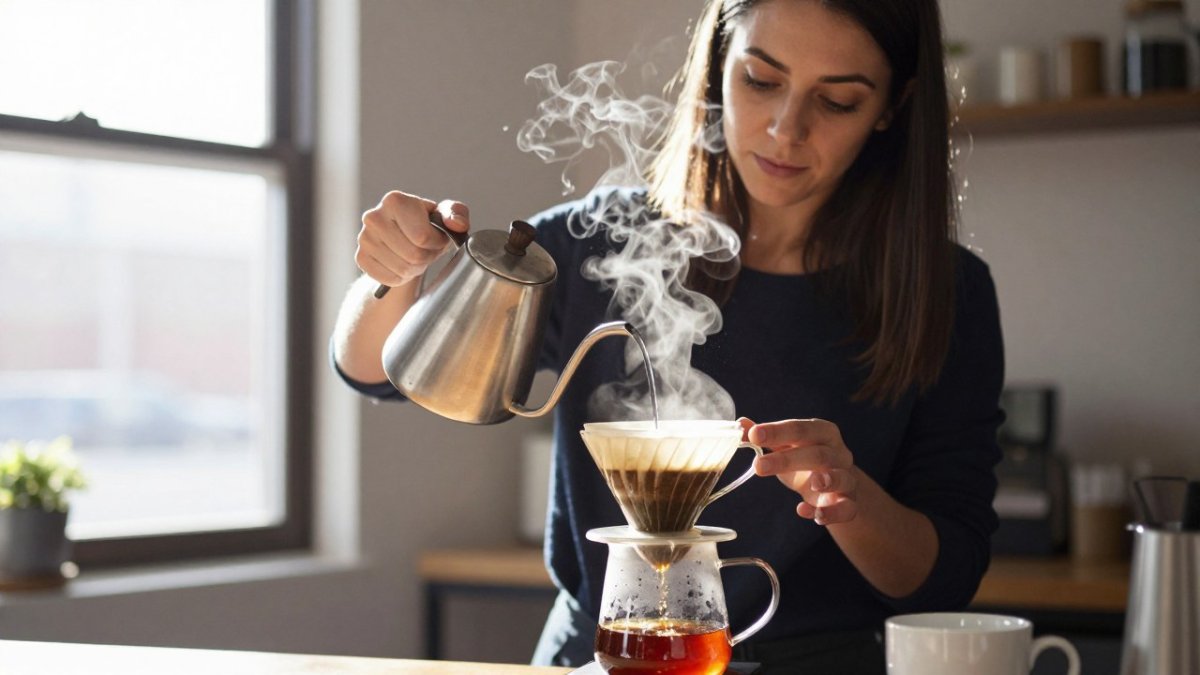
Pour over is a manual method. Hot water is poured by hand over ground coffee in a cone-shaped dripper, usually with a paper filter, and drains into a cup or carafe below. Drip coffee is an automatic method. A machine heats water, distributes it over a filter basket of grounds, and collects the brew in a carafe.
The core difference is who controls the variables. With pour over, you decide the pouring pattern, the pace, and the timing. With drip, the machine makes those decisions for you, which is why drip is usually more repeatable from one pot to the next.
How Flavor Profiles Differ Between Pour Over and Drip
Pour over tends to produce a cleaner, more transparent cup. Because the grounds are saturated in a controlled way and the paper filter catches fine particles, the brew often shows distinct tasting notes such as fruit, florals, or nuts. Drip coffee generally tastes rounder and more uniform. It is less likely to reveal subtle differences between beans, but it delivers a steady, dependable flavor from cup to cup.
Neither result is better in every case. A light roast from a single-origin coffee often shines as a pour over, where its complexity stands out. A darker, chocolatey blend may taste just as good, or better, from a drip brewer.
Body, Clarity and Aroma
Body refers to how heavy the coffee feels in the mouth. Drip coffee often feels fuller because more of the coffee's oils and fine particles pass through. Pour over usually feels lighter-bodied and clearer, which lets acidity and aroma stand out more.
Aroma follows a similar pattern. Pour over tends to release more of the volatile aromatic compounds that give a coffee its perfume. If you want to notice those top notes, pour over gives you more to work with.
Sweetness, Acidity and Bitterness
Sweetness, acidity, and bitterness all depend on extraction. Under-extracted coffee tastes sour and thin. Over-extracted coffee tastes bitter and hollow. A well-balanced cup sits between those extremes.
Pour over gives you more chances to adjust this balance, because you can change the pour speed, the water temperature, and the total brew time. Drip coffee tends to land closer to a stable middle, which is useful when you want a balanced cup without thinking about it.
Pour Over vs Drip Coffee Grind Size and Why It Changes the Cup
Grind size is one of the strongest levers on flavor. Finer grounds have more surface area, so water extracts from them faster. Coarser grounds release flavor more slowly. To dial this in, read a concrete guide to adjusting grind size for better flavor.
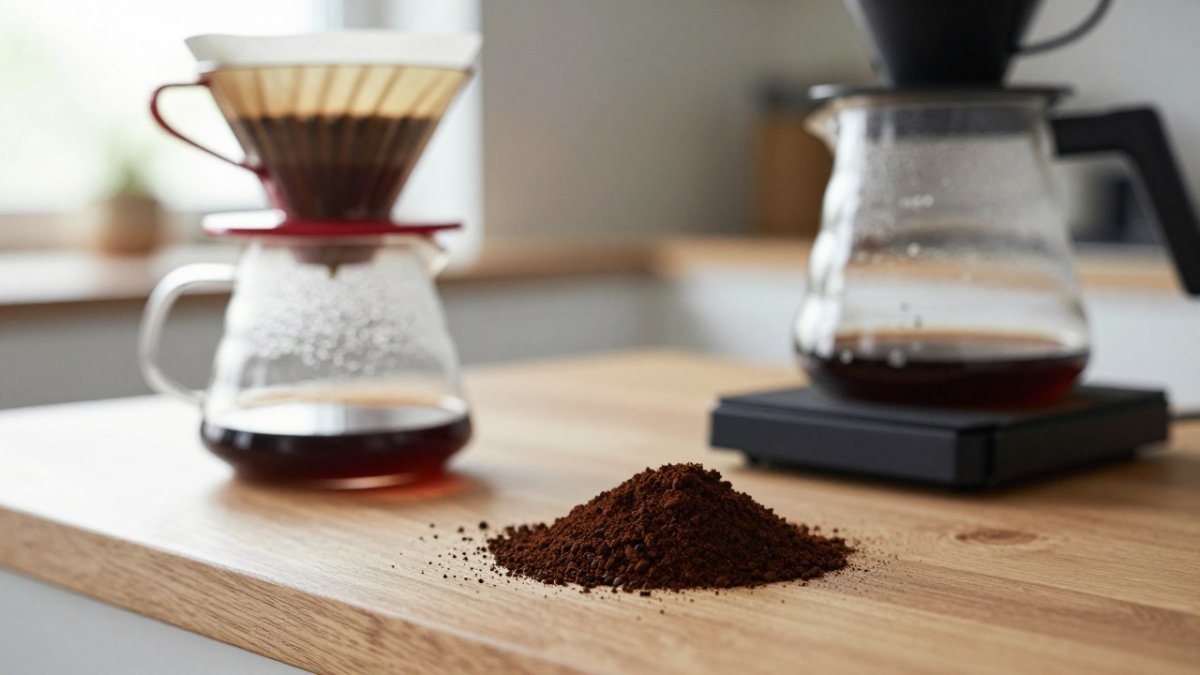
Pour over typically calls for a medium-fine grind, adjusted to your recipe and filter. If you switch methods with the same bag of coffee, you often need to change the grind size too. A grind that works in a drip basket can taste sour in a pour-over dripper, and a fine pour-over grind can clog or over-extract in a drip machine.
Coffee Extraction Variables That Control Flavor
Extraction is the process of dissolving flavor compounds from coffee grounds into water. The goal is to dissolve enough of the good compounds, sugars, acids, and aromatics, without pulling out the harsh ones that taste bitter or hollow. Four variables control how much and which compounds dissolve, and each one behaves differently in pour over versus drip.
- Grind size: Finer grounds have more surface area, so water extracts faster. Pour over usually calls for a medium-fine grind, adjusted to your dripper and filter. Drip machines usually use a medium grind because their brew times and water flow are fixed. A common pattern is that a grind that works in a drip basket tastes sour in a pour-over dripper, and a fine pour-over grind can clog or over-extract in a drip machine.
- Water temperature: Hotter water extracts more quickly and can pull out more bitterness; cooler water slows extraction and can leave the cup sour. Pour over lets you set and adjust temperature directly. Brewers with controlled temperature hold a steady set point.
- Contact time: Longer contact between water and grounds extracts more flavor. Drip contact time is set by the machine's cycle, often in a similar window but not directly adjustable. If a drip brew tastes weak, the fix is usually grind or dose rather than time.
- Coffee-to-water ratio: A stronger ratio gives a more intense cup. Pour over lets you change the ratio cup by cup. Drip fixes the ratio once you load the basket, so you control it mainly by how much coffee you add.
A fifth variable sits underneath all four: extraction yield, the percentage of the coffee's mass that dissolves into the cup. Under-extracted cups tend to taste sour and thin, and over-extracted cups tend to taste bitter and hollow. You do not need a refractometer to use the idea, taste is the practical guide. If the cup is sour, grind finer, raise the temperature slightly, or extend contact time. If it is bitter, do the opposite.
Pour over lets you adjust all of these directly, which is why it rewards attention but also punishes inconsistency. If your cups keep coming out sour or bitter, practical fixes for common pour-over extraction problems walk through the adjustments. Drip coffee fixes most of them, so you control mainly grind size and the amount of coffee you add. That is why understanding these variables matters even if you prefer the convenience of an automatic brewer: it tells you which lever you actually have.
Watch out: changing two variables at once makes it impossible to know which one fixed or broke the cup. Adjust one, taste, then adjust the next.
Choosing the Best Coffee Beans for Pour Over
Pour over shows off bean quality, so the choice of beans matters more here than with many other methods. Look for beans with a roast date printed on the bag.
Light to medium roasts from single-origin coffees often work well for pour over, because they keep their origin character. For guidance on picking a suitable pour-over coffee, see choosing the right beans for pour over. Darker roasts can taste heavy or smoky in a clean pour-over cup, though they may suit a drip machine well.
Running a Fair Taste Test at Home With Both Methods
Most comparisons of pour over and drip flavor are not fair tests. They use different beans, different grind settings, or different recipes, so the method effect is tangled up with recipe differences. A controlled, like-for-like comparison separates the two.
Start by holding the coffee and recipe constant. Use the same beans from the same roast date, the same water, and the same coffee-to-water ratio by weight. Grind the same dose for each method, then adjust only if one method clearly needs it.
A simple blind-tasting protocol removes bias:
- Label two identical cups A and B, and have someone else pour without telling you which method made which cup.
- Taste both, then write down body, sweetness, acidity, aroma, and aftertaste for each before discussing.
- Reveal the labels only after your notes are complete.
- Repeat once with the labels swapped to check whether your preference holds.
When you compare, map the likely differences by roast level rather than assuming one method wins. To understand how origin shapes flavor notes, read on before you choose.
Automatic brewer quality also changes the result. A basic machine may brew below the ideal temperature range and distribute water unevenly, which flattens flavor. A brewer with controlled temperature, even water distribution, and programmable settings narrows the gap with pour over and makes the comparison more precise.
Troubleshoot each cup by method. A sour, thin pour over usually means the grind is too coarse, the water too cool, or the pour too fast. A bitter, hollow pour over usually means the grind is too fine or the contact time too long.
Finally, treat preference as data, not a verdict. Perceived superiority depends on your taste, your recipe, and how consistent each method is in your hands. A blind test tells you which cup you prefer with those beans and that recipe, not which method is universally better.
A controlled comparison keeps the beans, water, and ratio constant so the brewing method is the only real variable.
| Step | What to do | Time or frequency |
|---|---|---|
| Hold constant | Same beans, roast date, water, ratio by weight | Before brewing |
| Grind | Same dose for each method, adjust only if needed | Per brew |
| Brew | Both cups back to back, similar temperature | Within a few minutes |
| Blind tasting | Label A and B, someone else pours | Each session |
| Record | Note body, sweetness, acidity, aroma, aftertaste | Before discussing |
| Repeat | Swap labels and taste again | Once more |
Which Method to Brew Next: Pick Your Setup and Test It
Choose pour over if you enjoy the process, want to explore nuanced flavors, and do not mind a few extra minutes at the counter. Choose drip if you want a dependable, hands-off brew for a busy morning or a crowd.
Either way, start with fresh beans and a consistent recipe. Run the taste test described above, and let your own results guide your next purchase. If you want help choosing beans or want to try both methods with coffee we roast ourselves, stop by Third Space Coffee and taste the difference for yourself.
Frequently Asked Questions
Does pour over or drip coffee taste better?
Neither method is objectively better. Pour over gives you direct control over water temperature, pour rate and contact time, which often brings out brighter, more nuanced flavors and aromas. Automatic drip brewers are built for repeatability and convenience, producing a steadier, fuller-bodied cup with less effort. Preference depends on the beans, the roast and the taste you want. A controlled side-by-side test using the same coffee and ratio is the most reliable way to decide for yourself.
What is the main disadvantage of pour over coffee?
Pour over demands more attention and skill. Results shift with grind size, water temperature, pouring technique and timing, so a cup can taste different from one day to the next if any variable drifts. It also takes longer per cup and requires a kettle and scale for best results. Drip machines avoid most of that variability, which is why they remain popular for consistent batches and busy mornings.
How does grind size affect pour over versus drip coffee flavor?
Grind size controls how fast water extracts flavor from the grounds. Pour over typically uses a medium-fine grind that lets you tune extraction by adjusting pour speed and bloom time. Automatic drip brewers are designed around a medium grind that fits their fixed brew cycle. Grinding too fine in either method can cause over-extraction and bitterness, while grinding too coarse can leave the cup thin and sour.
Why does pour over coffee often taste brighter than drip?
Pour over usually produces a cleaner, more transparent cup with higher perceived acidity and floral or fruity notes. The slower, more even water flow and the paper filter's removal of oils and fine particles tend to emphasize clarity. Drip coffee, with its steadier flow and different contact time, often tastes rounder and heavier in body. The bean's origin and roast level also shape how bright either method tastes.