
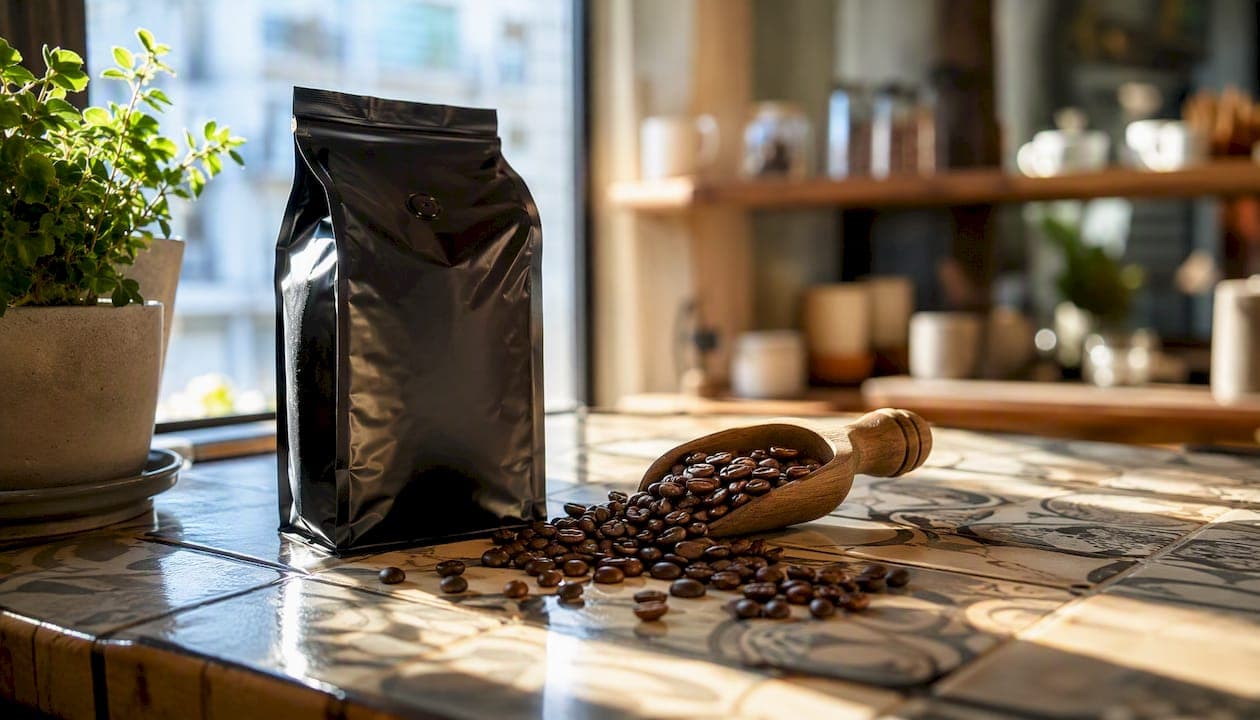
The roast date tells you when the flavor clock started. Brew too early and CO₂ interference flattens your extraction; wait too long and oxidation strips the aromatics you paid for. The sweet spot, according to practical roastery guidance, sits around days 5–14 post-roast for most brew methods, with flavor still very good through 3–4 weeks depending on storage and roast level.
Here is the quick-reference timing you can use right now:
- Espresso: Rest 7–14 days after roast for stable extraction and full body
- Pour-over / drip: 5–14 days; light roasts often benefit from a few extra days
- French press / immersion: 7–21 days; more forgiving of residual CO₂
- Cold brew: 10–21 days; slightly older beans work well here
- Day-of-roast brewing: Fine for a taste experiment, but expect uneven extraction and a grassy, hollow cup
Key Takeaways
The roast date is the only label that starts the flavor clock — brew within the method-specific window and store whole beans airtight to protect every day of that window.
| Point | Details |
|---|---|
| Peak window is days 5–14 | Most brew methods hit peak flavor between 5 and 14 days post-roast; flavor holds through 3–4 weeks with good storage. |
| Espresso needs more rest | Wait 7–14 days for espresso; excess CO₂ in early days causes channeling and uneven extraction. |
| Dark roasts stale faster | Surface oils and porous structure mean dark roasts oxidize quicker than light roasts — use them within 2–3 weeks. |
| Store whole beans airtight | Keep beans in an opaque, airtight container away from heat and light; grind just before brewing to slow oxidation. |
| Thirdspacecoffee | In-house roasted whole beans available for front-of-store pickup in Colorado Springs, so your roast-date math stays accurate. |
Table of Contents
- What does "roast date" actually mean on a coffee bag?
- How roast date changes what your coffee tastes like
- Practical freshness windows by brew method and roast level
- How to store roasted coffee at home
- How to buy coffee with roast dates in mind
- Common myths about roast dates and freshness
- How Thirdspacecoffee approaches roast-to-cup timing
- The roast date is a tool, not a rulebook
- Get freshly roasted beans from Thirdspacecoffee
- Sources
What does "roast date" actually mean on a coffee bag?
The roast date is simply the calendar day the green beans were put through the roaster. That is it. No calculation, no shelf-life estimate — just the moment the flavor clock started ticking.
What it is not is a best-by or sell-by date. Specialty roasters print roast dates because they are the clearest indicator of flavor age; best-before dates are marketing and safety windows, often set many months ahead by mass-market brands. A bag stamped with a distant best-by date tells you almost nothing about whether the coffee tastes good today.
You will find roast dates in a few formats: a printed calendar date ("Roasted On: April 14"), a Julian code (the 104th day of the year = April 14), or a stamped batch number that requires a quick lookup. Specialty roasters usually make it obvious. If you cannot find a roast date at all, treat that as a red flag — supermarket coffee without one is frequently 3–6 months old before it hits the shelf.
Some roasters also add a "best enjoyed by" note calculated from the roast date, often a couple of months out. That is a freshness recommendation from the roaster, not a food-safety expiration. The roast date itself remains the only label that anchors the flavor timeline.
One more packaging detail worth knowing: bags with a one-way valve let CO₂ escape without letting oxygen in. This matters because freshly roasted beans off-gas aggressively, and a sealed bag without a valve would balloon and burst. The valve buys you practical shelf life before you open the bag, but once it is open, the clock accelerates.
How roast date changes what your coffee tastes like
Two processes run in opposite directions after roasting: degassing and oxidation. Understanding both tells you exactly why timing matters.
Degassing: too much CO₂ is a real problem
During roasting, CO₂ forms inside the bean cell structure. Right after roast, beans are saturated with it. Brew too early and that CO₂ escapes violently during extraction, creating uneven flow paths in espresso (called channeling) and a hollow, slightly sour or grassy flavor in any brew method. Trade Coffee's freshness guide identifies a practical peak window of roughly 5–21 days depending on method, with the early days specifically problematic for espresso.
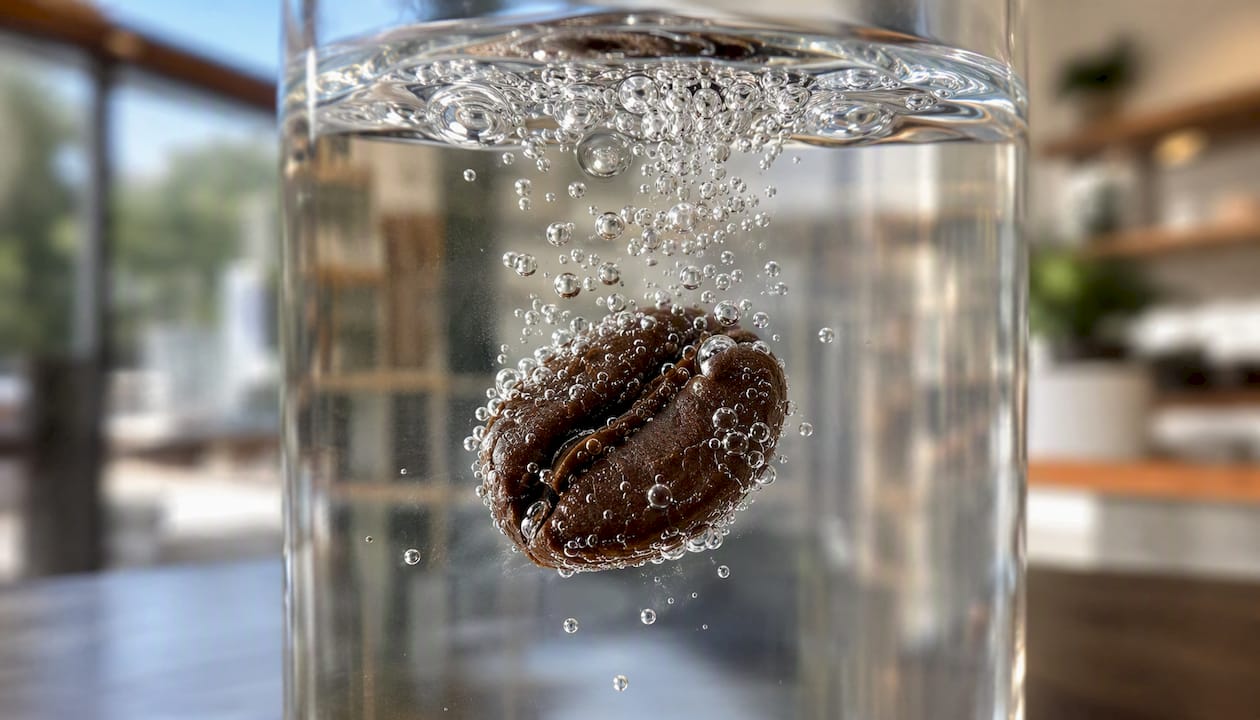
You can actually see degassing in action: drop a freshly roasted bean in water and watch it fizz. That same CO₂ is what causes the "bloom" when you pour hot water over grounds. A healthy bloom means the coffee is fresh. No bloom at all means it has gone flat.
Oxidation: the slow flavor thief
Once CO₂ levels drop to a workable range, oxygen takes over as the main threat. Oxidation progressively breaks down the volatile aromatic compounds that give coffee its brightness, fruit notes, and complexity. The result is a cup that tastes flat, papery, or faintly rancid. Airtight storage slows this considerably, but it cannot stop it.
How roast level changes the pace
Dark roasts degas faster and oxidize faster. The roasting process breaks down cell walls and pushes oils to the surface, creating more exposure to oxygen. A dark roast that tastes great at day 7 may taste noticeably stale by day 18. Light roasts, especially high-density beans from high-altitude origins like Ethiopian Yirgacheffe or Colombian Huila, hold their aromatics longer and often benefit from a slightly extended rest before brewing. See how roasting shapes flavor for a deeper look at how roast level affects the bean's physical and chemical structure.
What a too-fresh cup tastes like: grassy, hollow, slightly sour, with an uneven mouthfeel. Espresso will show obvious channeling.
What an oxidized cup tastes like: flat, papery, sometimes faintly musty. The brightness is gone and the finish is short.
Pro Tip: For espresso specifically, pull a test shot at day 5 and again at day 10. The difference in crema stability and flavor clarity is usually dramatic enough to calibrate your own palate to the degassing curve.
Practical freshness windows by brew method and roast level
The table below maps brew method and roast level to recommended wait windows. These are practical starting points, not hard rules — your specific origin, grind size, and storage conditions will shift things slightly.
| Brew Method | Light Roast | Medium Roast | Dark Roast | Notes |
|---|---|---|---|---|
| Espresso | 10–21 days | 7–14 days | 5–10 days | Dark roasts degas fast; light roasts need longer rest |
| Pour-over / drip | 7–21 days | 5–14 days | 4–10 days | Filter is more forgiving of residual CO₂ |
| French press | 7–21 days | 7–18 days | 5–14 days | Immersion tolerates slightly older beans well |
| Cold brew | 10–21 days | 10–21 days | 7–18 days | Slightly older beans work; cold extraction is slow |
| AeroPress | 5–18 days | 5–14 days | 4–10 days | Versatile; adjust by taste |
A few sensory indicators to guide you beyond the calendar:
- Bloom test: Pour a small amount of hot water over grounds. A vigorous, domed bloom means active degassing and good freshness. A weak or absent bloom suggests the coffee is past its peak.
- Aroma check: Open the bag and smell. Fresh coffee should hit you with a clear, distinct aroma. Faint or flat smell means oxidation has already done damage.
- Crema stability (espresso): Thin, fast-collapsing crema often signals either too-fresh (excess CO₂) or too-old (depleted oils) beans.
Buying online? Do the math on arrival age. If a roaster ships within two days of roasting and standard shipping takes four days, your beans arrive at day 6. For espresso, that puts you right at the start of the ideal window. For filter, you could brew immediately. Add transit time to the roast date before you assume freshness.
How to store roasted coffee at home
Good storage does not extend the roast date, but it does protect the window you have. Airtight storage in a cool, dark location is the single most effective step you can take to slow oxidation and preserve volatile aromatics. These coffee bean storage tips cover the full range of home options.
Do these things:
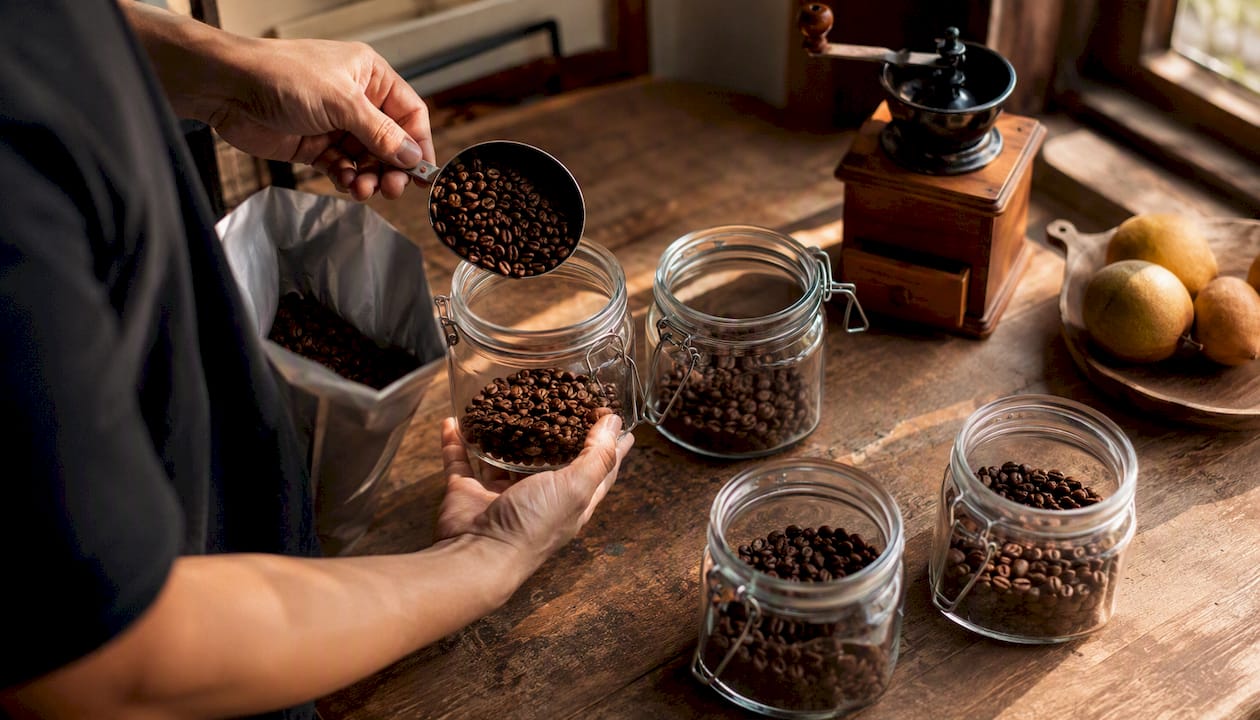
- Keep whole beans in an opaque, airtight container away from heat, light, and moisture
- Grind just before brewing — ground coffee oxidizes roughly 10 times faster than whole beans
- Buy only what you will finish within 2–3 weeks of opening
- Leave beans in the original roaster bag (with one-way valve) until you are ready to use them
- If you buy in bulk, portion into weekly amounts and seal each portion separately
Avoid these mistakes:
- Refrigerating your daily-use bag — temperature cycling causes condensation, which accelerates staling
- Leaving beans in an open bag or a clear glass jar on the counter
- Buying a 2-pound bag when you brew one cup a day (you will never finish it in time)
- Storing near the stove, oven, or any heat source
Freezing is a legitimate option only for long-term storage of a sealed, unopened bag you will not touch for weeks. Once thawed, do not refreeze. Treat it as a one-time move, not a routine.
Pro Tip: Portion a new bag into two or three smaller airtight containers the day you open it. The first portion gets used immediately; the others stay sealed and protected until you need them. This alone can add several days of peak flavor to the later portions.
How to buy coffee with roast dates in mind
Reading a bag correctly takes about 30 seconds once you know what to look for. Here is a practical checklist:
- Find the roast date first. If it is not on the bag, move on. No roast date usually means the coffee is already weeks or months old.
- Calculate arrival age. Add the roaster's typical shipping time to the roast date. If the bag says "Roasted April 10" and it arrives April 16, you have 6-day-old coffee.
- Match age to your brew method. Use the freshness windows above. A 6-day-old bag is perfect for filter; it needs a few more days for espresso.
- Prefer whole bean over pre-ground. Pre-ground coffee begins oxidizing immediately after grinding. Whole beans give you control over when that clock starts.
- Choose roasters who ship within 1–3 days of roasting. Many specialty roasters roast to order or on a weekly schedule. Ask if it is not stated.
- For subscriptions, check the cadence. A weekly subscription that delivers 12 ounces works if you brew one or two cups a day. A monthly delivery of a large bag often means the last week of coffee is past its peak.
- Older roasts are not always wrong. Beans roasted 3–5 weeks ago are still fine for cold brew, baking, or everyday drip when you are not chasing peak flavor. Skip them for a specialty pour-over session, but do not throw them away.
Podium Coffee Club's buying guide makes the point plainly: the absence of a roast date is a red flag, and buying within two weeks of roast is the conservative rule for peak flavor. Local pickup sidesteps the shipping math entirely — you know exactly how old the coffee is when you walk out the door.
Common myths about roast dates and freshness
A few beliefs about "fresh" coffee lead people to brew worse cups, not better ones.
Myth: "Brew it the day it's roasted." This is the most common mistake among enthusiasts who conflate "fresh" with "just roasted." Day-of-roast coffee is saturated with CO₂, which disrupts extraction and produces a grassy, uneven cup. There are exceptions: some experienced home roasters deliberately taste day-of coffee as a calibration reference, not as a drinking experience. For everyone else, wait at least 3–5 days minimum, and longer for espresso.
Myth: "The best-by date tells me when it's fresh." Best-by dates on coffee bags are safety and marketing windows, not flavor windows. A bag with a best-by date 18 months from roast is not telling you the coffee will taste good for 18 months. It is telling you it will not make you sick. Peak flavor is typically gone within 4–6 weeks of roasting, regardless of what the best-by date says.
Myth: "Dark roasts last longer because they taste bolder." The opposite is closer to the truth. Dark roasts have more surface oil exposure and more porous cell structure after roasting, which means they oxidize faster. A dark roast that tastes great at day 7 can taste flat by day 20. Light roasts, with their denser structure and higher acid content, tend to hold complexity longer.
Myth: "Vacuum-sealed or nitrogen-flushed coffee stays fresh indefinitely." Sealed packaging dramatically slows oxidation before opening, but once you break the seal, the same clock applies. A nitrogen-flushed bag opened at day 45 is still 45-day-old coffee.
The editorial case against roast-date obsession is worth reading: handling, storage, roast level, and brewing technique matter just as much as the date on the bag. The roast date is a starting point, not the whole story.
How Thirdspacecoffee approaches roast-to-cup timing
At Thirdspacecoffee in Colorado Springs, roasting is done in-house on a schedule built around the freshness windows described in this article. Beans are roasted in small batches, rested, quality-checked, and bagged before they reach the retail shelf or an online order.
For espresso, we rest beans a minimum of 7 days before they go into service. For our filter offerings, we typically start tasting at day 5 and make the call based on bloom behavior and aroma. The goal is always to hand you a bag that is already in its peak window, not one you have to wait on.
Here is how that workflow translates to what you receive:
- Roast day: Beans are roasted and allowed to begin degassing in the roasting environment
- Days 1–3: Beans rest in sealed one-way valve bags; no retail or shipping during this window
- Days 3–5: QC tasting begins; filter-ready bags may be released
- Days 7+: Espresso-designated bags are released for retail and online orders
- Pickup orders: When you order online for front-of-store pickup, you get beans at a known roast age, not beans that have sat in a warehouse or on a truck
That last point matters more than most buyers realize. Shipping time adds directly to roast age, and a bag that ships on day 3 and arrives on day 8 is already 8 days old before you open it. Local pickup eliminates that variable entirely. You can also read more about how to pre-order for pickup to plan your order around your brewing schedule.
The roast date is a tool, not a rulebook
There is a version of roast-date enthusiasm that becomes its own problem. I have watched people throw out perfectly good coffee because it crossed day 14, or refuse a gift bag because they could not verify the roast date. That is not coffee appreciation — it is anxiety dressed up as expertise.
The guidance in this article is real and worth following, especially if you are dialing in espresso or chasing the peak of a high-end single origin. But for everyday brewing, the practical hierarchy is: check the roast date, store it properly, and brew it within a reasonable window. If the bag is 18 days old and smells great, brew it. If it is 10 days old and smells flat, something went wrong in storage.
Roast level, brew method, and how you store the beans will determine your actual experience more reliably than obsessing over a single number on the bag. Use the date as a starting point, not a verdict.
Get freshly roasted beans from Thirdspacecoffee
Knowing your freshness windows only helps if you can actually get beans at the right roast age. Thirdspacecoffee roasts in-house in Colorado Springs and makes freshly roasted whole bean coffee available for online ordering with front-of-store pickup, so the roast-date math stays simple: you know exactly when the beans were roasted and you pick them up on your schedule.
No warehouse transit, no guessing how long the bag sat on a shelf. Order online, choose your pickup time, and walk out with beans already in or approaching their peak window. If you want to taste the difference before committing to a bag, stop in and try a cup from our specialty drinks menu — every espresso and filter drink is made with beans pulled from the current roast cycle. Browse the full coffee shop to see what is available now, or visit us at 2840 in Colorado Springs to ask about the current roast date before you buy.
Sources
The sources below back the claims in this article and offer deeper reading on roast-date science, storage, and buying strategy.
- Coffee Roast Date Explained: Read, Store, Brew | BrewedLate Coffee
- Coffee freshness explained: what roast date actually means | Trade Coffee
- Roast Date vs Expiry Date — Are You Reading the Right One? - Lighthouse Coffee Roastery & Academy
- Roast Date vs Best-By Date: What to Look For on a Coffee Bag – Podium Coffee Club
- The Science of Freshness: Why Roast Date Matters More Than You Think – Achilles Coffee Roasters
- How Long After the Roast Date Is Coffee Still Good? - Java City