 how-to
How to Brew Fresh Roasted Coffee at Home
Last Updated: November 6, 2026
Quick Summary
You can brew fresh roasted coffee at home with a dripper, kettle, scale, and grinder, but beans need to rest first because they release carbon dioxide for days after roasting. Most beans hit their stride a few days to a couple of weeks off the roast, depending on roast level and brew method. Start with a 1:16 coffee-to-water ratio and water between 195°F and 205°F.
- Dark roasts degas faster than light roasts, so they need shorter rest times before brewing.
- Espresso needs the longest rest because pressurized brewing amplifies any instability in the puck.
- Bloom 20 grams of medium-ground coffee with 40 grams of water and wait 30 to 45 seconds.
- Grind fresh-roasted coffee one step coarser than you would for the same bean after two weeks of rest.
- Store beans whole in an airtight container away from light and heat, and skip the fridge.
Table of Contents
- Why Fresh Roasted Coffee Tastes Different in the First Week
- How Soon After Roasting Can You Brew Coffee?
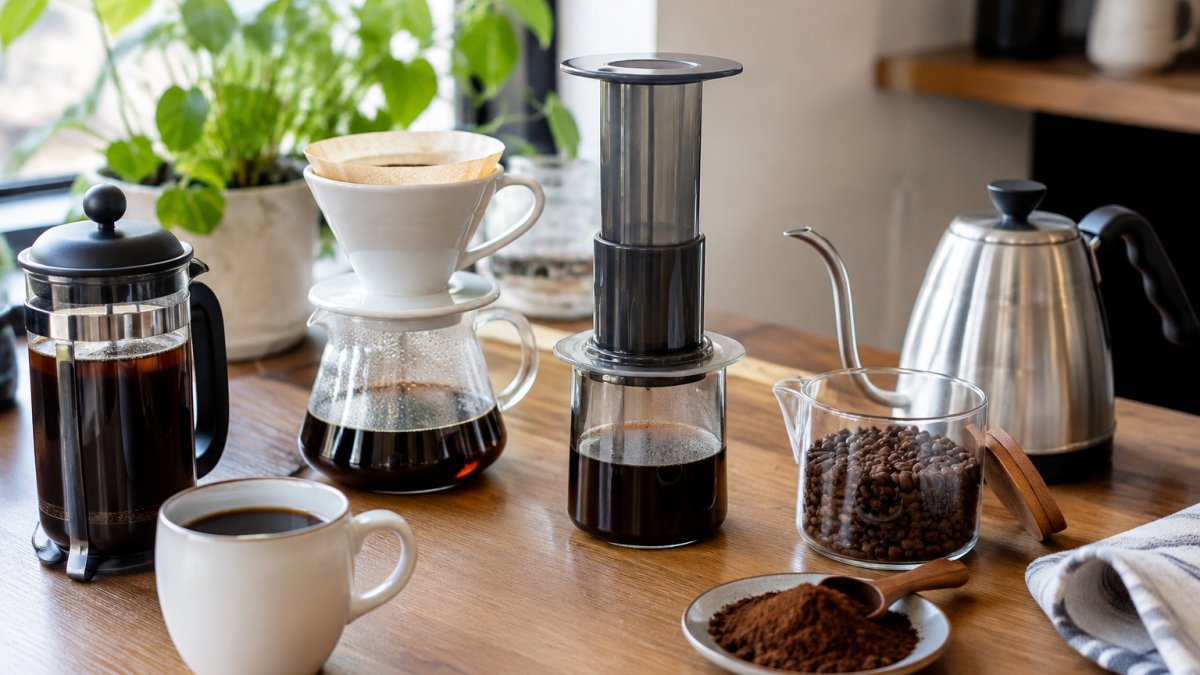
- How to Brew Fresh Roasted Coffee at Home Without a Machine
- The Best Grind Size for Fresh-Roasted Coffee
- Coffee-to-Water Ratio for Fresh-Roasted Coffee
- Water Quality and Temperature: The Variables Most Brewers Skip
- Troubleshooting Sour, Bitter, or Flat Cups From Fresh Beans
- Storing Beans Through the Resting Period
- Frequently Asked Questions
Why Fresh Roasted Coffee Tastes Different in the First Week
Fresh roasted coffee is coffee brewed within days of its roast date, and it behaves nothing like the bag that's been sitting on a shelf. Beans release carbon dioxide for days after roasting, and that gas changes how water moves through the grounds. Beans can taste sharp on day two and round on day nine.
That gap surprises people. Most brewing guides assume your beans are already settled. They aren't.
What degassing does to your brew
Degassing is the release of carbon dioxide trapped inside beans during roasting. (pubmed.ncbi.nlm.nih.gov) While a bean off-gasses, that gas pushes back against the water in your brewer. The result is uneven extraction: some grounds get over-washed, others barely get touched.
You'll notice it as:
- A sour, prickly edge that won't go away
- Bubbling or a foamy "bloom" that collapses fast
- A cup that smells great but tastes thin
The fix isn't a better grinder. It's timing.
How Soon After Roasting Can You Brew Coffee?
You can brew fresh roasted coffee the day after roasting, but it will taste sharp and gassy. Beans often hit their stride a few days to a couple of weeks off the roast, depending on the roast level and how you brew. There's no single answer, and anyone who gives you one is guessing about your beans.
A rest-time guide by roast level and brew method
Use this as a starting point, then adjust to taste:
| Roast Level | Espresso | Pour-Over / Drip | French Press |
|---|---|---|---|
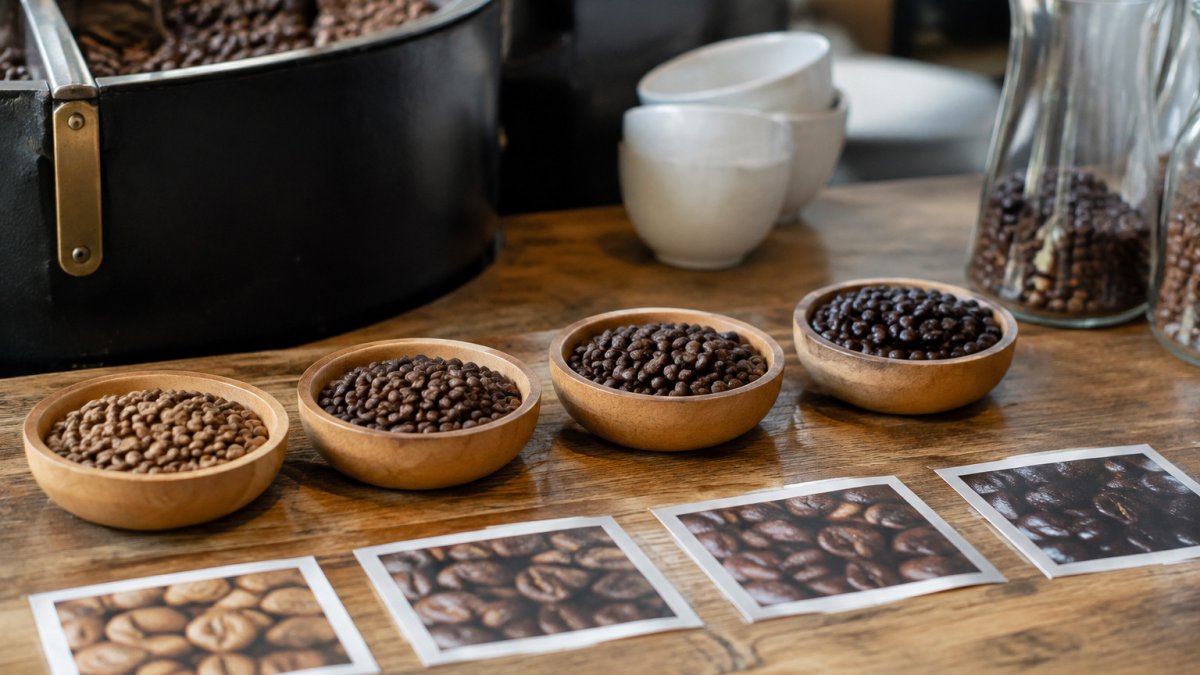
| Light roast | 10-14 days | 7-10 days | 5-8 days |
| Medium roast | 7-10 days | 5-7 days | 4-6 days |
| Dark roast | 5-7 days | 3-5 days | 3-4 days |
Pour-Over / Drip
Two patterns matter here. Darker roasts degas faster because the bean structure is more open. Espresso needs the longest rest because pressurized brewing amplifies any instability in the puck.
How to tell when your beans are actually ready
A calendar is a starting point, not a verdict. The most reliable test is your palate, backed by a few observable cues. Beans are generally ready when three things line up:
- The bloom settles. When you pour the first 40 grams of water over fresh grounds, they should bubble and expand, then settle into a relatively flat bed within 30 to 45 seconds. Beans that are still very gassy will foam aggressively and collapse unevenly; beans that are past their prime will barely bloom at all.
- The aroma turns sweet. Smell the grounds right after grinding. Very fresh beans smell sharp, almost yeasty or bread-like. Rested beans smell sweeter and more like the roast's intended flavors. If the dry aroma is muted or papery, the beans are likely stale, not fresh.
- The cup tastes balanced. Brew a small test cup and taste it black. If the dominant note is a prickly sourness that lingers, the beans need more rest. If the cup tastes flat or hollow, they may have rested too long or been stored poorly. A ready bean tastes sweet, with acidity that feels integrated rather than sharp.
A practical routine: brew a small cup every two days starting on day three, and note the date when the sour edge disappears. That date is your personal rest time for that bean and that brew method. Keep a simple log of roast date, brew date, and taste impression; after two or three bags you'll have a reliable pattern for your setup.
Here's the part most guides skip: you can drink it earlier, you just have to brew around the gas. More on that below.
How to Brew Fresh Roasted Coffee at Home Without a Machine
You can brew fresh roasted coffee at home with a dripper, a kettle, a scale, and a grinder. No espresso machine, no automation, no expensive gear.
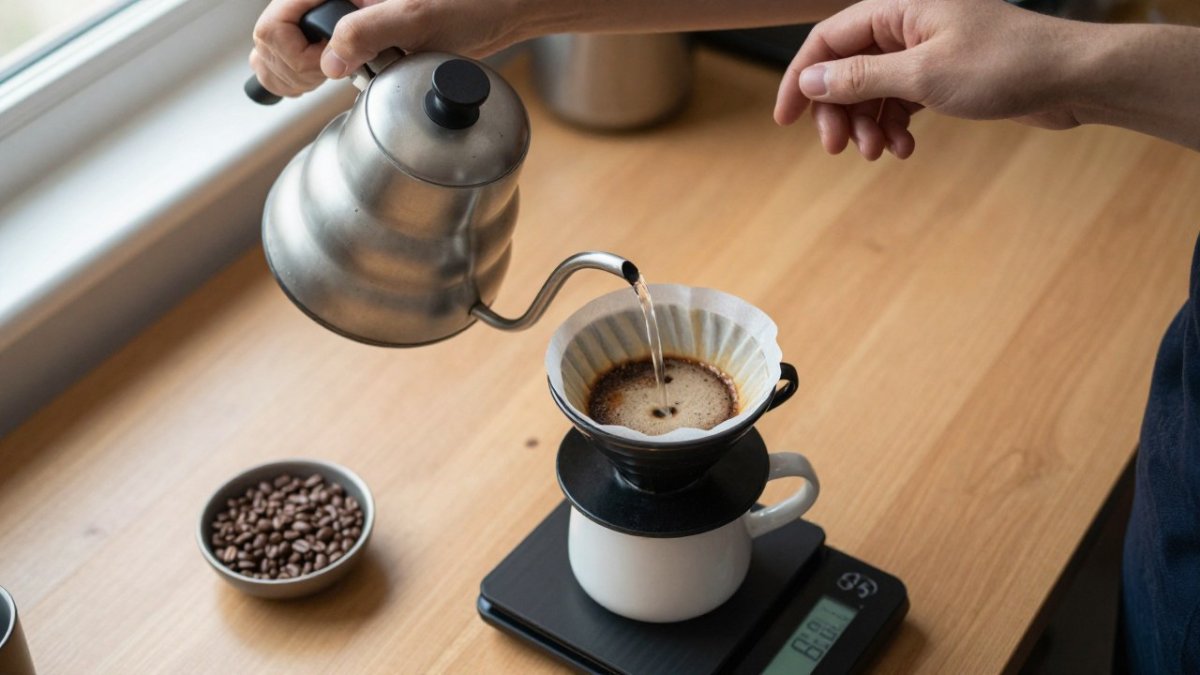
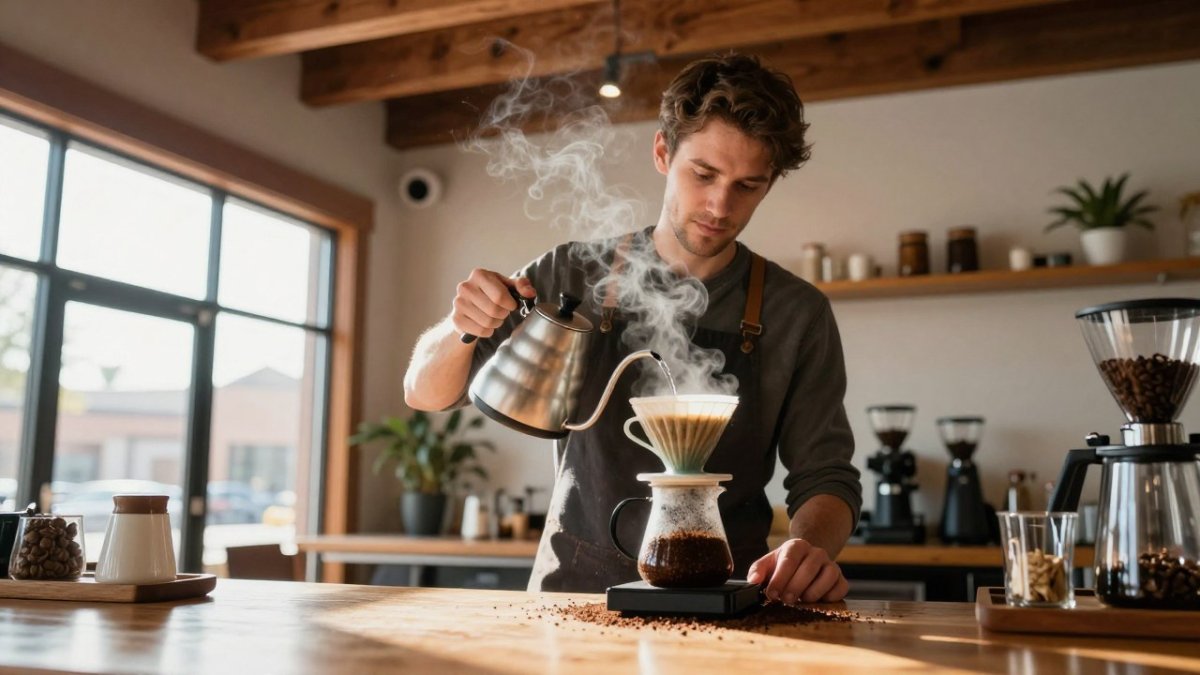
The pour-over method, step by step
Total time: about 4 minutes. Difficulty: easy, but it rewards attention.
What you'll need:
- Whole beans, rested at least a few days
- Burr grinder
- Pour-over dripper and paper filter
- Heat your water to between 195°F and 205°F.
- Rinse the filter with hot water, then discard the rinse. This removes paper taste and preheats the dripper.
- Weigh 20 grams of coffee and grind it medium, about the texture of sea salt.
- Set the dripper on your mug and place it all on the scale. Tare to zero.
- Bloom the grounds with 40 grams of water. Wait 30 to 45 seconds. Fresh beans will bubble hard here, and that's the carbon dioxide leaving.
- Pour in slow circles up to 200 grams total, then continue to 320 grams. Keep the water level steady.
- Let it drain fully. Total brew time should land around 2:30 to 3:30.
Expected result: a flat bed of grounds and a cup with clear sweetness. If you hit channeling or a stall, our guide to 7 pour-over coffee extraction fixes walks through each symptom.
The Best Grind Size for Fresh-Roasted Coffee
The best grind size for fresh-roasted coffee is one step coarser than you'd use for the same bean after two weeks of rest. Fresh beans offer more resistance to water, so a slightly coarser grind keeps the flow even and prevents over-extraction.
Think of it as compensation. The gas is doing some of the work for you.
- Pour-over: medium, like sea salt
- Drip: medium-fine
- French press: coarse, like breadcrumbs
Grind right before you brew. If your cup tastes muddy or slow, our guide on how to adjust coffee grind size covers the dial-in process in detail.
Coffee-to-Water Ratio for Fresh-Roasted Coffee
The standard coffee-to-water ratio for fresh-roasted coffee is 1:16, meaning one part coffee to sixteen parts water. For a single mug, that's about 20 grams of coffee to 320 grams of water.
Fresh beans extract a little differently, so a few adjustments help:
- Start at 1:16 and taste before changing anything
- If the cup tastes thin, tighten to 1:15
- If it tastes heavy or bitter, loosen to 1:17
A 1:16 ratio is the anchor. Change one variable at a time so you know what worked.
Water Quality and Temperature: The Variables Most Brewers Skip
Water makes up most of your cup, so it deserves attention. Two things matter most: mineral content and temperature.
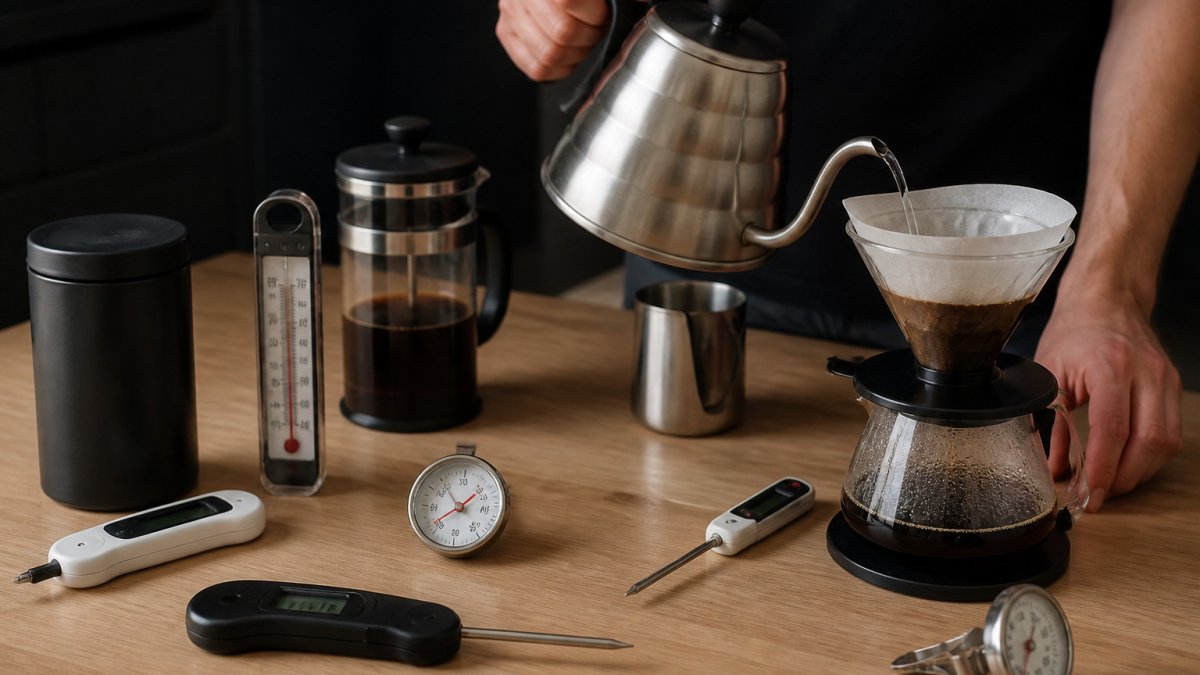
Temperature: brew between 195°F and 205°F. Our guide to the best water temperature for brewing coffee breaks down the range by brew method.
Minerals: pure distilled water makes flat, lifeless coffee. Water with some calcium and magnesium extracts flavor compounds properly.
No thermometer? Our roundup of ways to measure coffee water temperature accurately covers the workarounds.
Troubleshooting Sour, Bitter, or Flat Cups From Fresh Beans
Sour, bitter, and flat cups from fresh beans almost always trace back to gas, grind, or ratio, in that order.
Here's the workflow we'd use:
| Taste | Likely Cause | First Fix | Second Fix |
|---|---|---|---|
| Sour, sharp | Under-extraction from gas | Rest beans 2-3 more days | Grind finer |
| Bitter, dry | Over-extraction | Grind coarser | Lower water temp |
| Flat, hollow | Water quality or stale grounds | Filter your water | Grind fresh |
| Thin body | Ratio too loose | Tighten to 1:15 | Check grind consistency |
The order matters. If your beans are three days off the roast, no grind adjustment will fully fix a sour cup.
Watch out: changing grind and ratio at the same time makes it impossible to know which change helped. Move one lever per cup.
Storing Beans Through the Resting Period
Store fresh roasted coffee in an airtight container, away from light and heat, at room temperature. Skip the fridge during the resting period. It adds moisture and condensation, and moisture is the enemy of a clean cup.
A few habits that preserve freshness:
- Keep beans whole until you brew. Ground coffee loses aroma compounds within hours; whole beans hold them for weeks.
- Use a container with a one-way valve if you have one. The valve lets carbon dioxide escape during degassing without letting oxygen in. A sealed jar without a valve can build pressure and, more importantly, traps the gas that makes fresh beans taste sharp.
- Store in a cool, dark cabinet. Light degrades coffee oils, and heat accelerates staling. A opaque canister on a shelf beats a clear jar on a sunny counter.
Should you freeze fresh roasted coffee?
Freezing is the one storage method that can genuinely extend freshness, but only if you do it right. The goal is to stop the clock during the resting period, not to thaw and refreeze.
- Freeze after the beans have rested, not before. Beans that are still degassing heavily will release gas in the freezer, and repeated temperature swings cause condensation when you open the container. Freezing tends to work best once beans have passed their peak gas release, after the rest window in the table above.
- Portion before freezing. Divide beans into amounts you'll use in a week, seal each portion in an airtight bag or small jar, and squeeze out as much air as possible. A vacuum sealer helps but isn't required.
- Grind from frozen. You can grind beans straight from the freezer; they thaw almost instantly in the grinder. Letting a whole bag thaw and refreeze repeatedly is what causes moisture problems.
- Don't refreeze. Once a portion is thawed, use it within a week and don't put it back.
If you're weighing container options, our guide to the best coffee bean storage containers compares what actually holds up.
Brewing fresh roasted coffee is mostly about patience and one variable at a time.
Frequently Asked Questions
Do fresh-roasted coffee beans need to rest before brewing?
Yes, most beans benefit from a short rest. Right after roasting, beans release carbon dioxide in a process called degassing, and that gas can interfere with water contacting the grounds, which often produces a flat or sharply sour cup. Light roasts often need several days to a couple of weeks, medium roasts a few days to a week, and dark roasts less time, depending on your brew method. Espresso usually wants a longer rest than drip or French press because the pressurized brew amplifies uneven extraction.
What is the best grind size for fresh-roasted coffee?
Match the grind to your brew method, then adjust for freshness. Fresh beans release gas that can slow water flow, so a pour-over that stalls may need a slightly coarser grind than the same beans will need a week later. Use a medium-fine grind for pour-over, medium for drip, coarse for French press, and fine for espresso. Grind immediately before brewing, since ground coffee loses aroma compounds within minutes.
Can you brew fresh-roasted coffee without a coffee machine?
You can brew excellent coffee with no machine at all. A pour-over cone, a French press, or even a simple steep-and-strain method will do the job. For pour-over, use a 1:16 coffee-to-water ratio, water between 195°F and 205°F, and a medium-fine grind. Bloom the grounds with about twice their weight in water for 30 to 45 seconds to let carbon dioxide escape, then pour in slow circles until you reach your target weight.
How should you store freshly roasted coffee beans during the resting period?
Keep whole beans in an airtight container away from light, heat, and moisture, and leave them at room temperature rather than in the fridge. A one-way valve bag works well because it lets carbon dioxide escape without letting oxygen in. Avoid grinding until you brew, and buy in quantities you will finish within two to four weeks of the roast date. Past that window, flavor fades even with perfect storage.