
TL;DR:
- A coffee retail experience encompasses the entire customer journey, from online discovery to post-visit engagement. It is shaped by sensory, social, and functional elements that influence satisfaction and loyalty, with community programming enhancing the overall impact. Recognizing individual preferences helps match customers with venues that align with their values and desired experience.
Most people walk into a coffee shop thinking the only thing that matters is what's in the cup. And while great coffee is the foundation, it's actually just one piece of a much larger picture. The customer's end-to-end journey around a coffee venue, from the moment you discover it online to the way you feel an hour after you leave, is what truly defines a coffee retail experience. For enthusiasts in Colorado Springs, understanding this bigger picture can completely change how you seek out and appreciate local coffee.
Table of Contents
- What defines a coffee retail experience?
- How sensory, social, and functional elements shape your visit
- Customer service and baristas: The heart of hospitality
- The Colorado Springs difference: Beyond coffee to community and events
- Experience design: Balancing comfort, learning, and speed
- A fresh perspective: Why the "best" coffee retail experience is deeply personal
- Experience it yourself: Discover specialty coffee in Colorado Springs
- Frequently asked questions
Key Takeaways
| Point | Details |
|---|---|
| End-to-end journey | A coffee retail experience includes every touchpoint from discovering the shop to after your visit. |
| Sensory and social impact | Ambiance and staff interaction are often more influential than quick service or basic functionality. |
| Hospitality matters | Friendly, attentive service is a core ingredient in building loyalty and memorable experiences. |
| Community connection | Many Colorado Springs venues foster deeper engagement through events and education. |
| Experience is personal | Your ideal shop balances comfort, learning, and convenience based on what you value most. |
What defines a coffee retail experience?
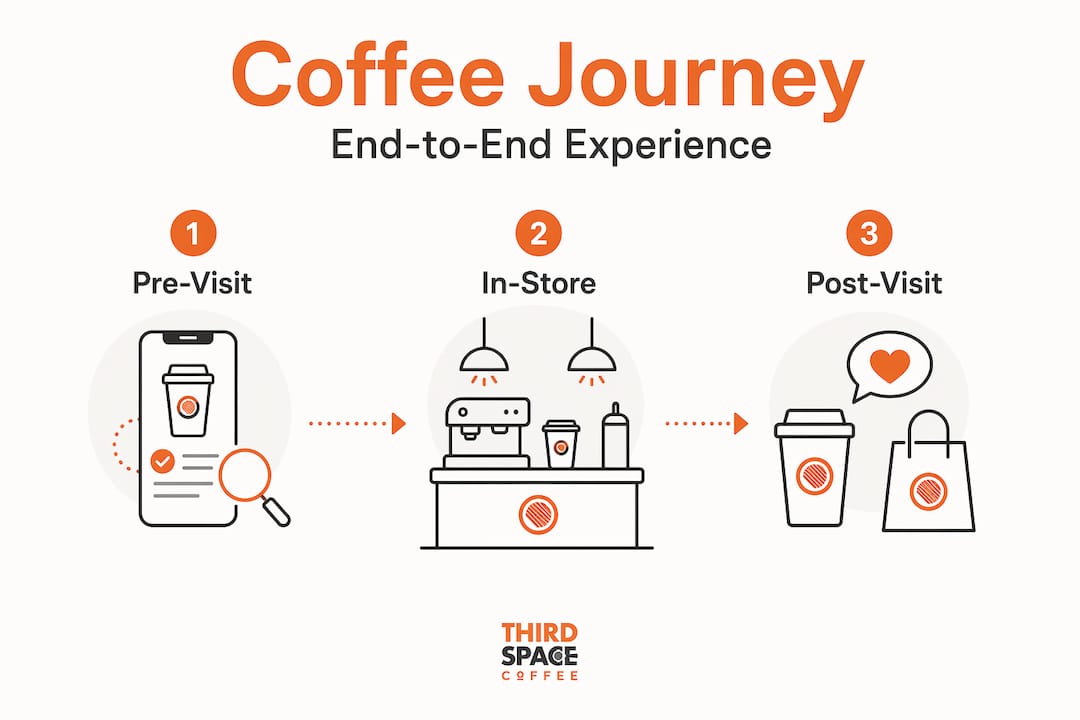
The phrase "coffee retail experience" gets thrown around a lot, but it rarely gets a complete definition. It's not just the drink. It's the complete sequence of interactions you have with a venue, before you ever walk in, while you're there, and after you've gone. Think of it like a story with multiple chapters, and every chapter contributes to how you remember the whole thing.
The customer journey framework breaks this into three stages: pre-visit, in-store, and post-visit. Each stage contains specific touchpoints, which are the moments where the venue either builds trust or loses it.
| Touchpoint | Stage | What it means in practice |
|---|---|---|
| Online discovery | Pre-visit | Website quality, social media, reviews |
| First impression | In-store (arrival) | Storefront, cleanliness, signage |
| Greeting | In-store | How quickly and warmly you're acknowledged |
| Ordering | In-store | Menu clarity, staff knowledge, customization |
| Waiting | In-store | Comfort, transparency about wait time |
| Serving | In-store | Presentation, accuracy, temperature |
| Payment | In-store | Ease, transparency, receipt options |
| Post-visit | After | Follow-up, loyalty programs, social engagement |
Beyond these visible steps, there are also "hidden" micro-moments that silently shape your overall impression:
- The moment you notice whether the bathroom is clean
- How the music volume makes you feel during conversation
- Whether the barista remembered your name from last time
- How the shop handles a mistake in your order
- Whether a staff member makes eye contact or ignores you while finishing a task
These moments don't happen in isolation. Each one adds up to a feeling, and that feeling is what determines whether you become a loyal visitor or you try somewhere else next time. For venues serious about attracting loyal coffee enthusiasts, managing every touchpoint is as important as dialing in the espresso recipe.
Pro Tip: Pay attention to how a coffee shop handles a problem. Whether that's a wrong order, a long wait, or a cold drink. A graceful recovery often reveals more about a shop's service culture than a perfect interaction ever would.
How sensory, social, and functional elements shape your visit
Once you understand the structure of the journey, you can start to look at what's actually driving how you feel at each touchpoint. Research on specialty coffee shop experiences identifies several key categories of in-store experience components: sensory, social, functional, natural, and cultural. Each one has a measurable impact on how satisfied you feel and whether you'll come back.
Here's how they each show up in a typical specialty coffee shop:
- Sensory elements: The aroma of fresh roasted beans hitting you at the door. The visual appeal of latte art. The warmth of a ceramic mug. The carefully selected playlist at just the right volume. These inputs hit you immediately and set the emotional tone before you've ordered anything.
- Social elements: The conversation between a barista and a regular. The way staff invite questions about the menu. The energy of a small group working together at a nearby table. Social warmth signals that you belong here.
- Functional elements: How fast orders move. Whether the line is organized. If the menu is easy to read. Functional efficiency removes friction, but it rarely creates loyalty on its own.
- Natural elements: Plants, wood textures, natural light, an outdoor seating area. These cues calm the nervous system and make people want to stay longer.
- Cultural elements: Local art on the walls, community bulletin boards, sourcing stories for the coffees served. Cultural context transforms a transaction into a meaningful experience.
| Element | Impact on satisfaction | Impact on return visits |
|---|---|---|
| Sensory | Very high | Strong positive correlation |
| Social | Very high | Strongest overall driver |
| Functional | Medium (removes negatives) | Weak if only factor present |
| Natural | High | Increases dwell time |
| Cultural | Medium to high | Builds deeper loyalty over time |
The data from that same study, based on 153 customers at urban specialty coffee shops, found that sensory, social, and natural components significantly boost customer experience and that the quality of that experience is what actually drives revisit intentions. Functional factors matter for removing negatives, but they rarely inspire loyalty on their own.
Understanding coffee shop ambience through this lens explains why two shops with equally good coffee can have dramatically different reputations. One invests in the atmosphere and social warmth; the other is just fast and clean. Guests may keep going back to the first one almost without knowing why. The thoughtful coffee shop decor ideas that support sensory and natural elements are not just about aesthetics. They're a business strategy.
Customer service and baristas: The heart of hospitality
The components above are important, but they only come to life through people. The barista is the human core of the entire retail experience. And in specialty coffee, there's growing recognition that technical skill at the espresso machine is only half the job.
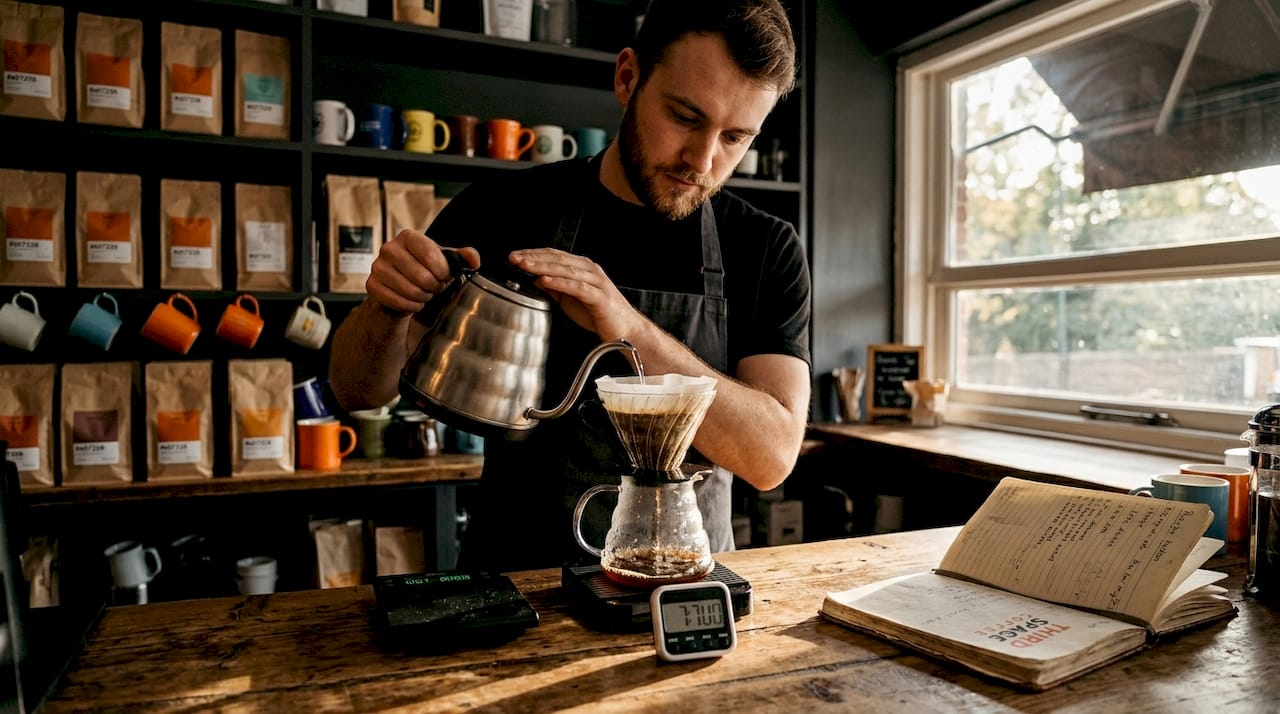
Small operational failures, like a long wait, a dirty counter, or a rushed interaction, are cited as enough to push customers away, even if the coffee itself is excellent. This is a significant insight. It means that no amount of single-origin sourcing or precise brew ratios can fully compensate for a cold or inattentive service experience.
Service moments that genuinely matter to guests include:
- The greeting: Being acknowledged within seconds of entering, even if it's just eye contact and a nod during a rush
- Custom order guidance: When staff proactively offer suggestions based on your preferences rather than just taking the order
- Issue resolution: Replacing a wrong drink quickly and without making the guest feel like a burden
- Consistency: Recognizing a returning guest and remembering preferences over time
- Genuine curiosity: Asking how you liked a new drink or coffee origin you tried last time
"Experience quality is revealed at each micro-moment, including recovery after mistakes." This framing from customer experience research is worth sitting with. It means a venue's true character shows up not in the easy moments, but in the hard ones.
Knowing how coffee is evaluated helps explain what great service looks like in practice. Baristas who can connect coffee cupping techniques to your flavor preferences or walk you through key coffee industry terms without making you feel uninformed are the ones who turn casual visitors into regulars.
Pro Tip: When visiting a new specialty shop, ask the barista what they're most excited about on the menu right now. The quality of that answer, whether they light up, give specifics, or seem disengaged, tells you everything about the shop's service culture.
The Colorado Springs difference: Beyond coffee to community and events
If great service and sensory design set a strong foundation, Colorado Springs coffee venues take it further by building actual programming around the coffee experience. This is where a shop stops being just a place to get a drink and becomes a genuine community hub.
Specialty coffee experiences in Colorado Springs often extend well beyond counter service into events and programming that support learning and social connection. Cuppings, tastings with storytelling, and dedicated venue hours for community gatherings all make the coffee experience richer and more memorable.
Common event types and programs you'll find in Colorado Springs coffee shops include:
- Sensory cupping sessions: Guided tasting events where guests compare different origins, roast levels, or processing methods side by side
- Origin storytelling nights: Events pairing coffee with the narrative of where and how it was grown
- Barista Q&A or skills workshops: Hands-on or demonstration-style sessions covering brewing methods, grind science, or tasting vocabulary
- Private gatherings and meetings: Buyout or reserved spaces for professional groups, celebrations, or social events
- Community open mics or collaborative events: Partnering with local artists, musicians, or organizations to blend coffee with other cultural experiences
| Venue offering | What it adds to the experience |
|---|---|
| Weekly cupping nights | Education, peer connection, deepened palate |
| Private event booking | Flexibility for professional and social needs |
| Online pre-order and pickup | Speed and convenience without losing quality |
| In-house roasting | Transparency, freshness, direct sourcing story |
| Instagram and social community | Ongoing engagement between visits |
These events create a reason to linger well beyond a single cup. They also generate the kind of shared memories and community identity that turn a coffee shop into something people feel genuinely attached to. Venues that function as community event spaces are doing something structurally different from standard cafes, and understanding how to organize coffee events well is itself a craft.
Experience design: Balancing comfort, learning, and speed
Here's a tension that every coffee shop eventually has to navigate: Should the space prioritize the slow, deliberate, educational experience, or the fast, efficient, convenient one? The answer shapes everything from furniture choices to staff training to menu design.
Experience economy retail formats in specialty coffee tend to increase time-in-store and emphasize guided learning, customization, and deeper interaction with baristas rather than just speed or convenience. These venues are betting that the quality of the experience justifies a longer transaction.
At the same time, there's a growing movement of intentionally slower cafes that redesign their layouts to encourage lingering and more deliberate orders. This is genuinely useful for community building and education, but it can conflict with throughput during a busy morning rush.
| Priority | Strengths | Tradeoffs |
|---|---|---|
| Comfort and learning | Deeper loyalty, longer visits, community feel | Slower throughput, potential line buildup |
| Speed and efficiency | Higher volume, less friction during rush | Lower emotional connection, easier to forget |
| Hybrid model | Serves both types of guests | Harder to execute well, requires intentional design |
Here's how to think about this as a guest choosing where to go:
- Match the format to your mood. If you have 10 minutes, a shop optimized for speed serves you better. If you have an hour, look for one with communal tables, event programming, and engaged staff.
- Look at the layout before you order. Long communal tables, soft seating, and counter space facing the room signal a linger-friendly design. Narrow counters and a clear queue signal speed-focus.
- Ask about events. If the shop runs regular programming, it's almost certainly designed to support longer, more meaningful visits.
- Notice the menu depth. A menu with options requiring explanation, like tasting notes, origin info, or brewing method choices, signals that staff are trained to slow down and guide you.
Paying attention to comfort-focused decor and thoughtful menu design helps you identify which type of experience a venue is actually built for, before you even order.
A fresh perspective: Why the "best" coffee retail experience is deeply personal
Here's the part that most articles on this topic skip: there is no single definition of the perfect coffee retail experience. And honestly, arguments about which shop is "best" often miss the point entirely.
Every guest walks in with a different set of values. Some people want warm conversation and to feel known. Others want to be invisible, get an excellent drink fast, and get back to their work. Others specifically show up to learn. They want their assumptions challenged and their palate stretched. None of these is the wrong way to experience coffee.
What gets lost in blanket rankings or "best of" lists is that matching your expectations to a venue's actual strengths is the real skill. A shop that makes an incredible guest feel like a regular might frustrate someone who needs to be in and out in four minutes. Neither person is having a bad experience based on quality alone. The mismatch is the problem.
The most useful thing you can do as a coffee enthusiast is map your own values honestly before you seek a new venue. Do you want to be challenged and educated? Then look for shops with active programming, baristas who like to talk origins, and menus that change with the seasons. Do you want comfort and community? Look for community gathering spaces with regular events and a welcoming layout.
And then, push your own edges a little. Attend a cupping even if you've never done one. Order something you can't pronounce. Tell a barista what you usually like and ask them to surprise you. The richest coffee retail experiences almost always happen when you show up with curiosity instead of a fixed order.
Pro Tip: Read the room when you walk in. A shop's energy, how staff move, how guests settle in, what's on the walls, reflects its values instantly. Trust that first impression and let it guide how you engage.
Experience it yourself: Discover specialty coffee in Colorado Springs
Everything you've just read points toward one practical next step: get out and apply it. Colorado Springs has a genuinely vibrant specialty coffee scene, and the best way to deepen your understanding is to experience it firsthand, not just read about it.

At Third Space Coffee, we roast our beans in-house, which means every cup carries a direct line back to sourcing decisions we care about. Whether you're looking for a quiet spot to work, planning a private gathering, or just want to explore what great coffee actually tastes like, we're built for all of it. You can browse our specialty drinks online, pre-order for quick pickup, or explore everything available through our shop. Come in with a question, a mood, or just a curiosity. That's exactly the kind of visit we're here for.
Frequently asked questions
What does a coffee retail experience include beyond just buying coffee?
It includes the entire customer journey: finding the venue, the welcome, interaction with staff, service quality, comfort in the space, and even post-visit engagement. Every touchpoint before, during, and after the visit contributes to the overall impression.
What are the most important factors for repeat visits to a specialty coffee shop?
Sensory and social elements, like ambiance and genuine interaction with staff, have the strongest impact on return visits, far more than just speed or functional efficiency. A 153-customer study found these elements significantly enhance experience quality, which is what drives revisit intentions.
How do Colorado Springs coffee shops go beyond serving drinks?
Many host events like tastings, cuppings, and learning sessions to build community and create unique experiences. Local programming in Colorado Springs often includes sensory storytelling and dedicated venue hours for social gatherings.
Is a longer stay in the shop usually a sign of a better experience?
Longer visits often indicate greater comfort and engagement, especially in experience economy formats that emphasize learning and interaction. That said, some guests prefer fast, efficient service and still walk away with a great impression.